

Horse Riding Show Jacket: Your Complete Guide
Mar 13, 2026
Stepping into the show ring demands more than technical skill and a well-trained horse. Your appearance matters. The horse riding show jacket serves as the foundation of competitive presentation, combining centuries of equestrian tradition with modern performance requirements. Whether you're preparing for your first affiliated competition or refining your established competition wardrobe, understanding what makes an exceptional show jacket helps you present yourself with confidence. This isn't about vanity. It's about respecting the sport, meeting regulations, and ensuring you can focus entirely on your performance rather than wardrobe malfunctions.
Understanding Show Jacket Requirements
Different disciplines demand specific styles and features from your horse riding show jacket. Dressage competitions typically require a black or navy tailcoat for upper-level tests, whilst preliminary through medium levels generally permit a shorter jacket in similar conservative colours. Showjumping offers slightly more flexibility, with many riders choosing jackets in navy, black, or subtle patterns depending on the competition level.
The British Horse Society provides comprehensive dress guidance covering acceptable attire across various equestrian contexts. Their standards reflect broader competitive norms that govern most affiliated shows throughout the UK and internationally.
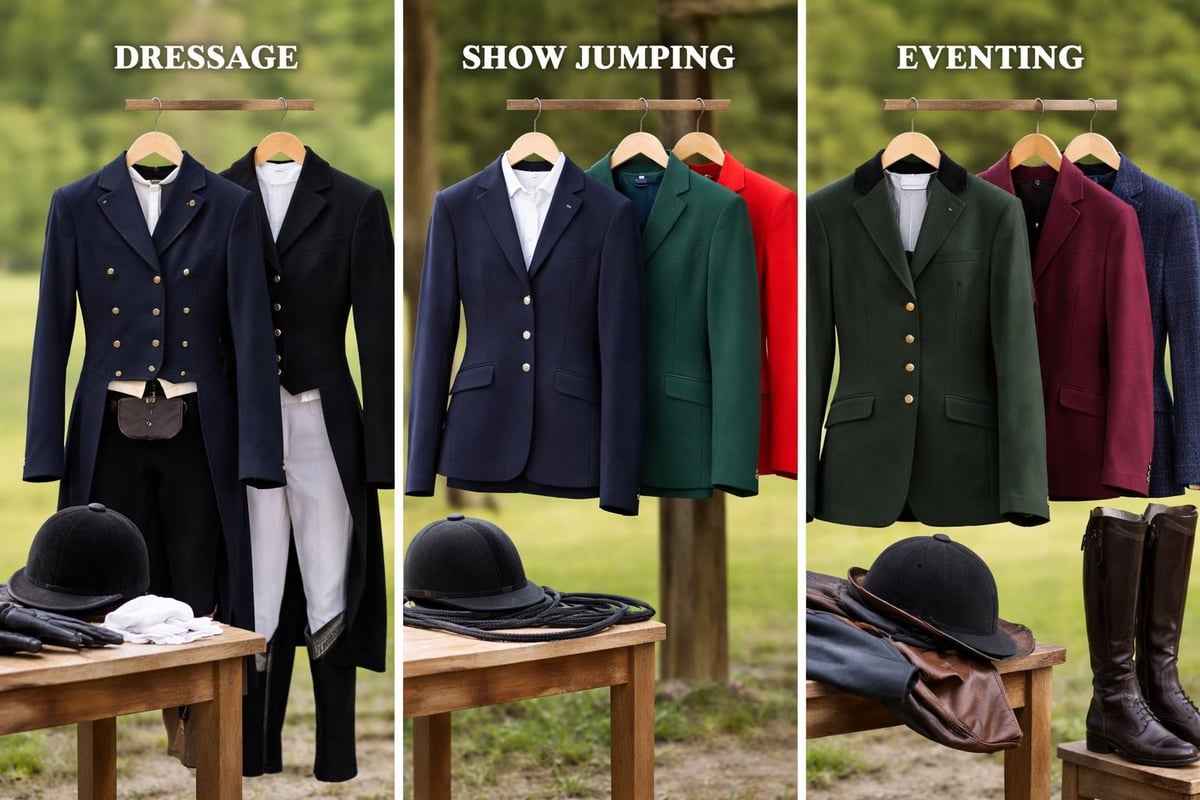
Traditional showing classes maintain the strictest standards. Gentlemen competitors need tweed or navy jackets for hack and riding horse classes, with specific collar styles and button configurations prescribed by show organisers. Hunter classes traditionally call for navy, black, or tweed jackets depending on regional customs and specific class requirements.
Fabric Technology and Performance
Modern show jackets have evolved considerably from their traditional wool predecessors. Technical fabrics now deliver moisture-wicking properties, four-way stretch, and machine washability whilst maintaining the formal appearance regulations demand. This progression means you no longer need to choose between comfort and correctness.
Quality fabrics regulate temperature effectively during summer competitions whilst providing adequate warmth for spring and autumn events. Look for materials that recover well after compression, maintaining their shape throughout long competition days. The best fabrics resist wrinkles, allowing you to travel to shows without requiring immediate pressing upon arrival.
Breathability matters significantly more than many riders initially appreciate. A show jacket that traps heat and moisture creates distraction and discomfort precisely when you need complete focus. Technical weaves allow air circulation without compromising the structured appearance expected in competitive environments.
Fit Fundamentals
A properly fitted horse riding show jacket permits full range of motion through shoulders and arms whilst maintaining clean lines when viewed from the judge's perspective. The shoulder seams should sit precisely at your natural shoulder point, neither dropping toward your arm nor pulling across your back.
Sleeve length requires particular attention. With arms relaxed at your sides, sleeves should reach your wrist bone, allowing approximately one centimetre of shirt cuff to show. When holding the reins, sleeves shouldn't ride up excessively, exposing large portions of your forearm.
Tailoring Considerations
The jacket length creates your overall silhouette from the judge's viewpoint. Traditional show jackets should cover your seat when standing, with the back hem falling to approximately mid-seat level. Shorter competition jackets typically end just below the belt line, creating a modern athletic appearance whilst meeting regulatory requirements.
Body fit determines both appearance and functionality. The jacket should close comfortably across your chest without pulling or gaping. When seated in riding position, the back shouldn't ride up significantly or create horizontal stress lines across your shoulders. Quality competition wear recognises these specific demands, incorporating design elements that accommodate mounted posture.
| Measurement Point | Proper Fit Indicator | Common Problem |
|---|---|---|
| Shoulder Seam | Sits at natural shoulder point | Drops toward upper arm |
| Sleeve Length | Reaches wrist bone, shows 1cm cuff | Rides up when arms extended |
| Body Length | Covers seat when standing | Too short, exposes shirt |
| Chest | Closes without pulling | Gapes or strains across buttons |
| Back | Smooth in riding position | Horizontal stress lines |
Collar height influences both appearance and comfort. The collar should sit flat against your shirt collar without creating gaps or appearing too loose. When properly fitted, you can comfortably fasten the top button of your show shirt without the jacket collar creating pressure points.
Style Options and Personal Choice
Conservative colours remain the safest choice for most competitive contexts. Navy and black dominate showing and dressage arenas, offering versatility across multiple horses and various competition levels. These colours photograph well, complement most horse colours, and never appear inappropriate regardless of venue formality.
Some disciplines permit subtle patterns or alternative colours at certain levels. Showjumping competitors occasionally wear jackets featuring discreet pin stripes or checks, though solid colours maintain broader acceptance. Understanding your specific discipline's current trends helps inform appropriate choices without risking elimination or criticism.
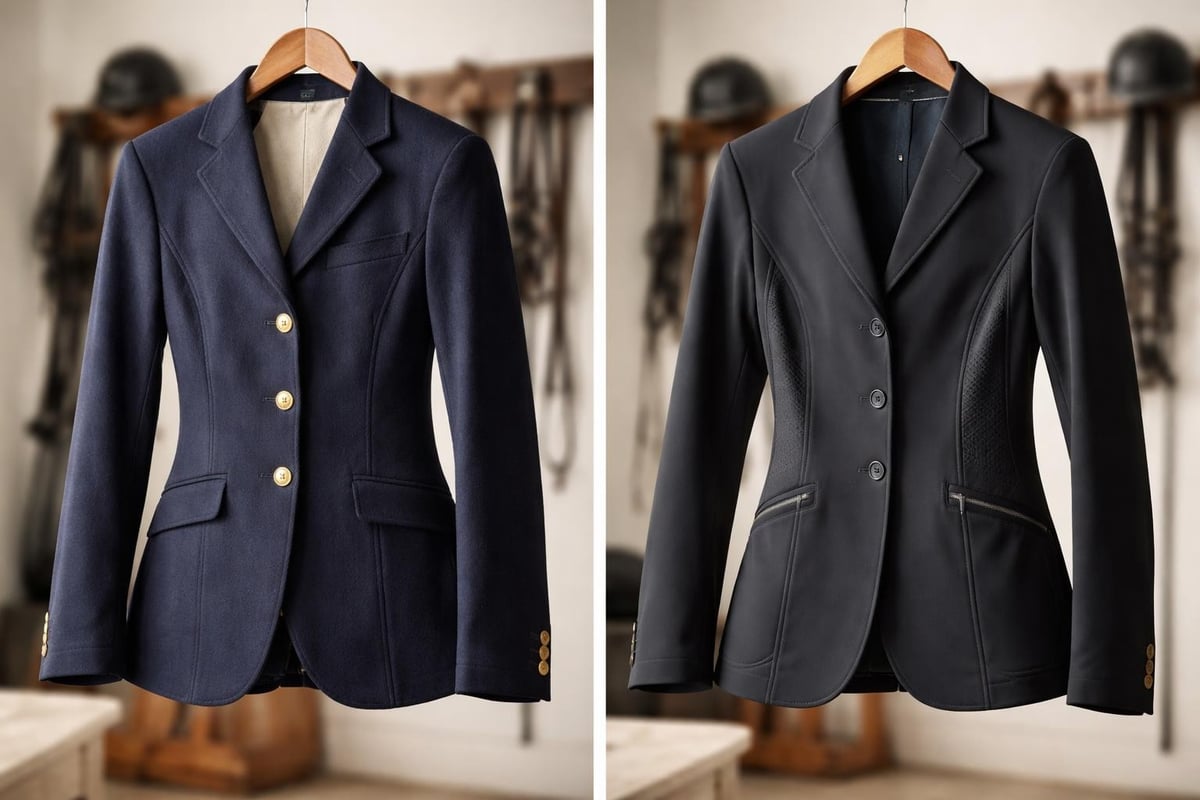
Button configuration carries meaning within equestrian traditions. Three-button jackets offer classic styling suitable across most disciplines, whilst four-button designs appear in certain dressage contexts. Single-breasted designs dominate modern competitions, though double-breasted styles maintain presence in traditional showing classes.
Details That Distinguish Quality
Vent construction affects how your jacket sits in the saddle. Centre back vents accommodate riding position better than non-vented designs, preventing fabric bunching and maintaining smooth lines from the judge's perspective. Side vents, whilst common in business attire, rarely appear in traditional show jackets.
Lining quality separates adequate jackets from exceptional ones. Full linings provide structure and help the jacket maintain its shape, whilst partial linings reduce weight and improve breathability. The best linings resist static, slide easily over shirts, and withstand repeated wear without degrading.
Pocket placement and style reflect both tradition and practicality. Flapped pockets create formal appearance whilst providing secure storage for essentials. Some modern designs incorporate subtle zip pockets that maintain traditional aesthetics whilst offering more secure closure. Remember that bulging pockets detract from your overall presentation, so carry only absolute essentials.
Maintaining Your Investment
A quality horse riding show jacket represents significant investment, warranting proper care to maximise its lifespan. Most modern technical fabrics permit machine washing, dramatically simplifying maintenance compared to traditional dry-clean-only materials. Always follow manufacturer instructions precisely, as improper care can damage specialised fabrics irreversibly.
Spot cleaning addresses minor dirt and dust between full washes. A barely damp cloth removes surface dust from collars and cuffs after each use, preventing accumulation that dulls the fabric's appearance. Address stains immediately when possible, as set stains prove far more difficult to remove.
Storage practices protect your jacket between competitions. Breathable garment bags prevent dust accumulation whilst allowing air circulation that discourages mildew. Proper hangers maintain shoulder shape, whilst cramped wardrobes create wrinkles requiring extensive pressing. Never store damp jackets, as moisture promotes mould growth and fabric degradation.
Travel and Transport
Transporting jackets to competitions requires forethought. Quality garment bags with sturdy hangers prevent crushing during vehicle transport. Some riders keep dedicated show jackets in their lorries, though this practice risks premature wear from temperature fluctuations and dust exposure.
Packing techniques influence whether you arrive with a presentable jacket or one requiring immediate attention. Rolling creates fewer wrinkles than folding for some fabrics, whilst others perform better when carefully folded along natural seam lines. Consider investing in a portable steamer for shows requiring overnight stays, as hotel irons often prove inadequate for equestrian fabrics.
Building Your Show Wardrobe
Starting your competitive journey doesn't require purchasing multiple jackets immediately. One well-chosen horse riding show jacket in navy or black serves most riders adequately through their first season. As competition frequency increases and you progress through levels, expanding your wardrobe makes practical sense.
Consider climate and season when selecting fabrics. Lightweight technical fabrics suit summer competitions, whilst traditional weights provide appropriate warmth for spring and autumn events. Some riders maintain separate warm-weather and cool-weather jackets, though quality mid-weight options perform adequately across most British seasons.
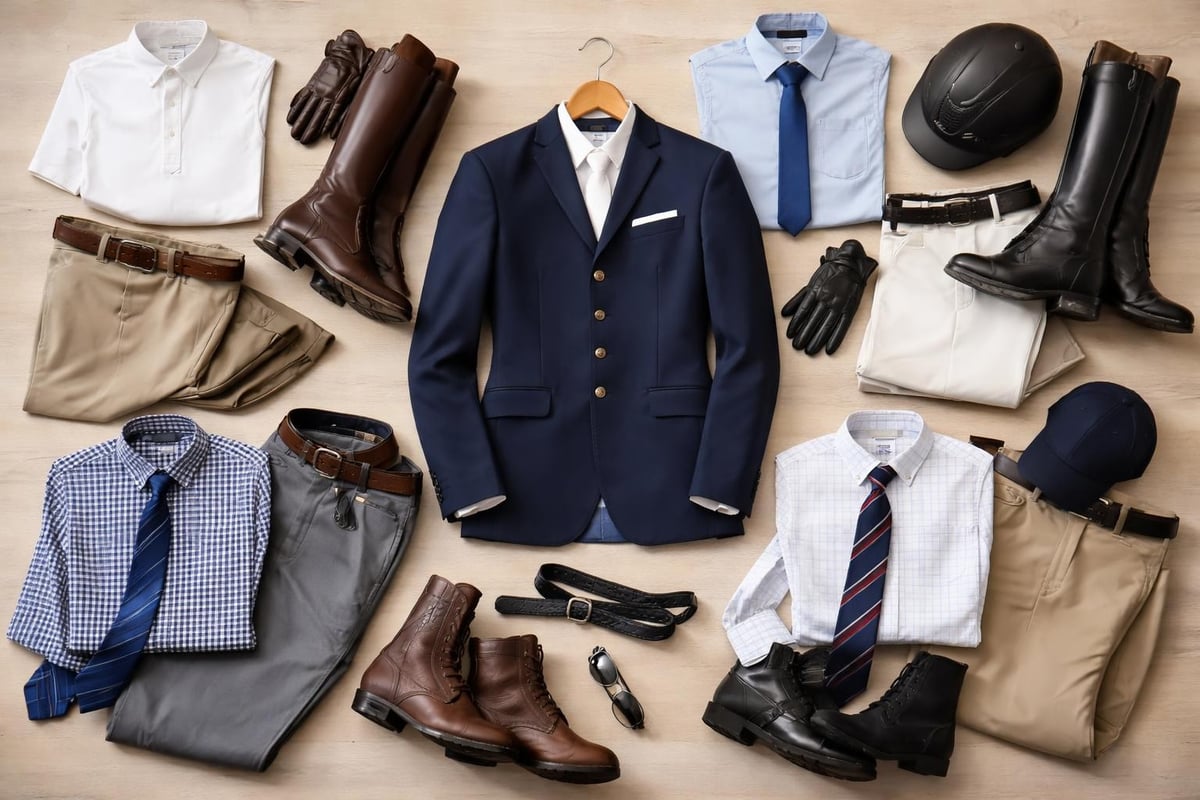
Coordinating your jacket with breeches and shirts creates cohesive presentation. Traditional combinations pair navy jackets with beige breeches or black jackets with white breeches, though modern competitions accept broader combinations. Ensuring your various pieces work together prevents last-minute wardrobe complications before important classes.
The Horse & Hound showing dress code guide offers detailed recommendations for traditional showing attire, helpful when planning purchases that serve multiple competitive contexts. Their guidance reflects current standards whilst acknowledging regional variations that sometimes influence appropriate choices.
Budget Considerations and Value
Show jacket prices vary dramatically, from entry-level options around £150 to premium pieces exceeding £500. Price generally reflects fabric quality, construction methods, and brand reputation. Understanding what you're paying for helps determine whether expensive options deliver proportionate value for your specific needs.
Entry-level jackets typically use basic polyester blends with standard construction. These serve adequately for occasional competitors or riders testing their interest before significant investment. Mid-range options incorporate better fabrics, improved tailoring, and enhanced durability suitable for regular competition. Premium jackets deliver superior fabrics, exceptional fit, and construction quality that withstands intensive use.
| Price Range | Typical Features | Best For |
|---|---|---|
| £150-£250 | Basic polyester, standard cut | Occasional competitors, beginners |
| £250-£400 | Technical fabrics, better fit | Regular competitors, progressing riders |
| £400+ | Premium materials, superior construction | Serious competitors, professional riders |
Consider cost per wear when evaluating options. An expensive jacket worn weekly throughout multiple seasons delivers better value than a cheap jacket requiring replacement after one season. Quality construction and fabrics maintain appearance longer, potentially saving money despite higher initial investment.
Exploring specialist retailers and sales periods uncovers opportunities for quality pieces at reduced prices. End-of-season sales offer significant discounts, though size availability may prove limited. Some riders purchase slightly larger sizes when exceptional deals appear, planning for professional alterations that still cost less than full retail prices.
Modern Safety Innovations
Recent developments have introduced integrated safety technology into competition jackets. Airbag competition jackets incorporate inflatable protection systems that deploy upon impact, though regulations governing their use vary by discipline and competition level. These innovations represent significant advancement in rider safety, though traditional show jackets remain standard for most competitive contexts.
Understanding whether your chosen disciplines permit safety-enhanced jackets prevents purchasing items you cannot actually wear in competition. Some governing bodies explicitly prohibit airbag systems during certain classes, whilst others embrace these safety developments. Checking current regulations before investing in advanced safety equipment proves essential.
Traditional body protectors worn beneath show jackets create distinct appearance challenges. The additional bulk affects jacket fit and silhouette, potentially requiring size adjustments or specific jacket styles. Some manufacturers now design show jackets specifically to accommodate body protectors, incorporating additional room through the torso without compromising overall appearance.
Regulations and Rule Books
Serious competitors must familiarise themselves with specific dress codes governing their chosen disciplines. The United States Equestrian Federation dressage attire booklet details precise requirements for American competitions, whilst British Dressage and British Showjumping maintain similar comprehensive guidelines for UK-based events.
Rules specify not only acceptable colours and styles but also details like button numbers, collar types, and sleeve treatments. Some competitions enforce traditional standards strictly, whilst others adopt more relaxed interpretations. Understanding these nuances prevents unfortunate situations where your chosen attire proves unacceptable, potentially resulting in elimination or reduced marks.
International competitions often maintain stricter standards than national-level events. Riders progressing to FEI-level competition must ensure their wardrobes meet these elevated requirements. What proves acceptable at local shows may not satisfy international judges and technical delegates.
Staying current with regulation changes protects your competitive interests. Governing bodies occasionally update dress codes, introducing new permissions or restrictions. Following official communications and checking rule books before each competitive season ensures compliance and prevents awkward surprises.
Practical Advice for First-Time Buyers
Purchasing your first horse riding show jacket feels significant. Visit physical retailers when possible, as trying multiple brands and styles reveals fit differences that photographs cannot convey. Different manufacturers cut their patterns distinctively, meaning your usual clothing size may not translate directly to show jacket sizing.
Bring your competition shirt when fitting jackets, as the combined layers affect overall fit and comfort. Moving through riding positions during fitting reveals whether the jacket permits adequate range of motion. Raise your arms as though holding reins, lean forward into riding position, and ensure the jacket doesn't restrict movement or pull uncomfortably.
Seeking advice from experienced competitors provides practical insights beyond sales staff recommendations. Fellow riders understand real-world performance demands and can identify potential issues you might overlook. Online forums and social media groups dedicated to equestrian attire offer valuable perspectives, though remember that individual preferences vary considerably.
The Gallant Equestrian jackets collection demonstrates how modern design addresses traditional requirements whilst incorporating contemporary performance features. Quality pieces balance heritage aesthetics with functional innovations that support serious competitors.
Photography considerations influence some riders' choices. Dark jackets photograph beautifully against most backgrounds, creating strong contrast that highlights position and form. Understanding how different colours and fabrics appear in both natural and arena lighting helps ensure you present well both to live judges and in competition photography.
Seasonal Adaptations
British weather demands versatility from competition wardrobes. Summer competitions can prove surprisingly warm, making lightweight fabrics essential for comfort. Winter indoor competitions may require traditional weights, whilst spring and autumn events need adaptable options suitable for variable conditions.
Layering strategies help manage temperature fluctuations throughout competition days. Technical base layers worn beneath show shirts provide warmth without bulk, whilst lightweight gilets can supplement jackets during warm-up periods before removal for actual competition. Planning these combinations ensures comfort without compromising presentation.
Some riders maintain multiple jackets for different seasons, whilst others prefer versatile mid-weight options that perform adequately year-round. Your competition schedule and budget constraints influence which approach proves most practical. Frequent competitors benefit from dedicated seasonal options, whilst occasional participants may find single versatile pieces sufficient.
Choosing the right horse riding show jacket combines understanding tradition, meeting regulations, and finding options that support your competitive performance. Quality pieces balance formal presentation requirements with modern comfort and functionality, allowing you to focus entirely on your riding rather than wardrobe concerns. Whether you're building your first competition wardrobe or upgrading established pieces, Gallant Equestrian offers performance-driven clothing designed specifically for men who ride seriously, combining refined style with the durability and function that competitive equestrian sport demands. Look the Part. Enjoy the Ride.

