

Casual Horse Riding Outfits: Style Meets Function
Aug 22, 2026
The best casual horse riding outfits do more than keep you comfortable in the saddle. They bridge the gap between performance and practicality, allowing you to move from stable chores to a proper ride without changing gear. For male riders, finding clothing that balances function, durability, and quiet style can be challenging. The equestrian industry has traditionally focused on competition wear or workwear extremes, leaving everyday riders to navigate an awkward middle ground. But casual riding demands its own approach: pieces that perform under pressure, protect when needed, and look proper whether you're schooling in the arena or grabbing coffee afterwards.
Understanding Casual Riding Wear
Casual horse riding outfits differ fundamentally from competition attire. You're not bound by strict dress codes or judges' expectations. Instead, you need clothing that withstands daily wear, handles unpredictable weather, and keeps you safe without the formality of show rings.
The foundation remains the same: close-fitting trousers, appropriate footwear, and layers that move with you. What changes is the flexibility. Your casual riding wardrobe should work for morning hacks, schooling sessions, stable chores, and everything between. This versatility makes casual wear arguably more demanding than competition gear.
Think about your typical riding week. You might school twice, hack out once, and spend several hours on yard work. Traditional jodhpurs or breeches work perfectly, but you also need shirts that don't show every speck of dust, jackets that pack into saddlebags, and boots that transition from stirrups to stable floors without complaint.
The Safety Foundation
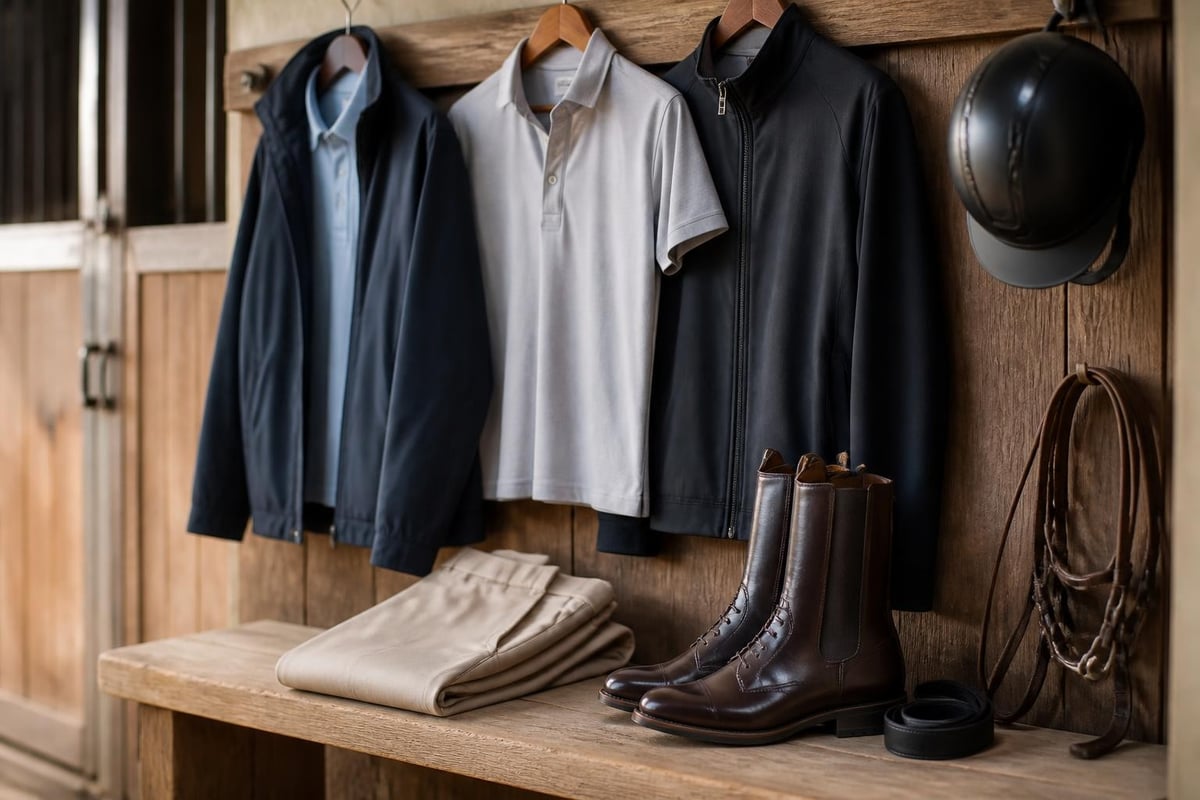
Safety never takes a day off, even in casual settings. What to wear to the barn starts with understanding that horses don't distinguish between competition days and quiet hacks. Protection matters equally across all riding contexts.
Helmets remain non-negotiable. Modern riding helmets meet specific safety standards, and staying current with concussion prevention guidelines matters regardless of your riding level or frequency. Choose a helmet that fits properly, replace it after any impact, and wear it every time you mount.
Body protectors add another layer of security, particularly for jumping or young horses. The BETA 2018 standard classifies protectors into three levels based on impact protection. Level 3 offers the highest protection for cross-country and eventing, whilst Level 1 suits lighter riding. Even casual riders benefit from understanding these standards when assessing risk.
Footwear deserves equal attention. Boots with a defined heel prevent your foot slipping through the stirrup, whilst a smooth sole releases cleanly if you fall. Steel-toed work boots might seem practical for yard chores, but they're dangerous for riding. The toe can catch in stirrups, creating a trap rather than protection.
Trousers That Work
The trouser question dominates casual riding wear discussions. Traditional breeches or jodhpurs remain the gold standard for good reason. They're cut to eliminate inseam bulk, feature grip panels where you need them, and stretch in directions that matter.
Men's breeches have evolved considerably. Modern technical fabrics manage moisture, resist odours, and maintain shape through repeated wear and washing. Four-way stretch ensures freedom of movement without bagging at the knees or pulling across the seat.
| Feature | Benefit | When It Matters |
|---|---|---|
| Full seat grip | Enhanced stability | All disciplines, particularly flatwork |
| Knee patch | Targeted grip without bulk | Jumping, general riding |
| Mid-rise waist | Comfortable coverage | Long rides, varied movements |
| Technical fabric | Moisture management | Warm weather, intensive schooling |
| Reinforced knees | Durability | Frequent riding, ground work |
Beyond traditional breeches, some riders prefer riding tights or performance leggings. These work well for casual contexts, particularly if you're alternating between riding and other activities. Look for fabrics that offer genuine compression without restriction, and ensure they include a high enough waist to prevent gaps when mounted.
Standard jeans rarely make good riding trousers. The thick inseams create pressure points, the fabric doesn't stretch properly, and the fit often proves uncomfortable in the saddle. If you must ride in jeans, choose a dark wash to minimise obvious wear marks and accept that they won't perform like purpose-built riding trousers.
Footwear Fundamentals
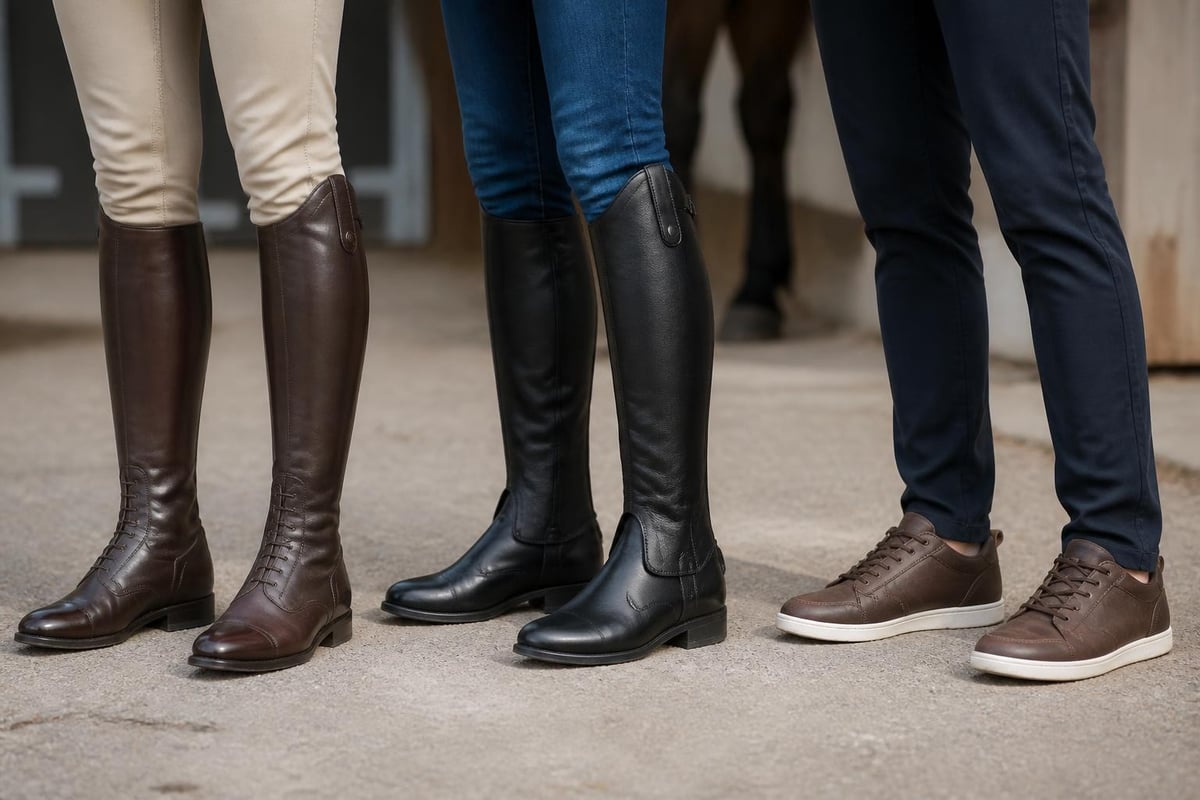
Boots anchor your position and protect your feet, ankles, and lower legs. For casual riding, you've got three main categories: tall boots, paddock boots with half chaps, or specialist riding trainers.
Tall boots offer maximum protection and a traditional look. Leather versions require maintenance but last years with proper care. Rubber alternatives handle wet conditions brilliantly and need less attention. Both work equally well for casual riding.
Paddock boots paired with half chaps provide similar coverage with more flexibility. You can wear paddock boots for stable work, then add chaps for riding. This modularity makes them practical for riders who spend significant time doing non-riding tasks around the yard.
Riding trainers suit lighter riding and favour comfort over tradition. They look like walking shoes but include riding-specific features: defined heels, reinforced toes, and grippy soles designed for stirrups. They excel at short rides, lessons, and situations where you're on and off frequently.
Upper Body Layers
Shirts and jackets for casual horse riding outfits need to balance weather protection, freedom of movement, and durability. You're looking for pieces that handle temperature fluctuations, don't restrict your riding, and survive encounters with stable dust, horse hair, and the occasional bramble.
Performance polo shirts have become a staple. They're smart enough for most contexts, technical fabrics manage moisture effectively, and they layer well under jackets. Quarter-zip designs add ventilation options without buttons that can gap or catch. Horseback riding polo shirts designed specifically for equestrian use typically feature longer backs to prevent riding up, reinforced shoulders for carrying tack, and fabrics that resist pilling and fading.
Long-sleeve base layers matter more than many riders realise. They regulate temperature, protect from sun, and provide a smooth layer under other garments. Merino wool works brilliantly across seasons: warm when cool, cool when warm, and naturally odour-resistant. Synthetic alternatives dry faster and often cost less, though they typically need more frequent washing.
Jacket Selection
The right jacket transforms your riding experience. You need weather protection without bulk, freedom of movement without excess fabric, and pockets that don't interfere with your position.
Softshell jackets excel at everyday riding. They're windproof, water-resistant (though not waterproof), breathable, and stretchy. Most pack down reasonably small, making them easy to tie to your saddle if conditions change. Look for riding-specific cuts: shaped sleeves that curve naturally when your arms are forward, longer backs for saddle coverage, and two-way zips that don't bunch.
Proper waterproof riding jackets become essential in wet climates. Riding in the rain tests jacket design severely. You need sealed seams, hood compatibility with helmets, and ventilation to prevent internal condensation. Many technical jackets include pit zips or back vents that allow airflow without letting rain in.
Lightweight gilets fill the gap between too warm and too cold. They protect your core, leave arms free, and layer easily under or over other pieces. The best versions include dropped tail hems for saddle coverage and high necks that don't interfere with helmet straps.
Building Your Rotation
Most riders benefit from having several complete casual horse riding outfits rather than one perfect set. This rotation approach ensures you always have clean, dry gear ready whilst allowing pieces to rest and recover between wears.
Start with three pairs of breeches or riding tights. This gives you one to wear, one in the wash, and one clean backup. Choose colours that don't show every mark. Navy, charcoal, and dark olive all hide stable dust better than lighter shades.
Four to five shirts provide adequate rotation. Mix sleeve lengths based on your climate, but lean towards long sleeves with roll-up options for versatility. Technical fabrics that dry quickly and resist odours reduce washing frequency, making smaller rotations more practical.
Two jackets cover most situations: one softshell for general use and one waterproof for serious weather. If you ride frequently, consider adding a lightweight gilet for shoulder seasons and a insulated option for winter.
| Season | Core Pieces | Optional Additions |
|---|---|---|
| Spring | 2 breeches, 3 long-sleeve shirts, softshell jacket | Lightweight gilet, rain jacket |
| Summer | 2 breeches, 3 polo shirts, 1 long-sleeve base | UV protection sleeves, cap |
| Autumn | 3 breeches, 4 mixed shirts, softshell + gilet | Gloves, neck warmer |
| Winter | 3 breeches, thermal base layers, insulated jacket | Waterproof overtrousers, winter gloves |
This approach aligns with the concept of an equestrian capsule wardrobe, where fewer, better pieces work harder and coordinate seamlessly.
Colour Coordination
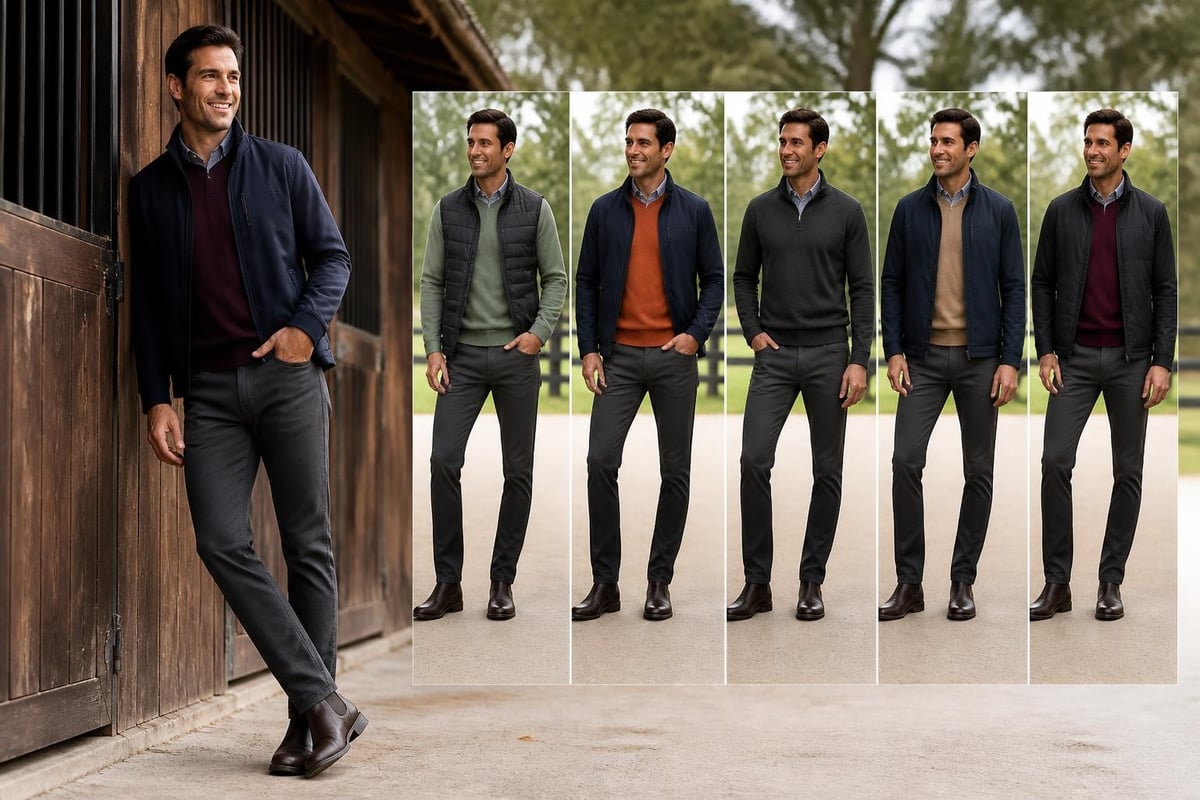
Casual doesn't mean careless. Your riding outfits should look intentional, even when you're not aiming for show-ring perfection. Stick to a consistent colour palette that allows pieces to mix freely.
Navy, charcoal, and black form a reliable foundation. They hide dirt, coordinate easily, and maintain a refined appearance. Add one or two accent colours for variety without creating chaos. Burgundy, forest green, or dark tan all work well with neutral bases.
Avoid excessive branding or loud patterns unless they genuinely reflect your style. Remember that casual horse riding outfits often appear in contexts beyond the stable. Clothing that looks equally appropriate at the tack shop and the local café offers maximum value.
Practical Considerations
The most comprehensive guide to appropriate barn attire emphasises that casual riding clothes must survive real-world conditions. Horses create mess. Stables generate dust. Weather changes rapidly. Your clothing needs to handle all of it without constant special care.
Choose machine-washable fabrics whenever possible. Hand-wash-only garments sound premium but become burdensome when you're riding four times weekly. Technical synthetics and merino blends typically handle machine washing well, whilst maintaining their performance properties.
Durability matters more than initial cost per garment. A well-made pair of riding breeches that lasts three years offers better value than cheap alternatives requiring replacement every six months. Look for reinforced stitching in high-stress areas, quality zips, and fabrics that resist pilling and fading.
Storage affects longevity too. Hang breeches and jackets rather than folding them. This prevents permanent creases and allows fabrics to breathe between wears. Air out sweaty gear before putting it away, but don't leave riding clothes in direct sunlight, which degrades fabrics and fades colours.
Weather Adaptability
British weather demands adaptable wardrobes. Morning might start cool and damp, then turn warm by afternoon. Having layers you can add or remove makes this variability manageable.
The classic three-layer system works brilliantly for riding. Start with a moisture-wicking base layer against your skin. Add an insulating mid-layer for warmth. Finish with a protective outer shell against wind and rain. As conditions change, adjust layers accordingly.
This system explains why men's horse riding jackets designed with versatility in mind prove so valuable. A jacket that works alone in autumn, over a fleece in winter, and stuffs into a saddlebag in summer delivers year-round utility.
Extremity protection shouldn't be overlooked. Gloves that allow proper rein feel whilst keeping hands warm are worth investing in. Similarly, neck warmers that fit comfortably under helmets prevent heat loss without bulk. For the comprehensive overview, resources like this complete guide to casual horseback riding wear cover the full spectrum of seasonal considerations.
Beyond Basic Functionality
Casual horse riding outfits increasingly blur the line between riding gear and everyday clothing. This reflects broader trends in equestrian style where functionality and aesthetics merge seamlessly.
Modern riding clothes incorporate technical features invisibly. Four-way stretch looks like regular fabric. Moisture-wicking happens unnoticed. Water resistance doesn't announce itself through crinkly coatings. This subtlety means your riding clothes can genuinely work in non-riding contexts without looking out of place.
The concept extends to fit and cut. Contemporary men's equestrian apparel favours athletic, streamlined silhouettes over the baggy or overly traditional fits that dominated previously. These refined cuts work equally well mounted or on foot, in the saddle or the pub.
Detailing matters too. Thoughtful pocket placement, discrete branding, and quality hardware elevate basic riding clothes into pieces you'd choose to wear regardless of your plans. This philosophy recognises that most riders' lives don't revolve exclusively around horses. Your clothing should accommodate that reality.
Investment Pieces
Certain items justify higher investment because they're worn constantly and significantly impact your riding experience. Quality riding pants top this list. You wear them every ride, they affect your comfort directly, and good ones last years. Spending more here returns dividends in performance and durability.
Similarly, boots that fit properly and protect effectively are worth the premium. Poorly fitting boots cause discomfort, affect your position, and can create safety issues. Conversely, excellent boots you barely notice become invisible enablers of better riding.
Jackets designed specifically for equestrian use rather than generic outdoor wear typically justify their cost through riding-specific features. Shaped sleeves, extended backs, and helmet-compatible hoods aren't standard in regular outdoor jackets but transform functionality for riders.
Balance these investments with more accessible pieces. Base layers and everyday shirts don't require the same outlay as breeches or boots. Build your wardrobe strategically, prioritising the items that work hardest and matter most.
Making It Work
Creating effective casual horse riding outfits isn't about buying everything at once. Start with essentials: properly fitting breeches, safe boots, appropriate headgear, and weather-suitable outerwear. Build from there as needs and budget allow.
Pay attention to how pieces perform in practice. Some garments that seem perfect in fitting rooms prove uncomfortable after an hour in the saddle. Others that look basic reveal themselves as workhorses that quietly excel ride after ride. Trust your experience over marketing claims.
Remember that "casual" doesn't mean compromised. Your everyday riding clothes should perform as well as competition gear within their context. The difference lies in flexibility and forgiveness, not quality or safety. Approach casual riding wear with the same thoughtfulness you'd apply to any other aspect of horsemanship.
The goal is clothing that supports rather than hinders your riding. Pieces that keep you comfortable, protected, and appropriately dressed without demanding constant attention or adjustment. When your clothing works this seamlessly, you can focus entirely on your horse, your riding, and the simple pleasure of time in the saddle.
Building a wardrobe of practical, stylish casual horse riding outfits means investing in pieces that genuinely serve your riding life. From breeches that move with you to jackets that handle British weather, the right clothing enhances every ride. Gallant Equestrian creates performance-driven menswear designed for exactly this: riding that looks proper and feels effortless, whether you're schooling or hacking out. Explore the collection and discover gear that works as hard as you do. Look the Part. Enjoy the Ride.

