

Show Jumping Clothing for Men | Competition & Training Kit
Oct 02, 2026
Stepping into the show jumping ring demands more than skill and a talented horse. Your turnout speaks before you've even cleared the first fence. Show jumping clothing serves a dual purpose: it meets strict competition standards whilst giving you the freedom to ride at your best. For men in the sport, finding kit that combines tradition with modern performance has become easier as brands recognise the need for tailored, functional pieces that work as hard as you do.
Understanding Competition Standards
Show jumping clothing isn't simply about looking sharp. Governing bodies set clear rules about what you can wear in the ring, and those standards exist for safety and tradition alike. The FEI Jumping Rules outline specific requirements for international competitions, whilst national federations add their own guidance.
Most competitions require a dark-coloured jacket, white or light-coloured breeches, tall boots or paddock boots with half chaps, and an approved helmet. Stock ties or chokers complete the formal look for upper-level classes, though some lower-level shows permit coloured shirts with collars.
The Jacket Question
Your competition jacket sets the tone for your entire turnout. Traditional navy, black, or dark green jackets remain the standard, cut to allow shoulder movement whilst maintaining a clean line. Modern fabrics now incorporate stretch panels and breathable zones, addressing the old problem of restrictive formal wear.
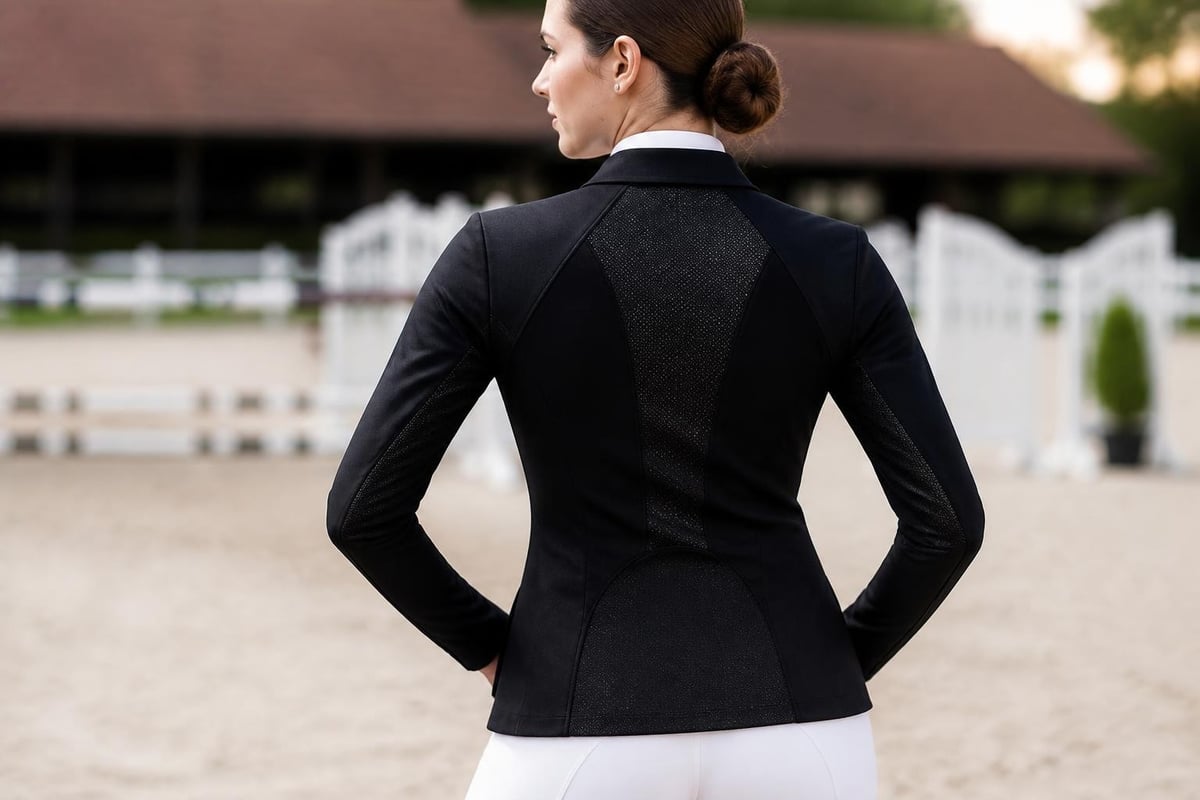
Competition jackets should fit close through the body without restricting your arms when you're in riding position. Sleeve length matters more than you might expect. Too short and your shirt cuffs show awkwardly; too long and the excess fabric bunches at your wrists. The rear vent should lie flat when you're mounted, not gape or pull.
| Jacket Feature | Purpose | What to Look For |
|---|---|---|
| Stretch panels | Shoulder mobility | Fabric that gives during posting and two-point |
| Ventilation | Temperature control | Mesh or perforated zones under arms, across back |
| Length | Clean line when mounted | Covers your seat, doesn't bunch or ride up |
| Closures | Secure fit | Buttons that stay fastened under movement |
Breeches Built for Purpose
Show jumping breeches differ from everyday training pairs in subtle but important ways. Competition breeches typically feature full-seat silicone or leather grip for security over fences, whilst training breeches might use knee patches only. The right pair should feel like a second skin without creating pressure points.
White or light colours remain standard for most competitions, though you'll find beige and pale grey accepted at many venues. The USEF Rulebook provides specific guidance for national competitions in the United States, whilst British Showjumping updates their requirements regularly for UK competitors.
Fit through the seat and thigh determines how well your breeches perform. Too loose and they bunch under your seat or behind your knee. Too tight and they restrict hip movement or create uncomfortable pressure when you're in half-seat over a fence. Quality show jumping clothing uses four-way stretch fabric that moves with you, maintaining its shape through repeated washing and wear.
Training Kit That Performs
What you wear for daily training sessions matters as much as your competition turnout. Training clothing needs to withstand mud, sweat, weather, and the demands of riding multiple horses. The best pieces transition seamlessly from morning schooling to afternoon lessons without looking worse for wear.
Everyday Breeches
Training breeches work harder than any other piece in your wardrobe. Knee-patch breeches offer security without the warmth of full-seat versions, making them ideal for summer sessions or high-intensity flatwork. Darker colours show less dirt between washes, a practical consideration when you're riding five days a week.
Modern technical fabrics address the moisture and temperature challenges riders face. Research into thermo-physiological comfort in sportswear shows that moisture-wicking and breathable materials significantly improve performance and comfort during athletic activity. Your breeches should pull sweat away from your skin whilst allowing air circulation, preventing the clammy discomfort that comes with traditional fabrics.
Look for reinforced seams in high-stress areas: inner leg, seat, and knee. These zones take the most abuse from daily riding, and quality construction here extends the life of your breeches considerably. Ankle closures should allow your boots to slide on easily without creating bulk inside your boot leg.
Shirts and Layers
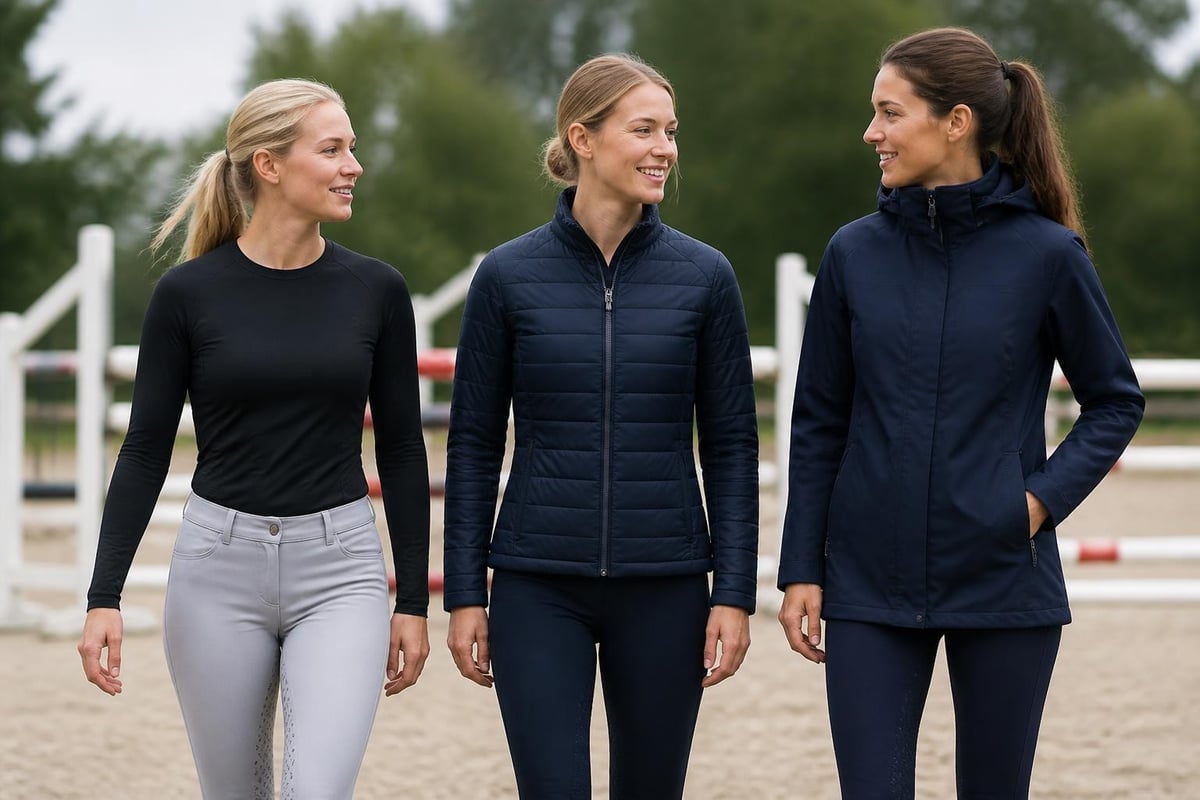
Your shirt choice depends on weather, intensity, and personal preference. Technical polo shirts work well for moderate conditions, offering collar and sleeves without excess bulk. Short-sleeve tees suit hot summer sessions, whilst long sleeves provide sun protection and extra warmth when needed.
Base layers matter more than many riders realise. A quality base layer pulls moisture away from your skin, regulating temperature whether you're schooling in cold morning air or jumping rounds under afternoon sun. Natural merino wool performs exceptionally well across temperature ranges, whilst synthetic blends dry faster and typically cost less.
Mid-layers bridge the gap between your base and outer shell. Lightweight sweatshirts or quarter-zips add warmth without restricting movement, and they're easy to strip off as your body warms up during a session. Performance-focused pieces designed specifically for riding fit better through the shoulders and arms than general athletic wear.
Weather Protection
British weather demands versatile outerwear. Your waterproof riding jacket should keep you dry without turning into a sauna, allow full range of motion, and ideally pack down small enough to tie behind your saddle when the sun breaks through.
Rain Jackets That Work
Quality rain jackets balance waterproofing with breathability. A completely waterproof but non-breathable jacket traps your body heat and moisture, leaving you nearly as wet from sweat as you would be from rain. Look for jackets with waterproof-breathable membranes that allow water vapour to escape whilst blocking external moisture.
Length matters when you're mounted. Too short and rain runs off the jacket straight onto your legs. Too long and excess fabric bunches uncomfortably when you're in the saddle. The ideal riding rain jacket hits mid-hip, covering your seat whilst remaining clear of the saddle.
| Feature | Function | Rider Benefit |
|---|---|---|
| Two-way zip | Access to pockets, ventilation | Open from bottom when mounted |
| Storm cuffs | Block water entry at wrists | Keep sleeves dry when adjusting reins |
| High collar | Neck protection | Seals out wind and rain without restricting head movement |
| Dropped back hem | Rear coverage | Protects lower back and seat when leaning forward |
Winter Riding Layers
Winter riding gear presents a particular challenge. You need enough warmth for early-morning mucking and tacking, but not so much that you overheat once you're working. Layering solves this problem better than a single heavy jacket.
Start with a moisture-wicking base layer, add an insulating mid-layer like a fleece or lightweight down jacket, and top with a windproof or waterproof shell. This system lets you adjust your warmth by adding or removing layers, and each piece can be worn independently in different conditions.
Gilets work exceptionally well for riding. They provide core warmth whilst leaving your arms free to move, and they don't bunch awkwardly when you're in jumping position. Look for versions with stretch side panels that move with your torso.
Safety Equipment Standards
Show jumping clothing includes one critical safety element: your helmet. Whilst boots protect your feet and gloves improve grip, your helmet literally protects your life. Modern testing standards have evolved significantly, giving riders better information about helmet performance than ever before.
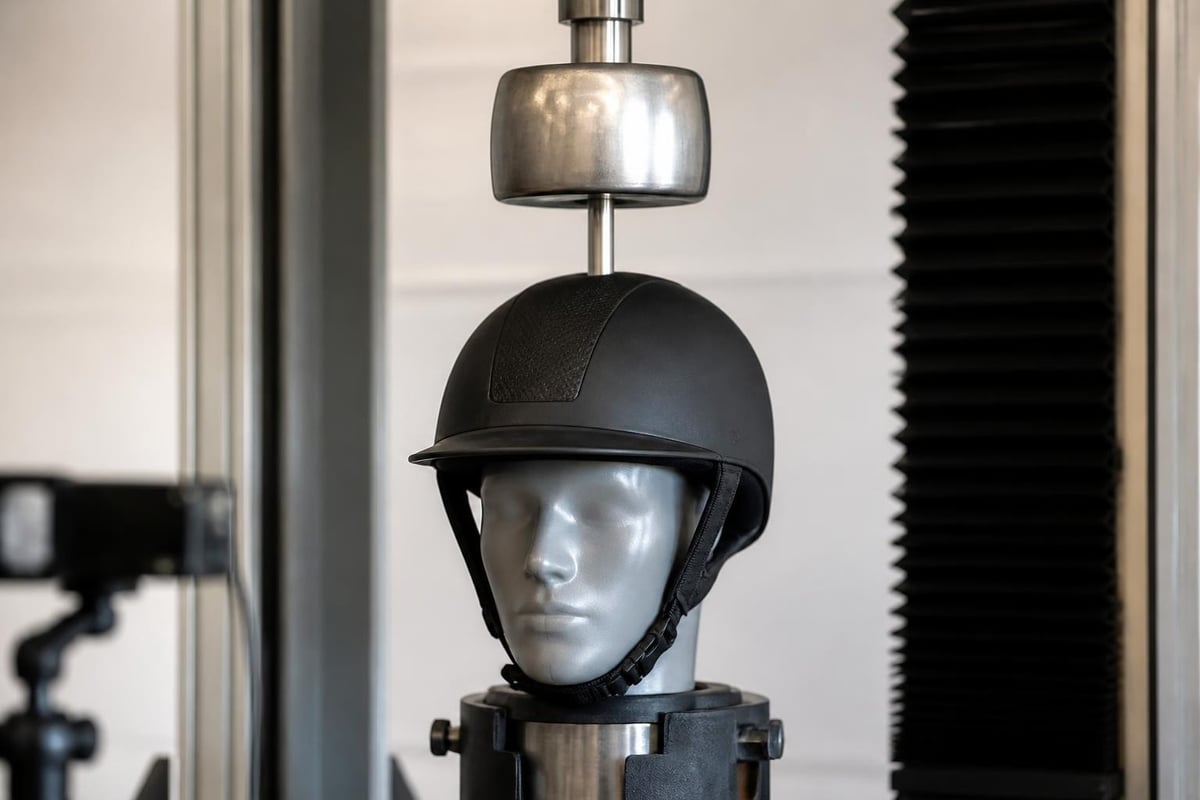
The Virginia Tech Helmet Lab provides independent STAR ratings for equestrian helmets, testing them against impacts similar to those experienced in real riding falls. Their research-based approach gives riders objective data about helmet protection levels, moving beyond simple pass-fail certification.
Understanding Certifications
Most competition-legal helmets meet ASTM F1163 or EN 1384 standards. These certifications ensure basic impact protection, but they represent minimum thresholds rather than top-tier performance. Look for helmets that exceed these standards whilst fitting your head shape properly.
Fit matters more than any other single factor in helmet safety. An expensive, highly-rated helmet that doesn't fit your head properly won't protect you as well as a properly-fitted helmet with standard certification. Your helmet should sit level on your head, positioned about two finger-widths above your eyebrows, with the chin strap adjusted so you can fit no more than two fingers between the strap and your chin.
Modern helmets incorporate ventilation, moisture-wicking liners, and dial-adjustment systems that maintain fit even as your hair length changes or you wear different underlayers. Replace your helmet after any fall that involves head impact, even if you can't see visible damage. The protective foam inside compresses on impact and doesn't return to full effectiveness.
Building Your Competition Wardrobe
Starting a show jumping wardrobe from scratch can feel overwhelming. The key is building systematically, prioritising pieces you'll use most whilst ensuring everything meets competition standards when needed.
Essential First Pieces
Begin with one quality show jacket in navy or black. A versatile dark jacket works for almost any competition level or venue. Add two pairs of white or light-coloured competition breeches so you always have a clean pair ready. Your first show shirt should be white with a subtle collar, appropriate for most classes.
For training, invest in three to four pairs of daily breeches in darker colours. This rotation lets you ride consistently without constant laundry. Add several technical shirts suitable for your climate, and one reliable rain jacket that fits well when mounted.
Your helmet represents your most important investment. Budget appropriately for the best-fitting, highest-rated helmet you can afford. Tall boots or quality paddock boots with half chaps complete your basic kit. Leather requires care but lasts years when properly maintained, whilst synthetic alternatives offer easier upkeep at lower cost.
| Priority Level | Item Category | Why It Matters |
|---|---|---|
| Essential | Helmet, boots, breeches | Safety and basic function |
| High priority | Show jacket, competition shirt | Required for most shows |
| Medium priority | Training shirts, rain gear | Comfort and consistency |
| Lower priority | Specialty items, extras | Nice to have, not critical |
Expanding Your Options
Once you've covered essentials, add pieces that increase versatility. A second show jacket in a different style or colour lets you vary your look. Additional competition breeches mean less frequent washing of your show kit. Training breeches in various weights suit different seasons.
Consider a complete training kit that coordinates base layers, mid-layers, and everyday riding pieces. Matching elements create a polished appearance even during schooling sessions, and quality training clothing lasts longer whilst performing better than budget alternatives.
Seasonal pieces round out your wardrobe. Winter layers like insulated gilets, thermal base layers, and windproof mid-layers extend your riding comfort through cold months. Summer additions might include UV-protective long-sleeve shirts, lightweight competition jackets with extra ventilation, and moisture-wicking underlayers.
Fabric Technology and Care
Show jumping clothing has evolved beyond traditional cotton and wool. Modern technical fabrics offer performance advantages that make riding more comfortable whilst lasting longer under hard use. Understanding these materials helps you choose pieces that match your needs and care for them properly.
Technical four-way stretch fabrics allow movement in every direction whilst maintaining their shape. Unlike old-style breeches that sagged at the knees or bagged at the seat, quality modern pairs return to their original form after each ride. This shape retention depends on proper care, though.
Wash show jumping clothing in cold water using mild detergent. Hot water and harsh chemicals break down elastic fibres and fade colours faster. Turn breeches inside out before washing to protect silicone grip and reduce pilling on the outer surface. Skip fabric softener entirely, as it coats technical fabrics and reduces their moisture-wicking properties.
Air drying extends the life of technical clothing significantly. Heat from dryers weakens elastic fibres and can damage silicone or leather details. Hang breeches by the waistband or lay flat to dry. Jackets should hang on proper hangers that support the shoulders, maintaining their shape between wears.
Store show jumping clothing properly between uses. Breeches fold or hang without sharp creases. Jackets need breathing room on hangers in a cool, dry space. Boots benefit from boot trees that help them hold their shape. Helmets should sit on a shelf or dedicated helmet hook, never crushed under other equipment.
Personalising Your Look
Competition rules leave room for personal style within their parameters. Subtle details let you express individuality whilst maintaining appropriate turnout. Your choice of jacket colour within the dark spectrum, breech style and fit, shirt pattern or piping, and boot selection all contribute to your personal aesthetic.
Some riders prefer traditional looks that could have stepped from competitions decades ago. Others embrace modern cuts and fabrics that signal updated sensibilities whilst respecting tradition. Neither approach is wrong. The best show jumping clothing makes you feel confident and comfortable, supporting your performance rather than distracting from it.
Fit remains paramount regardless of style preference. Well-fitted clothing in conservative colours always looks better than trendy pieces that don't suit your build. Work with brands that understand men's proportions and riding requirements rather than adapting women's designs.
Accessories offer another opportunity for personalisation. Belts, gloves, stock pins, and helmet covers allow subtle expression within competition rules. Quality leather goods, understated jewelry, and well-maintained equipment signal attention to detail that judges and fellow competitors notice.
Regional Variations
Show jumping clothing requirements vary slightly by region and governing body. European competitions often maintain stricter traditional standards, whilst some American venues allow more flexibility in training divisions. Australian and New Zealand competitions typically follow FEI guidelines whilst adapting to their climate considerations.
Understanding your region's specific rules prevents surprises at competitions. Most show organisers publish dress codes in their competition schedules, and calling ahead with questions about borderline items is always acceptable. When in doubt, traditional formal attire rarely causes issues.
Climate shapes regional preferences even within similar rule structures. Riders in hot, humid areas favour lighter-weight jackets with maximum ventilation, whilst those in cooler climates can wear heavier fabrics comfortably. Some competitions allow modified attire in extreme weather, but you'll need to check individual event rules.
The evolution of show jumping clothing reflects changing attitudes toward rider comfort and safety alongside respect for tradition. Recent years have seen governing bodies gradually accept technical fabrics, updated cuts, and safety innovations whilst maintaining the sport's elegant aesthetic. This balance serves riders well, providing clothing that works practically whilst preserving show jumping's distinctive character.
Show jumping clothing combines tradition with modern performance, giving you the tools to compete confidently whilst looking the part. Whether you're building your first competition wardrobe or updating your training kit, focus on pieces that fit well, meet current standards, and support your riding. Gallant Equestrian designs performance-driven clothing specifically for men who ride, creating pieces that work in the ring and beyond. Explore our collection to find show jumping clothing that matches your standards. Look the Part. Enjoy the Ride.

