

Casual Equestrian Outfit Guide for Men | 2026
Oct 16, 2026
The modern rider needs clothing that works as hard as he does. Whether you're mucking out before breakfast, schooling your horse mid-morning, or heading into town afterwards, your casual equestrian outfit should move seamlessly between these worlds. Gone are the days when riding kit meant choosing between proper functionality and looking presentable. Today's male equestrian wardrobe blends performance fabrics, practical design, and refined style into pieces that earn their place both in the saddle and beyond the yard gates.
Building Your Foundation Layer
Every casual equestrian outfit starts with what sits closest to your skin. Base layers do the heavy lifting when it comes to temperature regulation and moisture management, yet they're often overlooked in favour of more visible pieces.
Technical fabrics designed for active wear draw sweat away from your body whilst providing enough stretch for full range of motion in the saddle. Merino wool offers natural odour resistance and works brilliantly across seasons, keeping you warm when it's cold and surprisingly cool when temperatures rise. Synthetic blends dry faster and typically cost less, making them practical for daily yard work.
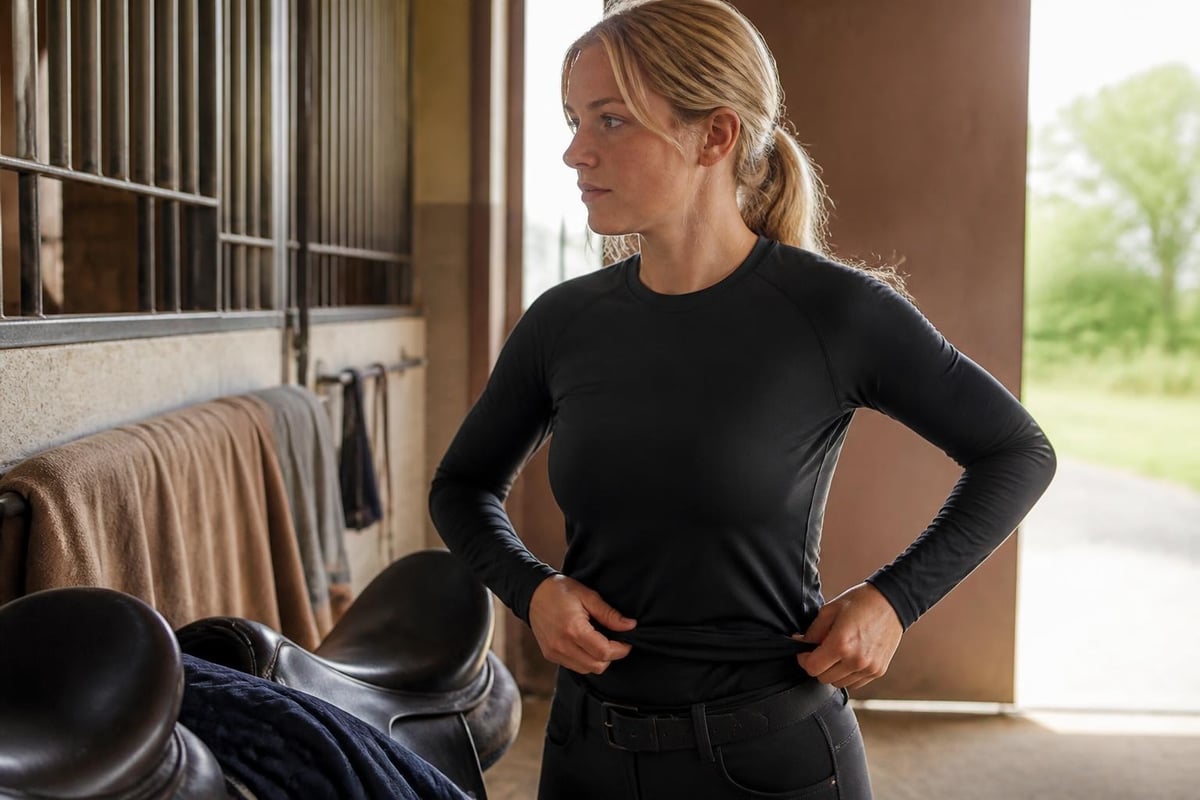
The fit matters more than you might think. Too tight and you'll restrict movement when reaching for stirrups or leaning forward; too loose and the fabric bunches uncomfortably under breeches or jeans. Look for flatlock seams that sit flush against skin rather than rubbing during long rides.
Core Pieces That Actually Work
Your breeches form the cornerstone of any casual equestrian outfit. Modern designs have evolved well beyond the traditional beige jodhpur. Technical breeches now feature four-way stretch, reinforced seats, and strategic grip panels that keep you secure without excess bulk.
For casual riding and yard work, consider breeches in neutral tones that hide dirt between washes. Navy, charcoal, and deep olive all work harder than lighter colours whilst maintaining a polished appearance. The British Horse Society provides practical guidance on suitable clothing for hacking that emphasises both safety and comfort for everyday rides.
Pair your breeches with well-fitted riding boots or paddock boots depending on your discipline and preference. Tall boots create a traditional silhouette that transitions well to semi-formal settings, whilst paddock boots with half chaps offer versatility and easier on-off access during busy yard days.
Layering for Variable Conditions
British weather demands adaptable clothing. Your casual equestrian outfit needs to handle morning frost, midday sun, and evening drizzle, often within the same ride.
Start with a quality polo shirt or technical tee from Gallant Equestrian's essentials collection. These pieces bridge the gap between pure performance wear and everyday style. Look for fabrics with UPF protection for summer riding and enough weight to hold their shape through repeated washing.
Quarter-zip tops add warmth without bulk. The partial zip gives you quick temperature control when you're working hard in the saddle or doing physical yard tasks. Choose styles with longer backs that stay tucked in and sleeves that don't ride up when your arms are extended.
| Layer Type | Primary Function | Key Features | When to Wear |
|---|---|---|---|
| Base Layer | Moisture management | Wicking fabric, flatlock seams | Daily, all seasons |
| Mid Layer | Insulation | Breathable, mobile shoulders | Cool mornings, autumn/winter |
| Outer Layer | Weather protection | Water-resistant, windproof | Wet conditions, winter riding |
Weather-Ready Outer Layers
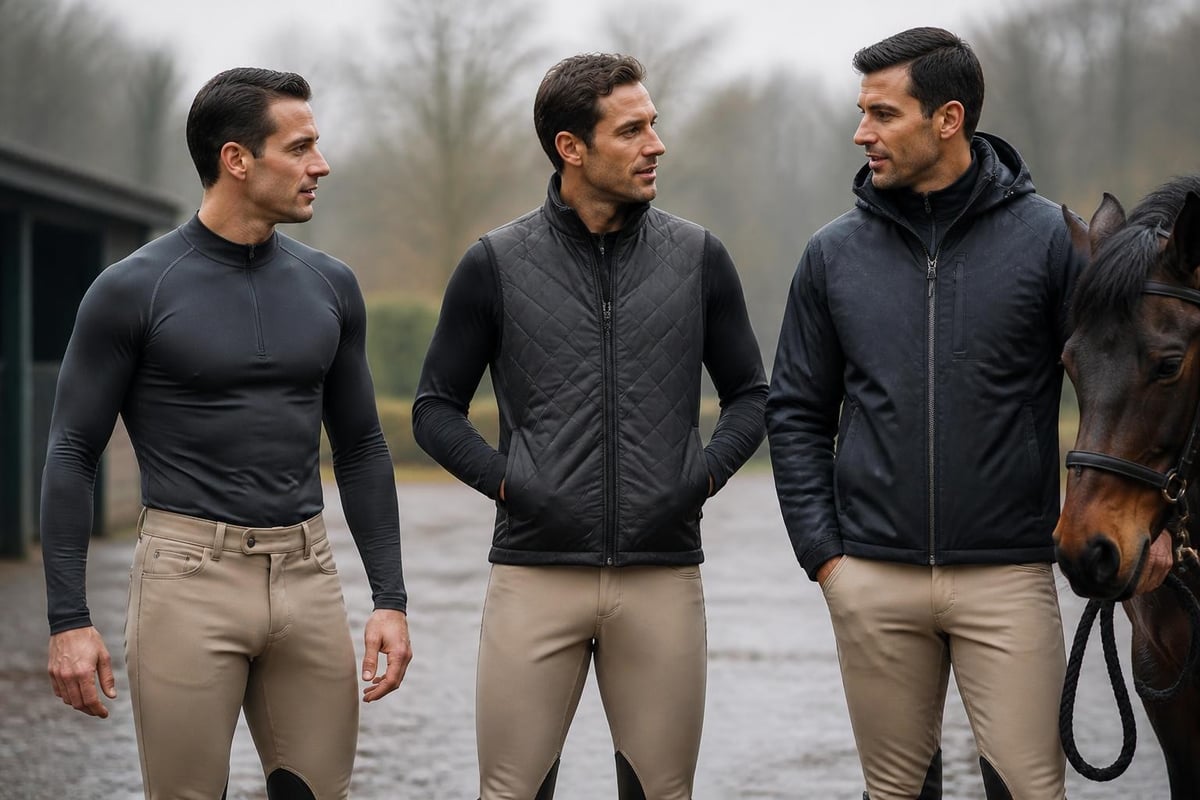
Your outer layer needs to protect against wind and rain whilst allowing enough ventilation to prevent overheating during active riding. A proper waterproof riding jacket should have a longer back hem to keep you covered in the saddle, articulated sleeves for forward arm position, and closures that you can operate whilst wearing gloves.
Softshell jackets offer excellent everyday versatility. They're more breathable than fully waterproof shells, making them ideal for dry but cool conditions. The slight stretch in quality softshells moves with you rather than restricting shoulder rotation when you're grooming or tacking up.
For proper wet weather protection, look for two-layer or three-layer waterproof fabrics with taped seams. Countryfile offers practical seasonal advice that helps riders prepare for British weather patterns throughout the year.
Getting the Details Right
Small choices make significant differences in how well your casual equestrian outfit performs. Buttons versus zips, pocket placement, hem length-these details separate clothing that merely looks the part from kit that genuinely works.
Practical Design Elements
Pockets need to be positioned where they won't interfere with saddle contact or rein handling. Chest pockets work better than hip pockets when you're mounted. Zip closures keep items secure during active riding, whilst magnetic snaps offer quick access for frequently used items like phones or yard keys.
Cuffs should adjust to accommodate different glove thicknesses and prevent cold air sneaking up your sleeves. Thumbholes in base layers keep sleeves in place when you're layering up. These small touches prove their worth during early winter mornings.
Hem lengths matter more than many riders realise. Shirts and jackets should extend past your belt line when seated to prevent exposure and cold spots. Test this whilst sitting in riding position before purchasing, as some cuts that look fine standing gap awkwardly in the saddle.
Transitional Style Choices
The best casual equestrian outfit works beyond the yard without looking out of place. Neutral colour palettes give you more mixing options and broader wearability. A navy quarter-zip worn over a crisp white tee transitions easily from morning schooling to afternoon errands.
Quality fabrics hold their appearance longer and resist the wear that comes with regular riding. Reinforced areas at high-stress points-elbows, seat, knees-extend garment life significantly. Performance fabrics also tend to resist odours better than basic cotton, letting you wear pieces multiple times between washes without concern.
Horse & Hound provides useful context on dress codes across different equestrian settings, helping you understand where casual wear is appropriate and when more formal attire is expected.
Seasonal Adaptations Worth Making
Your casual equestrian outfit needs to flex with the calendar. Summer riding in New Zealand sunshine requires different considerations than winter hacking through December rain.
Summer Strategies
Hot weather demands lightweight, breathable fabrics with moisture-wicking properties. Light colours reflect heat better than dark shades, though they show dirt more readily. Compromise with medium tones-soft greys, muted blues, sage greens-that offer practical dirt resistance whilst keeping you cooler than black or navy.
Long sleeves in technical fabrics actually work better than short sleeves for sun protection and bug defence. Modern performance fabrics weigh practically nothing whilst providing UPF 50+ protection. Roll sleeves to the elbow when needed rather than defaulting to short sleeves.
Ventilation becomes crucial. Look for mesh panels in strategic locations-under arms, across the back-that increase airflow without compromising the garment's structure. Riding during cooler morning or evening hours helps, but when midday rides are unavoidable, proper ventilation makes all the difference.
Winter Considerations
Layering becomes essential during cold months. Three thinner layers regulate temperature better than one thick jacket, giving you flexibility as your activity level changes throughout the day.
Merino wool base layers excel in winter. They're warm without bulk, naturally regulate temperature, and resist odours even during multi-day wear. Pair them with insulating mid-layers-fleece, lightweight down, or synthetic insulation-that trap warmth whilst allowing moisture to escape.
Your outer shell needs to block wind and shed precipitation. Winter riding often means spending extended periods at slower paces where wind chill becomes significant. A proper windproof jacket makes comfortable riding possible in conditions that would otherwise drive you indoors.
| Season | Priority Features | Fabric Suggestions | Typical Layers |
|---|---|---|---|
| Summer | Breathability, sun protection | Lightweight technical fabrics, UPF-rated materials | Base + light top |
| Autumn | Versatility, layering | Mid-weight stretch fabrics, water-resistant shells | Base + mid + light shell |
| Winter | Warmth, wind protection | Merino wool, fleece, waterproof membranes | Base + mid + insulated shell |
| Spring | Adaptability, quick-dry | Moisture-wicking synthetics, packable layers | Base + adaptable mid-layer |
Safety Considerations That Matter
Your casual equestrian outfit must prioritise safety without sacrificing style or comfort. Certain elements are non-negotiable regardless of how informal your riding session might be.
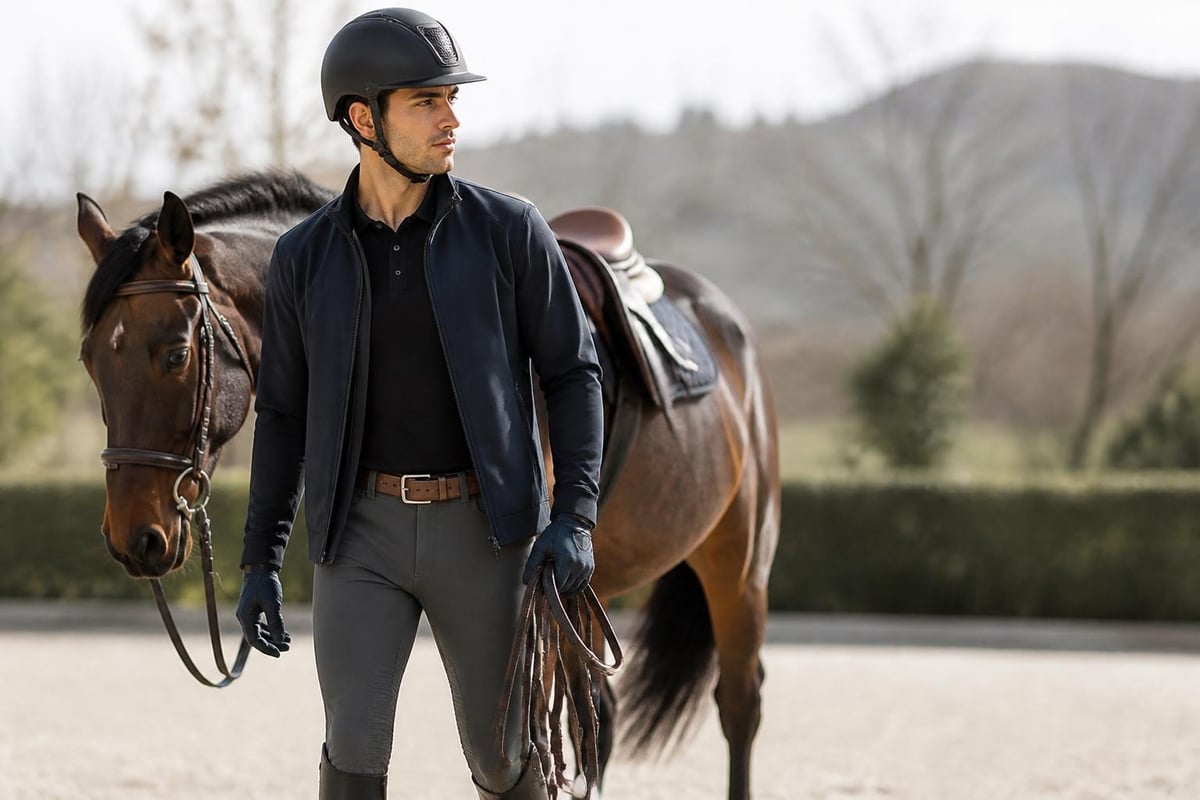
Helmets top this list. New Zealand Equestrian maintains comprehensive helmet standards guidance that explains approved certifications and proper fit requirements. Modern helmets have evolved significantly in both safety technology and aesthetic design, making it easier to find protection that looks good whilst meeting rigorous standards.
Footwear needs proper heel definition to prevent your foot sliding through the stirrup. Riding trainers have emerged as viable alternatives to traditional boots for casual riding, offering ankle support and appropriate sole design whilst looking more versatile off the horse. Avoid fashion boots with exaggerated heels or overly grippy soles that could trap your foot in an emergency.
US Equestrian provides valuable insight into helmet safety and concussion awareness that every rider should understand regardless of experience level.
High-visibility elements become important when hacking on roads or riding during low-light conditions. Reflective strips, bright colour panels, or clip-on visibility aids keep you seen without requiring full fluorescent coverage for every ride. Keep a hi-vis vest in your tack room for conditions that demand extra visibility.
Making Smart Investment Choices
Building a functional casual equestrian outfit requires strategic purchasing rather than buying everything at once. Quality pieces cost more initially but deliver better long-term value through extended wear life and superior performance.
Start with items you'll use most frequently. If you ride five days weekly, invest in two or three pairs of quality breeches rather than five mediocre pairs. The better fabric, construction, and fit will justify the price through comfort and durability. Equine Information Exchange offers helpful background on why specific riding apparel is recommended from both safety and performance perspectives.
Technical mid-layers deserve your budget attention. A quality quarter-zip or fleece jacket gets worn almost daily during cooler months, making cost-per-wear remarkably low even at premium prices. Look for pieces designed specifically for riding-they'll move better in the saddle and hold up to the unique demands of equestrian activity.
Outer shells require careful selection. A proper riding jacket should last several seasons with appropriate care. Focus on reputable brands with strong warranty support and proven track records in equestrian markets rather than adapting general outdoor gear that wasn't designed for mounted use.
Building a Capsule Wardrobe
A well-planned casual equestrian outfit rotation makes getting dressed effortless whilst ensuring you always look put-together. Build around versatile neutrals that mix freely, adding accent colours sparingly.
Three pairs of breeches in complementary neutrals-perhaps navy, charcoal, and tan-cover most casual riding and yard work needs. Pair these with four to five tops in coordinating colours. White, grey, and navy form reliable foundations, with perhaps one richer tone like burgundy or forest green for variety.
Two good jackets-one lightweight and packable, one heavier and fully waterproof-handle seasonal changes and unpredictable weather. These pieces from Gallant Equestrian's jacket collection should coordinate with your entire wardrobe rather than only matching specific outfits.
British Equestrian's guidance on preparing for your first lesson offers useful baseline kit recommendations that apply equally to experienced riders building casual wardrobes.
Care and Maintenance Essentials
Even the finest casual equestrian outfit deteriorates quickly without proper care. Technical fabrics require specific handling to maintain their performance properties through repeated wear and washing.
Always check care labels before washing. Most technical riding wear prefers cool water and gentle cycles. High heat damages stretch fibres and can compromise waterproof membranes. Air drying preserves fabric integrity better than tumble drying, though low-heat settings work for items that specify dryer-safe care.
Waterproof garments need periodic retreatment to maintain weather protection. Clean the jacket thoroughly, then apply technical wash-in or spray-on treatments designed for waterproof breathable fabrics. Heat activation-either low tumble dry or careful ironing-helps restore water-repellent performance.
Store riding clothing properly between uses. Hang jackets and shirts rather than folding them to prevent creasing and allow any moisture to dissipate. Keep breeches folded or hung by the waistband to maintain their shape. Proper storage extends garment life and keeps your kit ready to wear.
When to Replace Key Items
Breeches show wear primarily in the seat and inner leg areas. Once fabric becomes noticeably thin or grip panels lose their texture, replacement becomes necessary for both comfort and safety. Most quality breeches deliver one to two years of regular use before requiring replacement.
Base layers lose effectiveness as fabrics stretch out or develop persistent odours that washing can't eliminate. When you notice reduced moisture-wicking performance or the fabric no longer springs back after washing, it's time for fresh pieces.
Jackets typically last longer but eventually succumb to wear. Failed zips, delaminating waterproof membranes, or significant fabric damage signal replacement time. Regular reproofing extends shell life, but all waterproof fabrics eventually lose their weather resistance.
Building a proper casual equestrian outfit comes down to choosing pieces that perform reliably whilst looking refined enough to wear beyond the yard. Focus on quality fabrics, practical design, and versatile styles that transition smoothly between riding and regular life. Gallant Equestrian creates performance-driven menswear that bridges this gap naturally, offering breeches, jackets, and essential layers designed for riders who value both function and style. Look the Part. Enjoy the Ride.

