

Equestrian Shirts for Men: Performance Meets Style
Jul 31, 2026
The right shirt changes everything. Whether you're schooling in the arena, competing at a show, or transitioning to a post-ride coffee, equestrian shirts built for men need to deliver on multiple fronts. They must handle the physical demands of riding while maintaining the refined aesthetic that suits both stables and everyday settings. Gone are the days when men had to compromise on fit or settle for designs that didn't quite work. Modern equestrian clothing has evolved, and the shirts available now reflect a proper understanding of what male riders actually need.
What Makes Equestrian Shirts Different
Performance in the saddle demands specific features that standard casual shirts simply can't provide. The constant motion, varied weather conditions, and need for unrestricted movement create unique requirements. Understanding equestrian clothing fabrics reveals why purpose-built garments outperform everyday alternatives.
Traditional cotton shirts absorb moisture and retain it, leaving you damp and uncomfortable during intense sessions. Technical fabrics engineered for riding wick sweat away from your skin, dry quickly, and maintain their shape even after hours in the saddle. Stretch panels in strategic locations allow full range of motion without the shirt pulling or riding up as you move through different positions.
The Fabric Foundation
Modern equestrian shirts typically feature polyester-spandex blends, technical mesh panels, or specialized performance fabrics. These materials offer several advantages over natural fibres alone. They resist wrinkles, maintain colour vibrancy through repeated washing, and provide the four-way stretch that serious riders require.
Moisture management sits at the core of performance fabric design. When you're working with a horse, your body temperature fluctuates. Quality shirts transport perspiration to the outer surface where it evaporates efficiently, keeping you dry and preventing the chafing that accompanies wet fabric against skin. This isn't just about comfort but maintaining focus and performance throughout your ride.
Fit Considerations for Male Riders
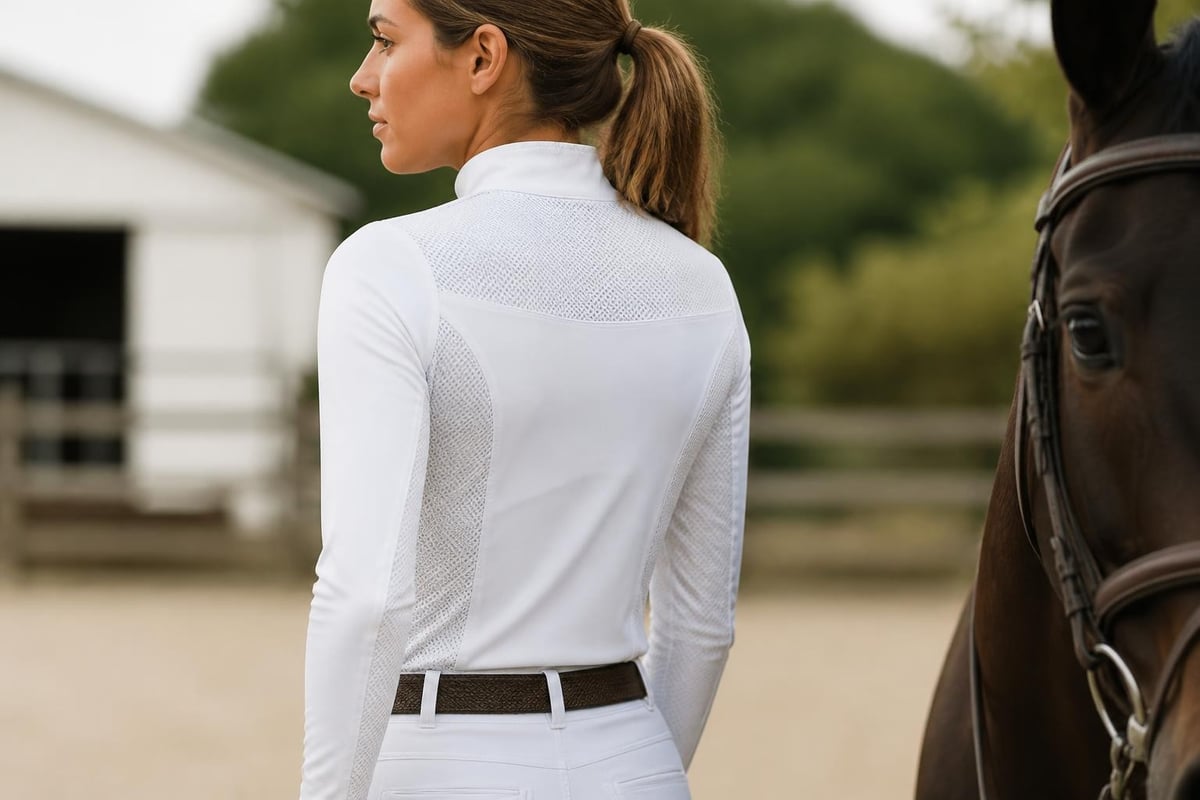
Men's physiques require different cut and proportion than standard unisex or women's designs. Shoulders need adequate room without excess fabric bunching under jacket sleeves. The torso length must accommodate longer upper bodies without pulling out of breeches when reaching forward. Sleeve length becomes critical when your arms extend for contact with the reins.
When choosing a performance equestrian shirt, pay attention to sizing charts that account for chest, waist, and shoulder measurements separately. A properly fitted shirt should allow you to raise your arms fully overhead without lifting the hem excessively. At the same time, it shouldn't billow at the waist when you're in riding position.
Athletic fit styles work well for riders with developed core and shoulder muscles, providing a tailored appearance without restriction. Regular fit options suit those who prefer slightly more room or plan to layer underneath during cooler months. The key lies in finding the balance between a refined silhouette and practical movement.
Competition Standards and Show Requirements
Competitive disciplines maintain specific dress codes that influence shirt selection. Equestrian competition apparel guidelines outline what's acceptable in various arenas, though rules generally allow more flexibility for men than many riders realise.
For dressage, traditional white or light-coloured shirts with conservative collars remain standard below certain levels. Show jumping and eventing offer more latitude regarding colour and style, though subdued tones typically project appropriate professionalism. Understanding these expectations helps you build a wardrobe that serves both training and competition without requiring separate pieces for each setting.
Short Sleeve Versus Long Sleeve Options
The sleeve length debate extends beyond personal preference to practical considerations around sun protection, temperature regulation, and aesthetic expectations. Evaluating long versus short sleeve options requires honest assessment of your typical riding conditions and how your body responds to varying temperatures.
Long sleeves provide comprehensive UV protection during summer months, particularly valuable for riders spending hours outdoors daily. Modern technical fabrics designed for sun shirts feel cooler than bare skin by reflecting heat and wicking moisture efficiently. Many riders find this counterintuitive until they experience the difference firsthand.
Short sleeve designs excel in extremely hot, humid conditions or for riders whose bodies run particularly warm. They also transition more naturally to casual settings after riding, eliminating the need to change shirts between stable and social environments. Some riders maintain both options, selecting based on daily weather and planned activities.
Collar Styles and Neckline Choices
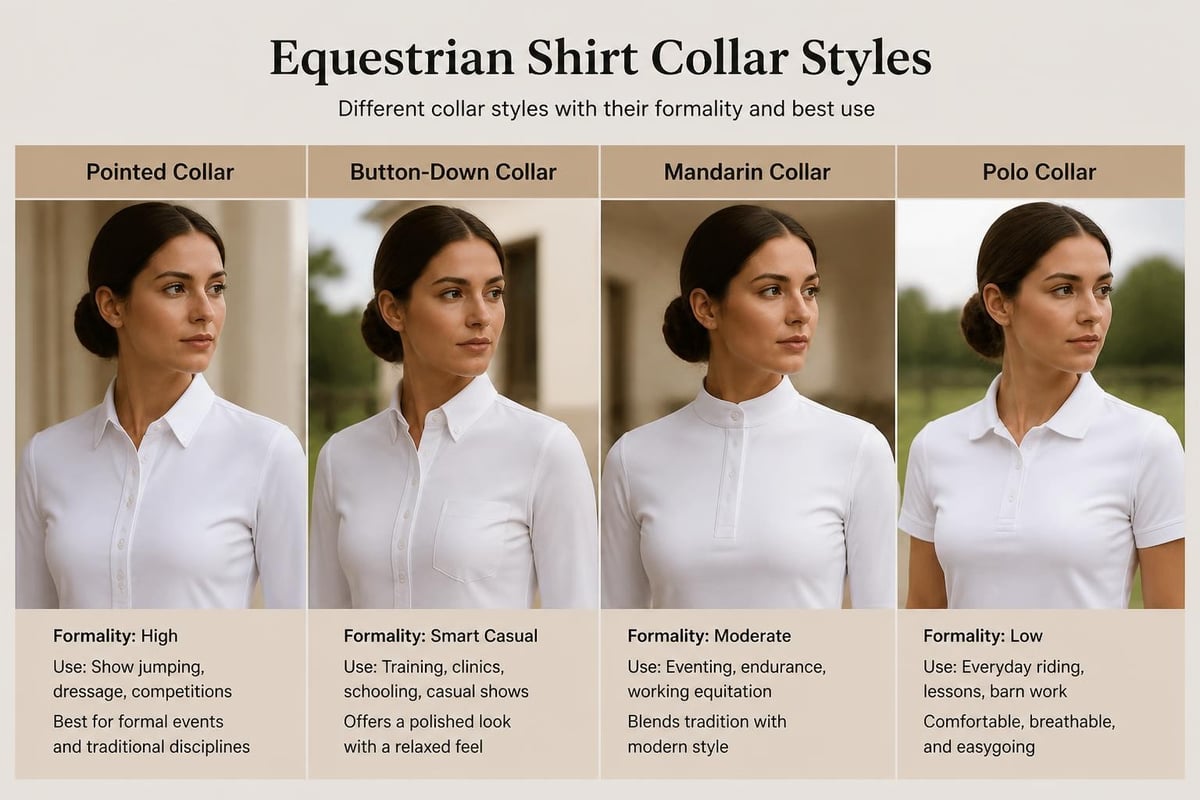
Collar design affects both appearance and functionality. Traditional pointed collars maintain a classic, formal aesthetic suitable for shows and professional settings. They pair naturally with stock ties or standard ties when competition rules require them. Button-down collars offer slightly more casual versatility while preventing collar points from flapping during energetic riding.
Mandarin collars provide a modern alternative that looks sharp without requiring tie accessories. They work particularly well for training situations where you want polished appearance without full show formality. Mock necks suit cooler weather and provide sun protection for the neck area.
Polo-style collars strike an excellent balance for many male riders, offering refinement without stiffness. They layer well under jackets, look appropriate in virtually any equestrian setting, and transition seamlessly to everyday wear. The Gallant Equestrian collection recognises this versatility in their design approach.
Performance Features That Matter
Beyond basic construction, specific features elevate equestrian shirts from adequate to excellent. Flatlock seams lie completely flat against skin, eliminating the raised ridges that cause irritation during extended riding sessions. This detail matters more than many riders initially recognise, particularly during intensive training periods.
Antimicrobial treatments inhibit bacterial growth that causes odour, keeping shirts fresher between washes. This proves valuable during multi-day competitions or when riding twice daily. Quality treatments withstand repeated washing without degrading, maintaining effectiveness throughout the garment's lifespan.
Ventilation panels positioned along the back, under arms, or across the chest enhance airflow where your body generates most heat. Mesh inserts or laser-cut perforations provide this cooling without compromising the shirt's overall structure or aesthetic. These features distinguish purpose-built riding shirts from standard athletic wear.
Construction Quality Indicators
| Feature | Purpose | What to Look For |
|---|---|---|
| Seam Type | Durability and Comfort | Flatlock or overlocked construction |
| Hem Finish | Prevents Pulling Out | Longer back hem, reinforced stitching |
| Fabric Weight | Season-Appropriate Performance | 150-200gsm for summer, 200-250gsm for year-round |
| Stretch Recovery | Maintains Shape | Fabric returns to original form after stretching |
Examining these construction elements before purchasing helps predict how the shirt will perform over time. Quality equestrian shirts maintain their fit, colour, and technical properties through hundreds of wears and washes. This longevity justifies higher initial investment compared to cheaper alternatives that deteriorate quickly.
Colour and Pattern Selection
While personal taste drives colour choices, practical considerations influence what works best for various riding situations. Lighter shades reflect heat during summer but show dirt and sweat more readily. Darker colours hide stains better yet absorb more solar radiation. Navy, grey, and subtle earth tones offer practical middle ground.
Patterns should enhance rather than distract. Thin stripes, micro-checks, or tonal designs add visual interest without overwhelming. Save bold graphics and large logos for casual wear rather than training or showing. The goal is refined style that lets your riding speak louder than your clothing.
Coordinating your shirt colour with other kit elements creates cohesive appearance. Consider how the shirt looks with your typical breeches, jacket, and boots. Building a versatile wardrobe around a core palette ensures everything works together regardless of specific combination.
Care and Maintenance
Technical fabrics require slightly different care than traditional cotton. Most equestrian shirts benefit from cold water washing with performance-oriented detergents that preserve moisture-wicking properties. Fabric softeners coat fibres and reduce technical fabric effectiveness, so avoid them entirely.
Air drying extends garment life significantly compared to machine drying, which degrades elastic fibres over time. If you must use a dryer, select low heat settings. Many riders hang shirts immediately after riding to air out before washing, reducing overall wash frequency and extending fabric longevity.
Treating stains promptly prevents permanent discolouration. Horse-related marks from leather, saddle soap, or medication often require specific stain removers. Keep a small kit at the stable for immediate treatment before stains set into fabric fibres.

Building a Practical Shirt Wardrobe
Most riders benefit from owning multiple equestrian shirts rather than relying on one or two favourites. Having adequate rotation prevents excessive wear on individual pieces and ensures you always have clean options available. The specific number depends on riding frequency and laundry schedule, but four to six quality shirts typically suffice for regular riders.
Consider seasonal variations when planning your wardrobe. Summer requires different fabrics and coverage than winter riding. Layering potential becomes important during transitional seasons when morning temperatures differ dramatically from afternoon conditions. Long-sleeved shirts in lightweight fabrics work year-round when combined with proper base layers or worn alone as weather permits.
Competition riders need show-appropriate options that meet dress code requirements while delivering the same performance features as training shirts. Fortunately, understanding equestrian attire standards helps identify pieces that serve dual purposes, reducing the total number of specialised garments required.
Investment Versus Budget Options
Price ranges for equestrian shirts vary considerably. Understanding what drives cost differences helps make informed purchasing decisions. Premium options typically feature superior fabric technology, refined fit developed through extensive rider testing, and construction quality that ensures longevity. Mid-range choices often provide excellent performance with slightly less refined details or fewer advanced features.
Budget alternatives may suffice for occasional riders or those just starting who haven't yet determined personal preferences. However, serious riders generally find that quality pieces offer better value over time through enhanced durability and maintained performance characteristics.
Customisation and Personal Details
Some riders appreciate personalised touches like monogramming or custom embroidery. These additions work best when subtle and placed discreetly, maintaining professional appearance suitable for various settings. Consider placement carefully to avoid areas subject to heavy wear or stretching.
Custom-fit options exist for riders whose proportions don't align with standard sizing. Selecting quality manufacturers ensures custom pieces deliver proper technical performance alongside tailored fit. This approach suits riders who've struggled finding off-rack options that accommodate specific physical requirements.
Transitional Versatility
One hallmark of well-designed equestrian shirts lies in their ability to function beyond the stable. Garments that look appropriate for post-ride commitments eliminate the need to pack separate clothing or rush home to change. This versatility stems from refined styling that balances technical performance with classic aesthetic.
Details like hidden zippered pockets, discrete branding, and thoughtful colour selection enable this dual functionality. You shouldn't look obviously dressed for sport when wearing these shirts in everyday contexts, yet they must perform flawlessly during demanding riding sessions. Achieving this balance requires careful design consideration.
The evolution of equestrian fashion reflects changing expectations around this versatility. Modern riders refuse to sacrifice style for function or vice versa, driving brands to develop solutions that deliver both authentically.
Materials and Technology Advances
Fabric engineering continues advancing, introducing new materials that enhance performance characteristics. Silver-threaded fabrics offer natural antimicrobial properties without chemical treatments. Phase-change materials help regulate body temperature by absorbing excess heat and releasing it as you cool down. Recycled polyester options provide environmental benefits without compromising technical performance.
Understanding these innovations helps riders make informed choices aligned with personal priorities. Optimal performance materials balance multiple factors including moisture management, durability, stretch, and hand feel. No single fabric excels in every category, so identifying your priorities guides selection.
Safety Considerations
While less critical than items like jackets or breeches, shirts do contribute to overall safety. Protective clothing standards outline requirements for equestrian activities, though shirts typically fall outside the strictest protective categories. Still, well-fitted garments that don't snag, pull, or restrict movement indirectly support safer riding by eliminating distractions and enabling full control.
Reflective elements incorporated into shirt design enhance visibility during early morning or evening riding, particularly relevant for riders hacking out on roads or in low-light conditions. These features work best when integrated subtly rather than dominating the overall aesthetic.
The Complete Kit Perspective
Shirts form one element within your complete riding wardrobe. They work in conjunction with properly fitted breeches, appropriate boots, and weatherproof outerwear. Considering how these pieces interact ensures your overall kit functions cohesively rather than as disconnected individual items.
Layering strategies particularly benefit from thoughtful shirt selection. A performance shirt serves as excellent base layer under jackets during cold weather, or as standalone top piece during warmer conditions. This flexibility reduces the total number of garments required while maximising versatility across varying weather and riding contexts.
Finding Your Preferences
Personal preferences develop through experience. Trying different styles, fabrics, and fits helps identify what works best for your specific riding discipline, climate, and physical characteristics. What suits a dressage rider in a temperate climate may differ significantly from ideal choices for an event rider in hot, humid conditions.
Reading reviews from other male riders provides useful insight, though ultimately your own trial remains most valuable. Men's equestrian shirt buying guides offer starting points for exploration, but individual body types and riding styles create unique requirements that generalised recommendations can't fully address.
Pay attention to how shirts perform over time, not just initial impressions. Some fabrics feel wonderful when new but degrade quickly, while others improve with breaking in. Similarly, certain fits that seem acceptable in the fitting room may prove problematic during actual riding sessions.
Choosing equestrian shirts that truly perform requires understanding the interplay between fabric technology, construction quality, fit, and intended use. The right pieces elevate your riding experience through enhanced comfort, unrestricted movement, and appropriate style for any setting. Gallant Equestrian creates performance-driven shirts specifically designed for men who ride, combining New Zealand design sensibility with technical fabrics that transition seamlessly from arena to everyday life. Look the Part. Enjoy the Ride.

