

Horseback Riding Gear for Men: Essentials Checklist
Nov 08, 2026
The horseback riding gear every man needs comes down to a certified helmet, riding boots with a small heel, breeches or jodhpurs, a fitted top and jacket, and gloves, with a body protector added for jumping and cross-country. Everything else is a refinement. Get those five right and you can ride safely and comfortably from your first lesson.
This checklist covers what each piece does, what to look for, and five named products with specs and approximate prices as of November 2026. Fit matters as much as the label, so each section says what to check before you buy.
1. Troxel Spirit Riding Helmet
The Troxel Spirit is an ASTM/SEI certified riding helmet with DialFit adjustment. It suits everyday riding and lessons, where a secure, adjustable fit matters more than a competition finish.
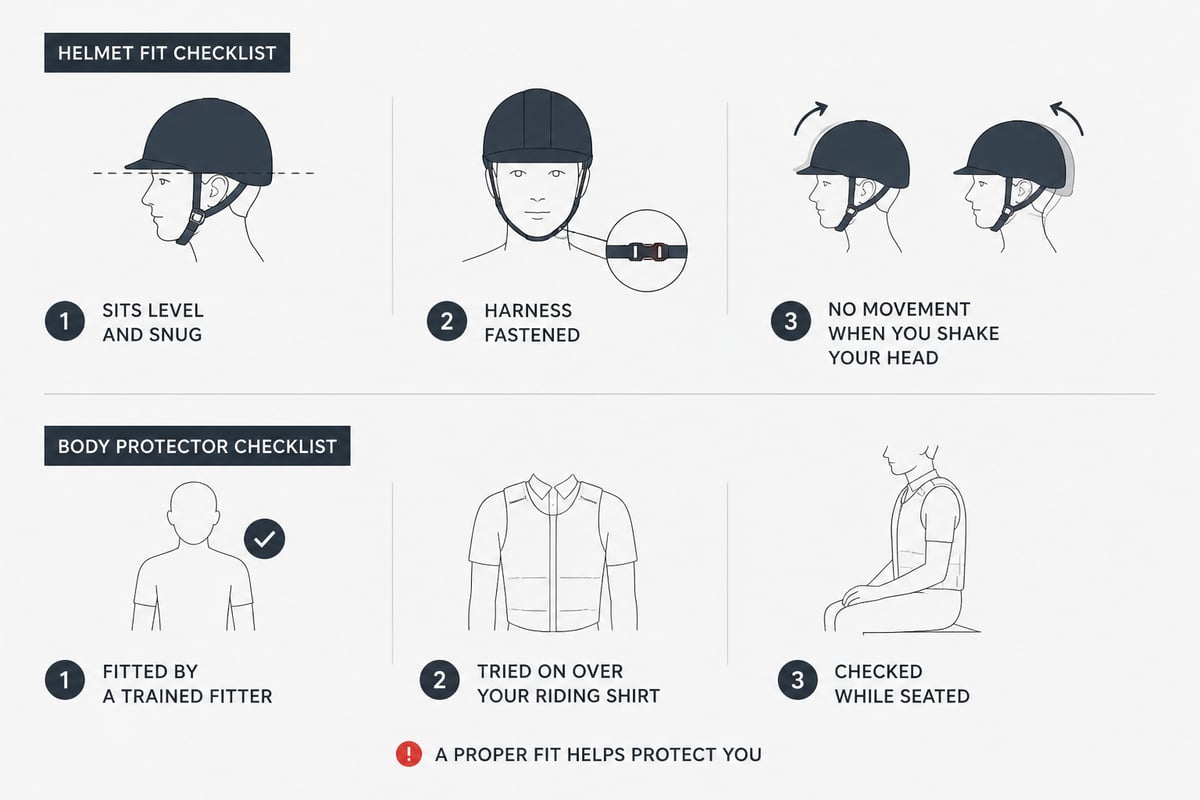
A helmet is the one item you should never compromise on. The British Horse Society advises wearing a properly fitted, fastened riding hat every time you ride, and is clear that no helmet can guarantee protection in every circumstance. It also recommends having a new hat fitted at a reputable tack shop by someone with appropriate BETA training, which is worth doing rather than ordering a size from a chart.
Pricing was not shown in the research available, so check the current price with your retailer.
Verdict: A sensible, adjustable certified helmet for regular riding and schooling.
2. Tipperary Contender Body Protector
The Tipperary Contender is a body protector certified to ASTM F1937 / SEI, with lace sides for adjustment and a zip front for easy fastening. It suits jumping and cross-country riders who want added protection beyond a helmet.
The BHS says body protectors should fit correctly and recommends a fitting at a reputable outlet, ideally with someone who holds BETA training. A protector that rides up or gapes at the sides is doing half its job. Try it on over the shirt you actually ride in, and sit down in it, because standing in a shop tells you very little.
If you want to understand why the helmet and body protector pair matters, the British Horseracing Authority explains why riders wear a helmet and body protector in plain terms.
Verdict: A well-specified protector for faster, riskier disciplines, provided it is fitted properly.
3. SSG Digital Riding Gloves
The SSG Digital riding gloves have a textured digital-grip palm designed to hold the reins when wet, and they are machine washable. They suit riders who want reliable rein contact in changeable weather.
Gloves are easy to dismiss until reins get slippery in the rain or your hands blister on a long hack. A textured palm gives you consistent contact without gripping harder than you should. Machine washability is a practical bonus, since gloves pick up sweat, dust and the occasional wet nose.
Choose a snug fit with no loose fabric at the fingertips, because bunching under the rein is the quickest route to a sore hand. Pricing was not shown in the research available.
Verdict: A practical, washable glove that keeps your contact steady in mixed conditions.
4. TuffRider Starter Pull-On Breeches
The TuffRider Starter pull-on breeches are a cotton-spandex pair with knee patches in a simple pull-on style. They suit beginners and lesson riders who want a budget-friendly start.
The BHS notes that riding jodhpurs are designed for riding, and that beginners can manage in strong trousers without an inside-leg seam to avoid pinching in the saddle. That seam is the whole case for proper breeches. Cotton-spandex gives stretch through the hip and knee, and knee patches add grip against the saddle flap.
If you want to compare cuts and fabrics before choosing, our guide to men's horseback riding pants walks through the options. Pricing was not shown in the research available.
Verdict: A straightforward starter pair for lessons, with room to upgrade later.
5. Gallant Equestrian Riding Breeches, Jackets and Shirts
Gallant Equestrian makes men's riding breeches, jackets and shirts designed in New Zealand, with tailored silhouettes that allow full movement in and out of the saddle. They suit adult men who want clothing that fits close without restricting, and that works as well off the horse as on it.
A few details matter for a working wardrobe:
Gallant Equestrian pieces are designed to work with the rest of the range, so you can mix and match easily. The fit is designed specifically for men, close but never restrictive.
The BHS recommends a long-sleeved shirt and a fastened jacket that will not flap, which a tailored cut can deliver. For ideas on putting an outfit together, see our guide to horseback riding clothes for men and the notes on men's horseback riding apparel. You can browse the range at Gallant Equestrian.
Verdict: Considered, hard-wearing men's riding clothing that looks right at the yard and beyond.
Horseback riding gear comparison
The table below sets the four named items side by side on the attributes that decide a purchase.
| Item | Category | Key feature | Best suited to |
|---|---|---|---|
| Troxel Spirit Riding Helmet | Head protection | ASTM/SEI certified, DialFit adjustment | Everyday riding and lessons |
| Tipperary Contender Body Protector | Torso protection | ASTM F1937 / SEI, lace sides, zip front | Jumping and cross-country |
| SSG Digital Riding Gloves | Hands | Textured palm, wet grip, machine washable | Varied weather |
| TuffRider Starter Pull-On Breeches | Legwear | Cotton-spandex, knee patches, pull-on | Beginners and lessons on a budget |
What is horse riding gear called?
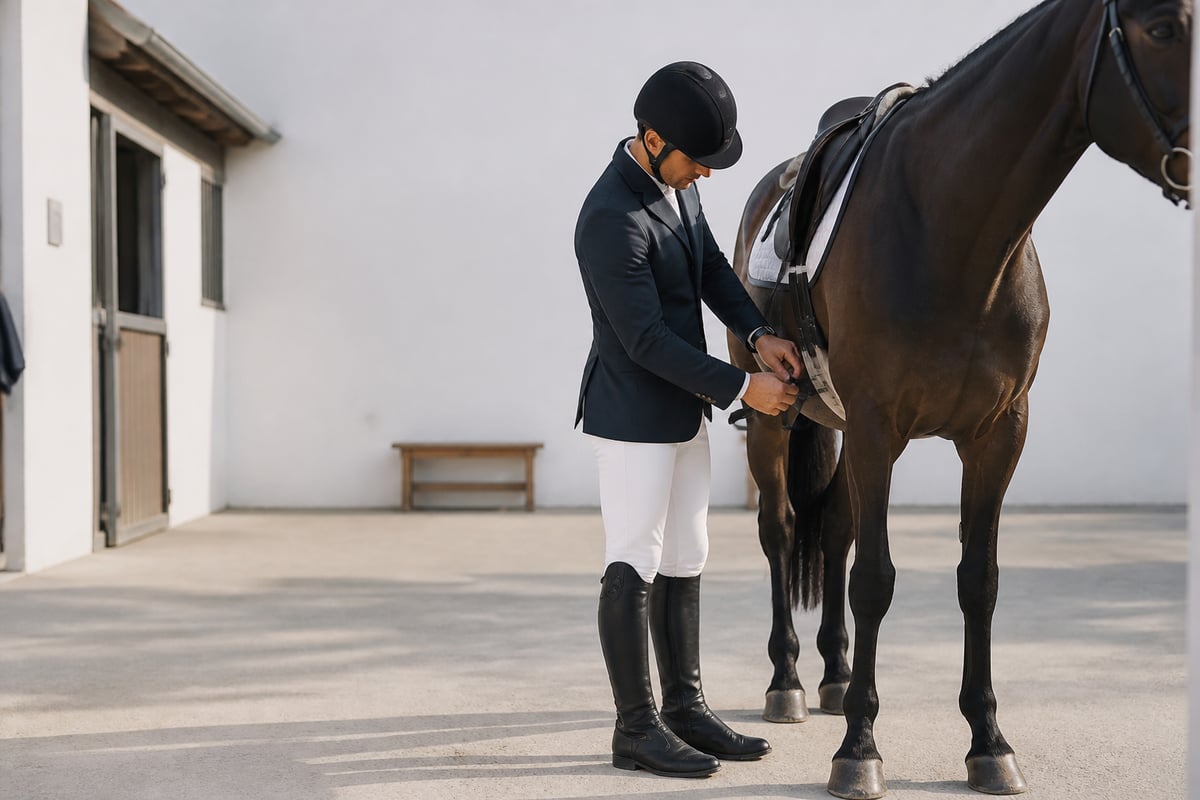
Horse riding gear is usually called riding apparel or equestrian clothing, while the equipment used on the horse is called tack. The terms overlap in everyday speech, but they point to different things. Your clothing and protection is apparel, and the saddle, bridle and girth are tack.
Within apparel, the standard vocabulary is helmet or riding hat, breeches or jodhpurs, riding boots or paddock boots, half chaps or tall boots, gloves, and a body protector. Knowing the names helps when you ask for advice in a tack shop, and it makes it easier to compare like with like online.
Boots and half chaps: the often-forgotten foundation
Riding boots need a smooth sole and a defined heel, which helps stop your foot sliding through the stirrup. That heel is the safety feature, not a style choice. Trainers or work boots with a deep tread can catch, which is the situation you most want to avoid.
You have two sensible routes. Tall boots give a clean line and support in one piece. Short paddock boots paired with half chaps cost less, are easier to get on, and suit lessons and general yard work. Leather lasts longest if you condition it, and synthetics need less care.
Fit matters most around the calf. You should be able to flex your ankle freely, and the boot should not slip at the heel when you walk. Wear your riding socks when you try them on.
Shirts, layers and jackets for the saddle
The right top for riding is a fitted, breathable shirt that moves with your shoulders, with a jacket that closes without flapping. Loose clothing can spook a horse and catch on tack, which is why the BHS recommends a long-sleeved shirt and a fastened jacket that will not flap, or a sweatshirt.
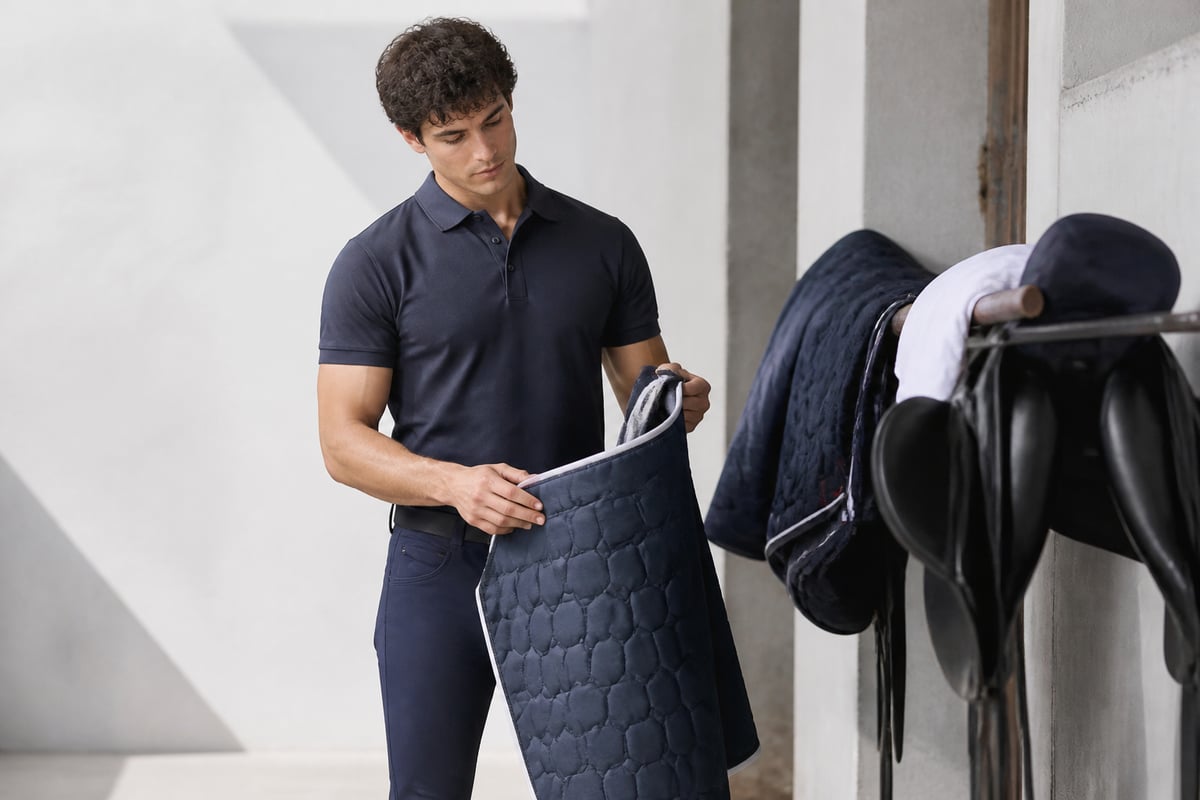
Start with a moisture-managing base layer or polo, then add a softshell or tailored jacket as the weather changes. Look for stretch across the back and underarm so your arms reach forward without pulling the hem up. Our notes on shirts for horseback riding and the horseback riding jacket guide go further on fabric and cut.
What are the must-haves for horseback riding?
The must-haves for horseback riding are a certified helmet, boots with a small heel, and legwear without a bulky inside-leg seam. Add gloves and a fitted top, and you can ride safely in most conditions. A body protector becomes a must-have once you jump or ride cross-country.
Competitive standards give a useful benchmark for how seriously safety kit is taken. From 17 October 2024, British Horseracing Authority rules specified body protectors meeting BS EN 13158:2018 at least Level 2 and helmets meeting at least two international testing standards. You are not a jockey, but it shows that safety kit is a moving target worth checking against current standards.
How to build a horseback riding gear kit in the right order
Spend first on protection, then on fit, then on finish. Buy the helmet and have it fitted by someone with appropriate training before anything else. Add boots, then breeches that suit your build, then gloves, and finally the layers that make you comfortable and look the part.
Fit and care affect how long everything lasts. Wash breeches on a gentle cycle and air-dry them to protect the stretch. Wipe leather boots after muddy rides and condition them regularly. Check helmet straps and buckles for wear, and replace a helmet after any significant impact. If budget is tight, our piece on cheap horse riding gear shows where to save and where not to.
A small habit pays off too. Keep a dedicated bag with your gloves, a spare pair of socks and a lightweight layer, so you are never caught short at the yard. If you carry a foam roller for stretching tight hips after a long ride, a collapsible one such as those from Brazyn Life packs easily into a kit bag.
FAQ
What is the 20% rule in horseback riding?
The 20% rule is a commonly cited guideline suggesting a horse should carry no more than about 20% of its own body weight. It is a rule of thumb rather than a fixed limit, and fitness, build and the type of work all affect what a horse can comfortably carry. If you are unsure, ask your instructor or a qualified equine professional.
What gear do you need for horse riding as a beginner?
A beginner needs a correctly fitted, certified riding helmet, boots with a smooth sole and small heel, and strong trousers or breeches without a thick inside-leg seam. Gloves and a fitted jacket or sweatshirt help, and many riding schools lend a helmet or body protector for early lessons. Buy your own helmet as soon as you commit to regular riding.
Do I need a body protector for everyday riding?
Not necessarily for gentle hacking or flatwork, but it is strongly worth wearing for jumping, cross-country and riding young or unpredictable horses. Choose one that is certified and fitted by someone trained to do so. Wear it over the shirt you ride in so the fit is accurate.
Before your next ride, check that your helmet sits level and snug, the harness is fastened, and your boots have a proper heel. Once the safety basics are covered, choose breeches, a jacket and a shirt that fit close and move freely, and that carry from the yard to the pub without a change. Gallant Equestrian designs men's riding clothing in New Zealand to be built to last, so shop now for a range that mixes and matches with ease. Look the Part. Enjoy the Ride.

