

Mens Equine Clothing: Essential Riding Kit for 2026
Oct 31, 2026
When you're selecting mens equine clothing, you're choosing more than just something to wear in the saddle. You're investing in kit that supports your riding, withstands the demands of stable work, and looks sharp enough to wear beyond the yard. The right pieces perform under pressure, fit properly through every movement, and last season after season. That matters whether you're schooling in the arena, competing at affiliated level, or simply enjoying a weekend hack.
Modern mens equine clothing has evolved considerably over the past decade. Designers now understand that men need riding wear built specifically for their proportions and riding style, not adapted from women's patterns. The result is a growing selection of performance fabrics, functional cuts, and versatile designs that work as hard as you do.
Understanding the Core Components
Every rider needs a foundation wardrobe that covers daily riding, stable work, and occasional competition. The essentials remain consistent across disciplines, though the specific styles and finishes vary depending on whether you're riding dressage, showjumping, eventing, or purely for leisure.
Your primary riding layer consists of breeches or jodhpurs. These aren't ordinary trousers. Proper riding breeches feature stretch panels for freedom of movement, reinforced inner legs for grip and durability, and flatlock seams that won't chafe during extended sessions. Modern technical fabrics wick moisture away from your skin whilst maintaining enough structure to look polished.
Upper body layers need equal consideration. A well-fitted riding shirt allows full range of motion through your shoulders and arms without excess fabric bunching under a jacket. Technical polo shirts have become increasingly popular for everyday riding, offering breathable comfort and a smart appearance that transitions easily from stable to social settings.
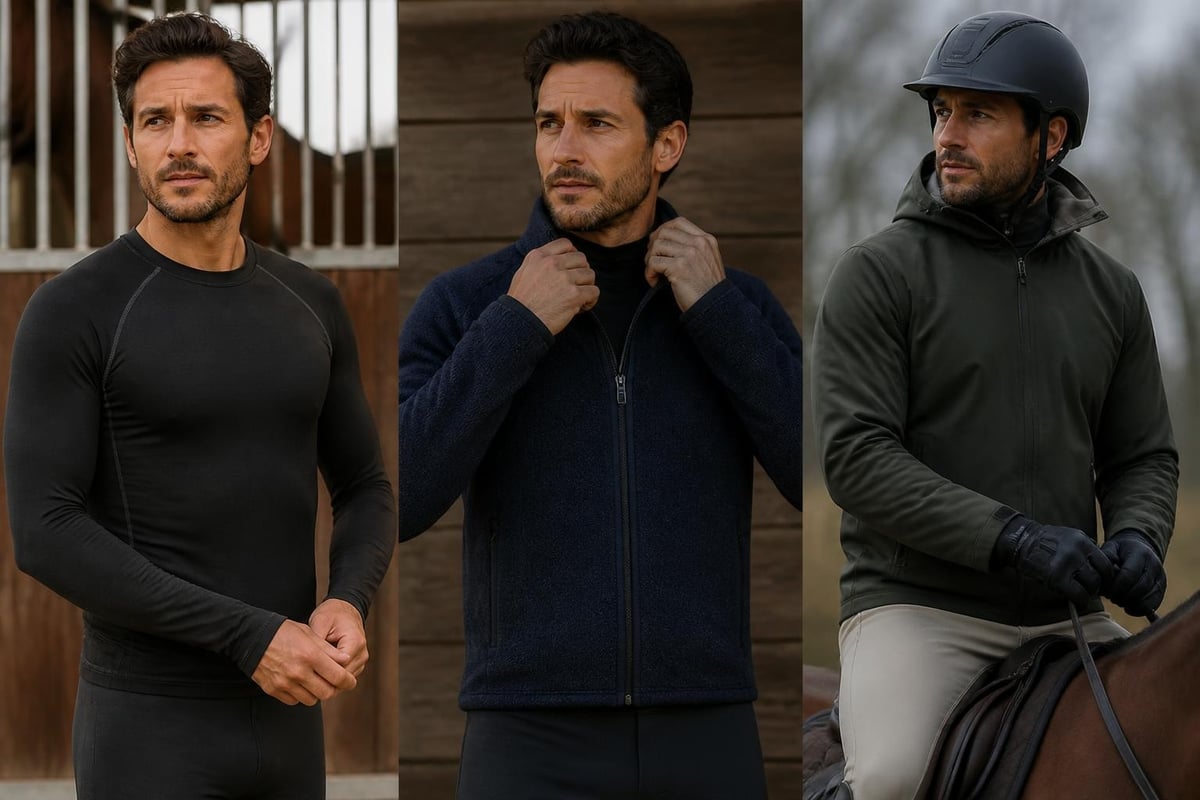
Outerwear completes your core kit. A proper riding jacket needs to be cut longer in the back to cover your seat when mounted, with articulated sleeves that move with you rather than restricting your position. Weather-resistant fabrics keep you dry during winter sessions, whilst breathable softshell materials prevent overheating when you're working hard.
Choosing Performance Fabrics
The difference between adequate and exceptional mens equine clothing often comes down to fabric technology. Contemporary riding wear incorporates advanced textiles originally developed for other performance sports, adapted specifically for equestrian demands.
Four-way stretch materials have revolutionized riding comfort. These fabrics move with you in every direction, maintaining their shape whilst allowing complete freedom through your hips, knees, and seat. Quality breeches use panels of varying stretch levels, placing maximum give exactly where your body needs it most.
Moisture management keeps you comfortable during intense sessions. Technical weaves pull sweat away from your skin and move it to the outer fabric layer where it evaporates quickly. This regulation matters in summer heat and winter cold alike, preventing that clammy feeling that comes from working hard in non-technical materials.
Durability determines whether your investment lasts one season or many. Look for reinforced zones at high-wear points: inner legs, seat, and knee patches. Abrasion-resistant fabrics maintain their appearance despite regular contact with leather tack, stable walls, and washing machines. For a wider look at the kit beyond clothing, see our guide to equestrian essentials for modern riders.
| Fabric Technology | Primary Benefit | Best Application |
|---|---|---|
| Four-way stretch | Freedom of movement | Breeches, base layers |
| Moisture-wicking polyester | Temperature regulation | Shirts, technical tops |
| Softshell composite | Weather resistance + breathability | Riding jackets |
| Reinforced Cordura panels | Extended durability | Breech inner legs, knee patches |
| Merino wool blend | Natural odor control | Base layers, winter wear |
Getting the Fit Right
Poorly fitted mens equine clothing compromises both comfort and effectiveness. Riding wear needs to fit closer than everyday clothing without feeling restrictive, accommodating your position in the saddle whilst looking sharp when you're on the ground.
Breeches should sit at your natural waist, not your hips. This positioning prevents gaping at the back when you're mounted and ensures the seat reinforcement sits exactly where you need it. The leg should be snug without cutting in, with enough length that the fabric doesn't ride up your calf when your knee is bent at riding angle.
Shirts and technical tops need room through the shoulders and chest for a full range of motion. Test this by raising your arms overhead and rotating through your torso. The fabric should move with you, not pull tight or shift out of position. Sleeve length matters too. Cuffs should reach your wrist bone when your arms are relaxed, sitting just right when you're holding the reins.
Jackets require particular attention to cut and proportion. The back panel should extend low enough to cover your seat completely when mounted. Sleeves need pre-bent shaping so they don't pull tight when your elbows are flexed at riding position. Competition jackets must meet specific requirements outlined in various rulebooks governing equestrian competition attire, so check your discipline's standards before purchasing.
Many riders find that trying on mens equine clothing whilst mimicking riding position reveals fit issues that aren't apparent when standing normally. Bend your knees, lean forward slightly, and extend your arms as if holding reins. The clothing should accommodate these positions comfortably.
Building Your Competition Wardrobe
Competition requirements vary significantly between disciplines, but certain principles apply across the board. Your competition kit needs to meet regulatory standards, present a polished appearance, and perform reliably under pressure.
For dressage, tradition dictates specific formality levels. Lower-level tests typically require a light-colored shirt, tie or stock, and dark breeches with a dark jacket. As you progress through the levels, tailcoats replace standard jackets, and white or cream breeches become appropriate. The emphasis rests on classical elegance and precise turnout.
Showjumping allows slightly more flexibility in color and style whilst maintaining a smart appearance. Navy or black jackets paired with light breeches create the traditional look, though some venues now accept subtle color variations. The key is choosing competition wear that looks professional without sacrificing the freedom of movement essential for jumping rounds.
Eventing combines elements from multiple disciplines across its three phases. Your dressage phase follows dressage standards, cross-country requires protective gear and practical clothing, and showjumping mirrors standard jumping attire. Many eventers maintain separate wardrobes for each phase rather than trying to make single pieces work across all three.
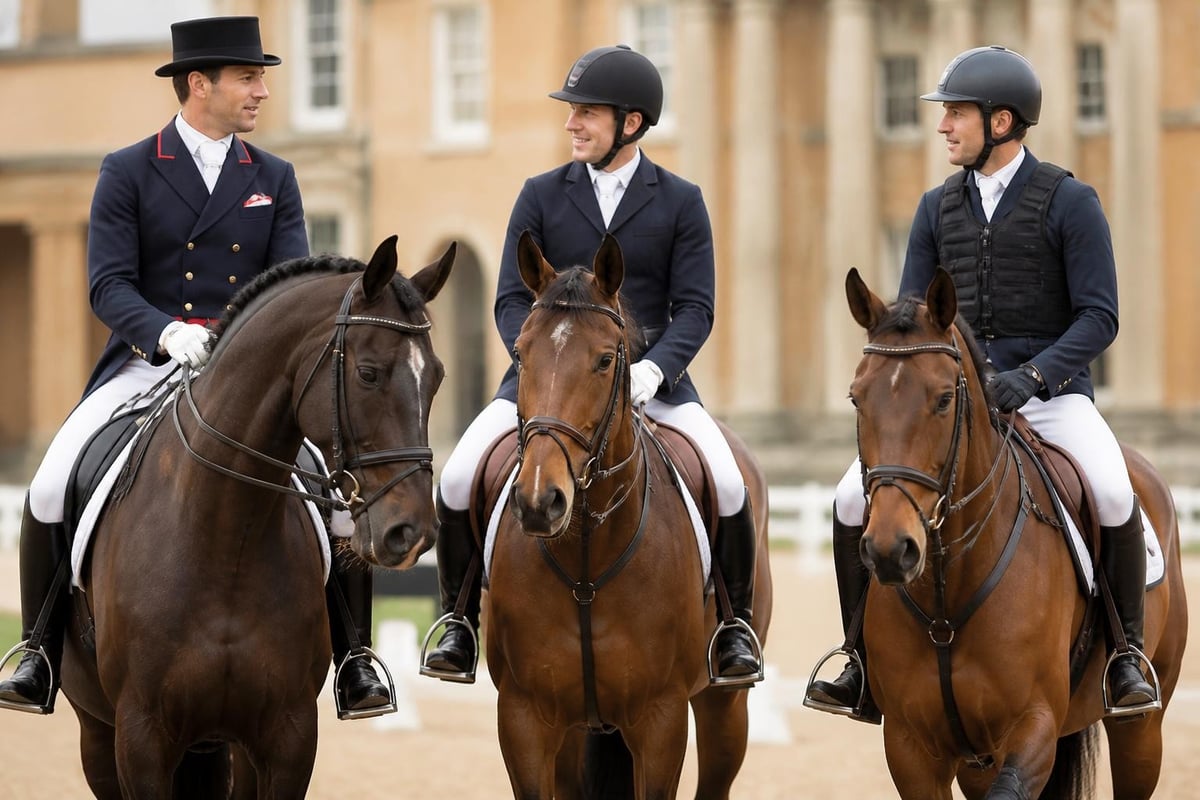
Safety equipment deserves special mention. Whilst not strictly clothing, approved protective headgear is mandatory across virtually all competitive riding. Current helmet standards and requirements continue evolving as testing improves, so verify your existing helmet still meets current approval standards before competing. Body protectors are essential for cross-country and increasingly common in other disciplines as well.
Layering for All Seasons
British weather demands adaptable mens equine clothing that handles morning frost, midday warmth, and afternoon rain within a single ride. Effective layering lets you regulate temperature and weather protection without compromising your position or feel.
Your base layer sits next to your skin, managing moisture and providing initial temperature regulation. Merino wool blends excel here, offering natural odor resistance and comfort across a wide temperature range. Synthetic technical fabrics work well too, particularly in warmer conditions where their superior wicking becomes most valuable.
Mid layers trap warmth without bulk. Lightweight fleece quarter-zips, technical sweaters, and insulated vests add considerable warmth whilst maintaining freedom of movement. Choose pieces with athletic cuts rather than casual styling. The difference shows clearly once you're mounted and working.
Outer layers protect against wind and precipitation. A proper riding jacket handles weather whilst accommodating all the layers beneath it. Look for adjustable features like storm cuffs, adjustable hems, and ventilation zips that let you fine-tune protection as conditions change. Waterproof doesn't mean much if the fabric can't breathe. Modern technical shells combine genuine weather resistance with adequate ventilation to prevent overheating.
Summer riding presents different challenges. Lightweight, breathable fabrics become essential. Technical polo shirts in performance fabrics offer sun protection and sweat management whilst looking appropriately smart. Some riders add arm sleeves for additional sun protection during long summer sessions.
Maintaining Your Investment
Quality mens equine clothing represents a significant investment. Proper care extends the life of your kit considerably, maintaining both performance and appearance across seasons of regular use.
Most technical riding wear tolerates machine washing, but check care labels carefully. Turn garments inside out to protect outer surfaces and close all fastenings before washing. Use liquid detergent rather than powder, which can clog technical fabrics and reduce breathability. Avoid fabric softener entirely. It coats fibers and dramatically reduces moisture-wicking performance.
Water temperature matters more than many riders realize. Cold or lukewarm water cleans effectively whilst protecting elastic fibers and technical treatments. Hot water degrades stretch fabrics and can damage water-resistant finishes. If your breeches or jackets have specialized treatments, higher temperatures will shorten their effective life.
Air drying preserves fabric integrity better than tumble drying. Heat breaks down elastic fibers over time, causing breeches to lose their shape and support. Hang items to dry away from direct heat sources. If you must use a dryer, choose the lowest heat setting and remove items whilst still slightly damp.
Proper storage prevents unnecessary wear. Fold or hang items appropriately based on their construction. Heavy jackets benefit from proper hangers that support their shoulders. Breeches can be folded or hung, but avoid creasing technical fabrics sharply, as repeated folding in the same places can weaken stretch panels over time.
Transitioning from Stable to Street
One significant advantage of contemporary mens equine clothing is its versatility beyond the stable yard. Well-chosen pieces integrate seamlessly into everyday wear, making them practical investments that earn their keep throughout your week.
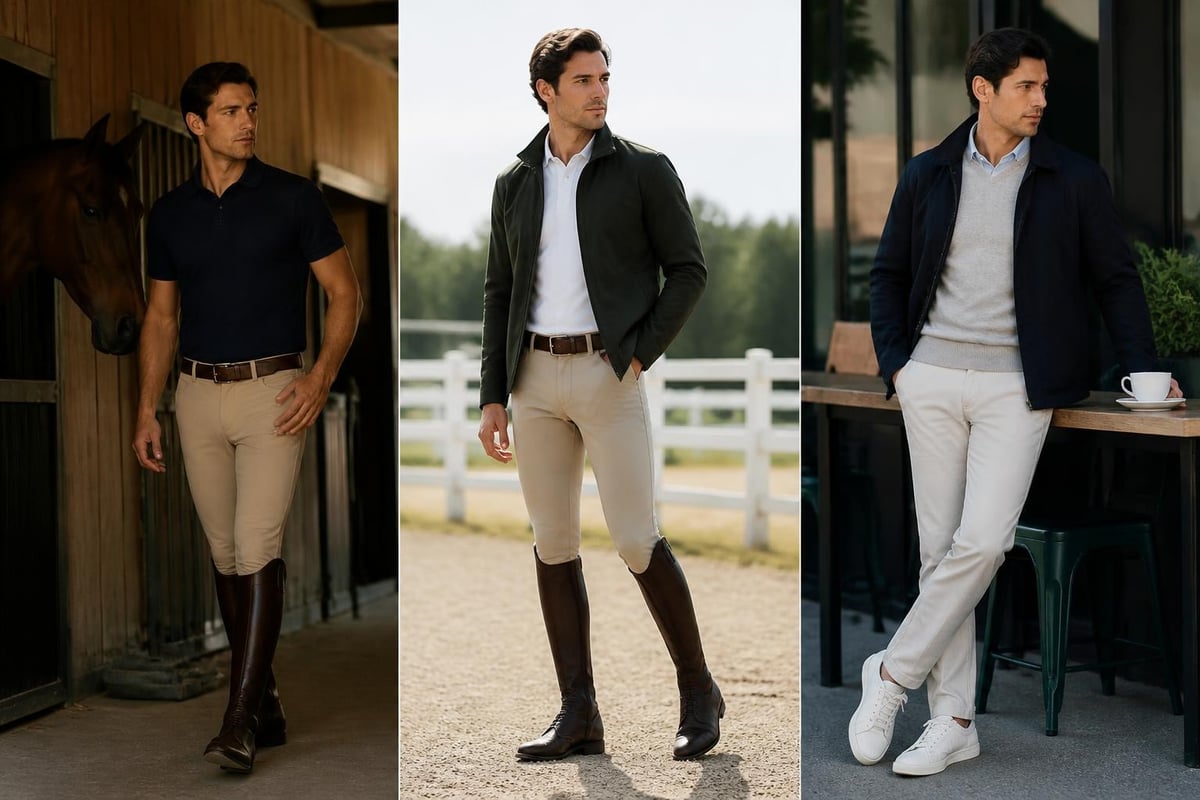
Technical shirts and polos work perfectly for casual occasions. The same moisture management and durability that serves you in the saddle makes these pieces comfortable for everyday activities. Paired with jeans or chinos, a quality riding polo looks completely at home in informal settings. Nobody needs to know it started life as equestrian wear.
Many modern riding jackets feature designs sophisticated enough for general outdoor wear. Softshell jackets particularly cross over well, offering weather protection and technical performance whether you're walking the dog, running errands, or heading out for the evening. The equestrian-specific features like longer backs and articulated sleeves simply mean better fit and comfort in any active context.
This versatility matters when you're building a wardrobe. Pieces that serve multiple purposes reduce the total number of items you need whilst ensuring you always have appropriate clothing available. It's practical efficiency combined with genuine style.
Selecting Brands That Understand Men's Riding
The equestrian clothing industry has historically focused primarily on female riders, leaving men with limited options and often questionable fit. That's changing as brands recognize the distinct needs and preferences of male equestrians.
Look for manufacturers who design specifically for men rather than simply adapting women's patterns. The difference shows immediately in how the clothing fits and performs. Men's riding wear needs accommodation for different proportions: broader shoulders, longer torsos, different hip-to-waist ratios. Brands that understand this produce clothing that simply works better.
Quality construction matters as much as design. Examine seam work, reinforcement placement, and finishing details. Well-made mens equine clothing uses flatlock seaming that lies completely flat against skin, preventing chafing during extended wear. Reinforcements should be precisely positioned where friction and wear actually occur, not just placed decoratively.
Customer service and sizing consistency indicate a brand's commitment to their market. Companies that maintain detailed sizing information, offer fit guidance, and stand behind their products demonstrate genuine understanding of their customers' needs. Returns and exchanges should be straightforward, recognizing that achieving perfect fit sometimes requires trying multiple sizes.
Investment vs. Value
Price and value aren't the same thing in mens equine clothing. The cheapest option rarely represents the best value when you factor in durability, performance, and comfort across seasons of regular use.
Quality riding wear costs more initially but delivers superior performance and longevity. A well-made pair of breeches might cost twice what basic versions sell for, but if they last three times as long whilst fitting and performing better throughout their life, they represent genuine value. The same principle applies to jackets, shirts, and base layers.
Consider cost per wear rather than absolute price. A £150 pair of breeches worn twice weekly for three years works out to roughly £1 per wear. That same investment in cheaper breeches replaced every eight months ends up costing more whilst providing inferior performance. The mathematics favor quality.
That said, strategic shopping can reduce costs without sacrificing standards. End-of-season sales, bundle offers, and loyalty programs provide opportunities to acquire quality pieces at reduced prices. Building your wardrobe gradually rather than all at once spreads the investment across time whilst ensuring you're never without essential items.
Seasonal Considerations
Your mens equine clothing needs shift with the seasons, though core pieces remain constant. Understanding these variations helps you plan purchases and ensure appropriate kit for every condition.
Winter Requirements
Cold weather demands effective layering and weather protection. Base layers become essential, trapping warmth close to your skin whilst managing moisture. Insulated mid layers add bulk-free warmth. Your outer shell needs genuine waterproofing and wind resistance to handle the worst conditions British winter can deliver.
Extremities require attention too. Quality gloves that maintain grip and feel whilst keeping your hands warm make miserable rides tolerable. Thermal socks designed specifically for riding boots prevent the cold feet that end sessions prematurely.
Spring and Autumn Versatility
Transitional seasons require the most adaptable wardrobe. Temperatures can swing dramatically between morning and afternoon, whilst weather turns unpredictable. Layering pieces that you can easily add or remove become invaluable. Lightweight, packable jackets that stuff into a pocket mean you're always prepared when conditions shift.
Summer Practicality
Hot weather makes fabric choice critical. Lightweight, breathable materials with moisture-wicking properties keep you comfortable despite heat and exertion. UV protection becomes relevant for extended outdoor sessions. Lighter colors reflect rather than absorb heat, making them practical choices for summer riding.
The Role of Personal Style
Within the practical requirements of effective riding wear, personal style still matters. Your mens equine clothing reflects your approach to riding and your broader aesthetic preferences. Finding pieces that perform well whilst aligning with your personal taste makes getting dressed for riding genuinely enjoyable.
Classic styling endures for good reason. Traditional cuts and conservative colors never go out of fashion and always look appropriate in any riding context. Navy, black, grey, and white form a reliable foundation that works across disciplines and occasions.
Contemporary variations on traditional themes let you express individuality whilst maintaining appropriate appearance. Subtle design details, modern fabric treatments, and refined proportions update classic pieces without abandoning the fundamental principles that make them work.
Your complete wardrobe reflects balance between these elements. Core pieces in traditional styling ensure you're always appropriately dressed, whilst a few contemporary items add personal character to your overall presentation. The specific balance depends entirely on your preferences and riding context.
Looking Forward
The mens equine clothing market continues evolving rapidly. Increased attention to male riders drives innovation in design, materials, and manufacturing. Brands recognize that men want riding wear that performs exceptionally whilst looking sharp enough to wear beyond the stable yard.
Sustainability considerations influence purchasing decisions increasingly. Riders seek brands committed to responsible manufacturing, durable construction that reduces replacement frequency, and materials with reduced environmental impact. These priorities align naturally with the equestrian community's broader connection to land and animal welfare.
Technical development continues advancing fabric performance. New materials offer improved moisture management, better stretch recovery, enhanced durability, and superior weather resistance whilst remaining comfortable against skin. These innovations filter into mainstream riding wear steadily, raising performance standards across the market.
Finding mens equine clothing that truly works requires understanding how riding demands differ from everyday wear and choosing pieces built specifically for those needs. Quality materials, proper fit, and thoughtful design transform riding comfort and performance whilst creating a wardrobe that serves you well beyond the stable. Gallant Equestrian designs performance-driven riding wear specifically for men who demand both functionality and style. Our New Zealand-designed collection delivers essential pieces built to last, from technical breeches to versatile jackets that transition seamlessly from arena to everyday life. Look the Part. Enjoy the Ride.

