

Man in Jodhpurs: Style, Function & Heritage
May 13, 2026
The image of a man in jodhpurs carries weight. It speaks to tradition, discipline, and a certain refined practicality that's become increasingly rare in modern menswear. Whether you're navigating the demands of competitive riding or simply appreciate clothing designed with purpose, understanding what makes jodhpurs distinct matters. These aren't relics of a bygone era. They're performance garments that have evolved alongside the sport itself, balancing heritage with contemporary demands.
The Heritage Behind the Garment
Jodhpurs trace their lineage to the Rajput nobility of Jodhpur, India, where riders needed trousers that allowed freedom of movement whilst maintaining dignity in the saddle. The original design featured a loose fit through the thigh and a snug ankle, deliberately crafted to work with traditional boots.
By the early twentieth century, British cavalry officers adopted and refined the style. The man in jodhpurs became synonymous with military precision and sporting excellence. Polo players embraced them. Equestrians across disciplines recognized their superiority over standard breeches for certain riding contexts.
What separated jodhpurs from other riding trousers was their ankle closure system. Traditional jodhpurs feature straps or buttons at the ankle, designed to fit inside short paddock boots rather than tall riding boots. This construction created a streamlined silhouette whilst preventing fabric from bunching or catching.
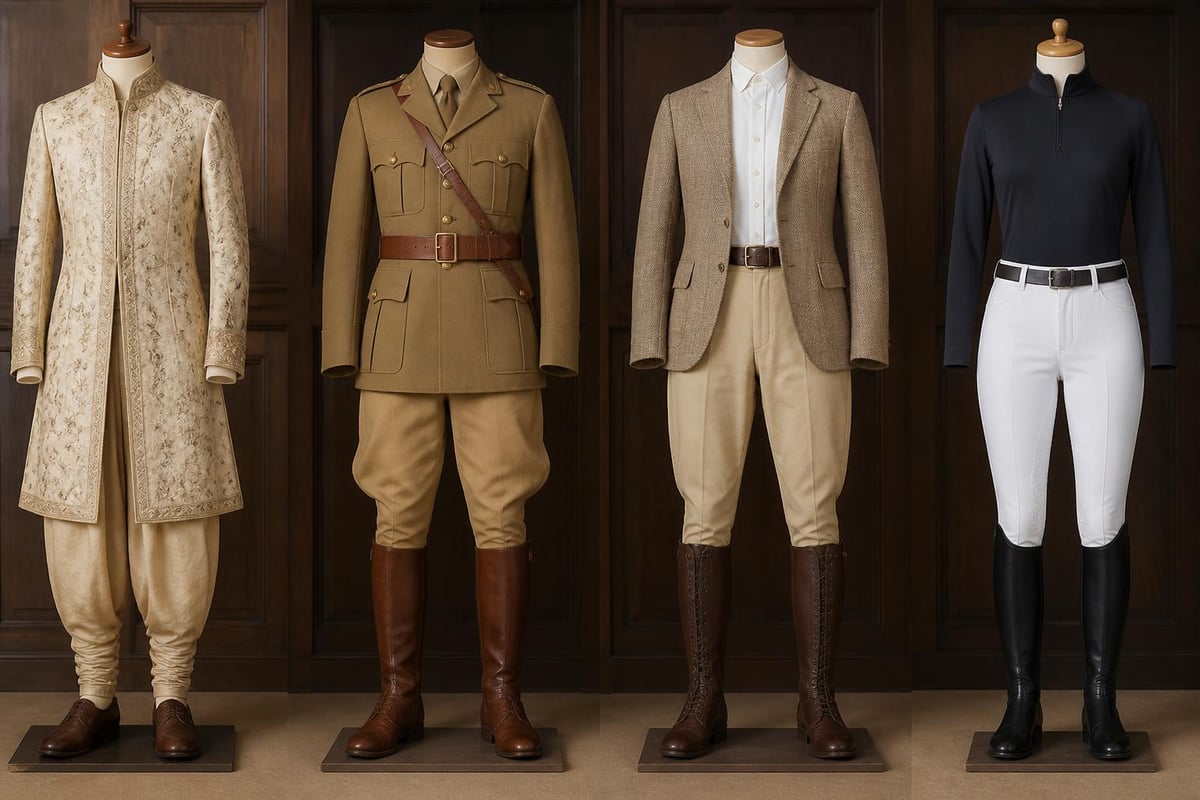
The historical significance of jodhpurs extends beyond mere aesthetics. These garments solved genuine problems for riders. Excess fabric in the wrong places causes discomfort during long hours mounted. Poor fit compromises communication with your horse. The jodhpur design addressed both concerns with elegance.
Understanding the Modern Man in Jodhpurs
Today's man in jodhpurs represents a different breed of rider. Modern iterations incorporate technical fabrics that wick moisture, offer four-way stretch, and maintain shape through countless rides and washes. The fundamental design principles remain unchanged, but the execution reflects contemporary performance standards.
Fit and Construction
Proper fit distinguishes a well-turned-out rider from one who merely owns riding clothes. Jodhpurs should follow your body's contours without restricting movement. Through the thigh, expect a closer fit than standard trousers but without tightness. The seat area needs sufficient room for the natural position you assume in the saddle.
The ankle closure deserves particular attention. Whether you prefer traditional buttoned straps or modern elastic options, the closure should create a smooth transition into your boot without bulk. This detail affects both comfort and appearance.
| Fit Point | What to Look For | Why It Matters |
|---|---|---|
| Waist | Sits comfortably at natural waist | Prevents slipping during mounting |
| Thigh | Contoured but not restrictive | Allows leg aids without fabric interference |
| Knee | Slight room for bend | Accommodates riding position without stress |
| Ankle | Snug closure inside boot | Eliminates bunching and maintains clean line |
When considering how to select the right jodhpurs, remember that sizing varies considerably between manufacturers. What works for one brand may not translate directly to another. Quality jodhpurs from specialists like Gallant Equestrian account for the male physique specifically, offering cuts that respect how men are built.
Performance Features That Matter
The contemporary man in jodhpurs expects more than historical authenticity. Performance matters. Grip panels, strategically placed on the inner leg or seat, provide security in the saddle without adding bulk. The best implementations use silicone or suede patches that enhance stability whilst remaining barely noticeable off the horse.
Fabric technology has transformed what jodhpurs can deliver. Four-way stretch materials move with you rather than against you. Moisture-wicking properties keep you comfortable during intense work. Reinforced seams in high-stress areas extend garment life considerably.
Choosing Between Jodhpurs and Breeches
This question arises frequently. Both serve equestrian purposes, but their applications differ. Traditional jodhpurs work with short boots, making them practical for everyday riding, schooling, and training sessions. Breeches, designed for tall boots, suit competition settings and formal occasions.
The man in jodhpurs often values versatility. Jodhpurs transition more easily from stable to street. Paired with paddock boots, they create a complete look without requiring the commitment of tall boots. For riders who appreciate performance-driven riding clothing, this flexibility matters.
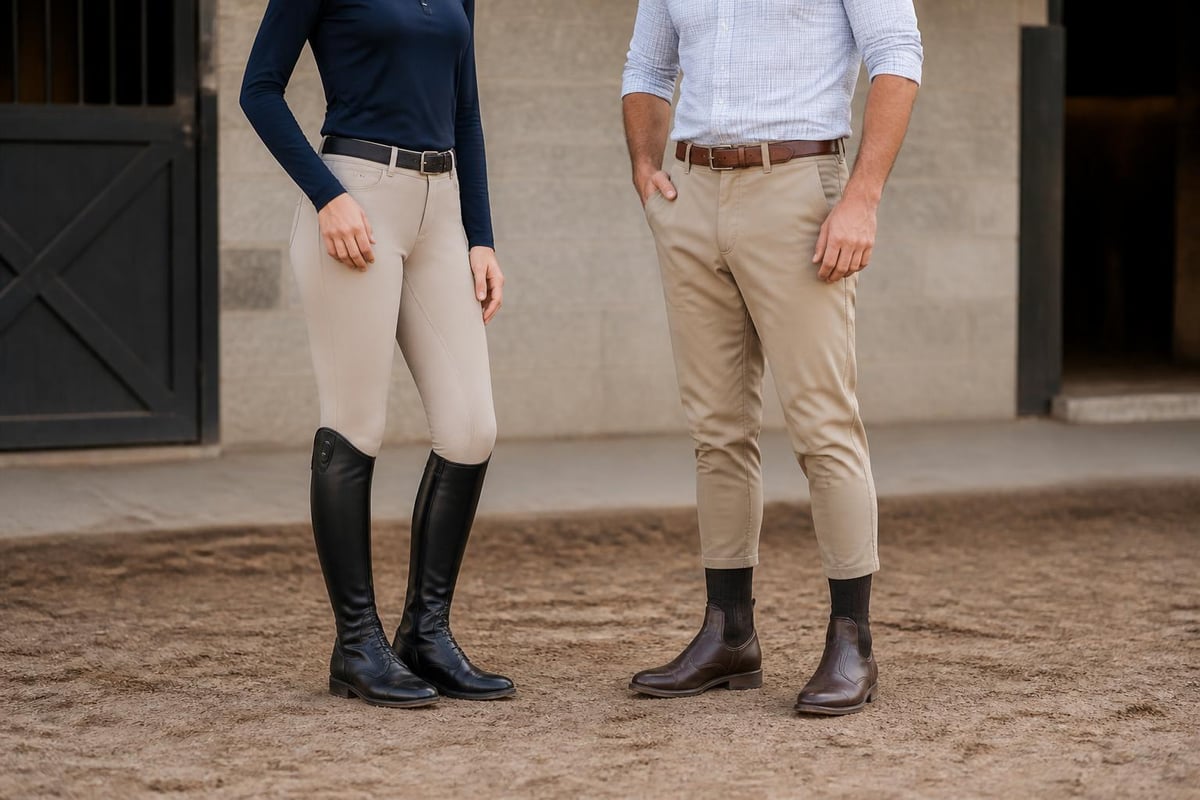
Neither option is objectively superior. Your choice depends on riding discipline, personal preference, and practical requirements. Dressage riders typically favor breeches with tall boots. Those focused on everyday riding, schooling, or jumping practice often find jodhpurs more practical.
Styling Beyond the Arena
The well-dressed man in jodhpurs understands that riding clothes needn't remain confined to equestrian contexts. Quality jodhpurs in neutral colors work surprisingly well in casual settings. The key lies in thoughtful pairing and confidence in your choices.
Navy or tan jodhpurs combine naturally with simple shirts, quality jumpers, or refined casual jackets. The silhouette differs from standard trousers, certainly, but the difference reads as intentional style rather than costume when executed properly. Your paddock boots should be well-maintained. Your accompanying pieces should share the jodhpurs' quality level.
This versatility explains why classic horse riding trousers continue influencing contemporary menswear. Designers recognize that garments developed for genuine purpose often possess inherent style that transcends their original context.
Color and Fabric Selection
Traditional colors dominate for good reason. Tan, beige, navy, and black work across contexts whilst hiding the inevitable dirt that accompanies stable work. These shades also pair effortlessly with standard riding shirts, jackets, and casual pieces.
Fabric weight varies seasonally. Lighter materials suit summer riding, offering breathability when temperatures climb. Heavier options provide warmth during winter months whilst maintaining necessary flexibility. The best approach involves maintaining options for different conditions rather than seeking one perfect pair.
| Season | Recommended Fabric | Key Properties |
|---|---|---|
| Summer | Lightweight technical blend | Maximum breathability, quick-dry |
| Autumn/Spring | Mid-weight stretch cotton | Balance of warmth and ventilation |
| Winter | Heavier technical fabric | Insulation without bulk, wind resistance |
Consider how your jodhpurs coordinate with other riding essentials. A man in jodhpurs needs appropriate shirts, potentially a waterproof riding jacket for inclement weather, and complementary casual pieces that maintain the refined aesthetic when transitioning from mounted work.
Maintenance and Longevity
Quality jodhpurs represent an investment. Proper care extends their functional life considerably. Most modern technical fabrics tolerate machine washing, but specific requirements vary. Check manufacturer guidance before assuming anything.
Turn jodhpurs inside out before washing to protect outer surfaces and any grip panels. Cold or warm water works better than hot, which can degrade elastic components over time. Avoid fabric softeners, particularly with technical materials designed to wick moisture or provide stretch.
Air drying preserves fabric integrity better than tumble drying. The heat from dryers accelerates wear on elastic fibers and can damage silicone grip panels. If you must use a dryer, select the lowest heat setting available.
Proper storage matters too. Hanging jodhpurs prevents creasing and maintains their shape better than folding. If space constraints require folding, do so along natural crease lines rather than creating new ones. Keep them away from direct sunlight, which can fade colors over time.

When to Replace
Even well-maintained jodhpurs eventually require replacement. Signs include persistent loss of stretch, particularly in the knee and seat areas. Thinning fabric in high-friction zones indicates the garment has reached its practical limit. Grip panels that no longer provide secure contact also signal time for new jodhpurs.
The man in jodhpurs who rides regularly might need replacement every twelve to eighteen months, depending on riding frequency and garment quality. Those who ride less often can extend this timeline considerably. Rotating between multiple pairs distributes wear, extending the life of each.
Building a Practical Wardrobe
Rather than acquiring numerous variations, focus on versatile core pieces. Two or three quality pairs in complementary colors serve most riders better than a wardrobe full of mediocre options. This approach aligns with how serious riders across disciplines approach their kit.
Start with one pair in a neutral tone that works across contexts. Navy or tan jodhpurs provide maximum versatility. Add a second pair in a contrasting shade to allow rotation whilst one is being washed. Consider a third option in black for more formal occasions or personal preference.
Quality matters more than quantity. Well-constructed jodhpurs from reputable riding clothes brands withstand regular use whilst maintaining appearance and function. Cheaper alternatives often disappoint, losing shape or developing problems after minimal wear.
Coordinating Your Kit
The man in jodhpurs needs compatible pieces that work together. Your boots should complement rather than clash with your jodhpurs. Paddock boots in brown leather pair naturally with tan or beige jodhpurs. Black boots work across the color spectrum but particularly suit navy or black jodhpurs.
Shirts matter too. Technical polo shirts, traditional button-downs, and quarter-zips all coordinate well with jodhpurs, depending on context and weather. The key involves maintaining consistent quality and style across pieces rather than mixing performance gear with casual wear arbitrarily.
Layering options extend your wardrobe's practical range. A quality gilet or riding jacket transforms your kit for different conditions without requiring separate complete outfits. Consider pieces that transition naturally between riding and everyday contexts, maximizing value and versatility.
The Functional Advantage
Understanding why the man in jodhpurs chooses this particular garment over alternatives reveals their enduring appeal. The design addresses specific equestrian requirements that standard trousers cannot match. Communication with your horse depends partly on consistent leg contact. Excess fabric interferes with this crucial element.
Jodhpurs eliminate unnecessary material whilst preserving freedom of movement. The close fit through the lower leg ensures your aids transmit clearly without fabric dulling the message. Simultaneously, the contoured cut through the seat and thigh allows the flexibility necessary for proper position.
Modern performance analysis in equestrian activities increasingly recognizes how equipment affects rider effectiveness. Clothing that supports rather than hinders natural movement contributes to better riding outcomes. This isn't mere theory. Experienced riders consistently report improved feel and communication when wearing properly fitted, quality jodhpurs.
Climate Adaptability
Different riding environments demand different solutions. Summer sessions in intense heat require maximum breathability. Winter riding needs insulation without sacrificing mobility. Quality jodhpurs address these varying requirements through thoughtful fabric selection and construction.
Technical fabrics in modern jodhpurs regulate temperature more effectively than traditional materials. Moisture-wicking properties keep you drier during demanding work. Quick-dry capabilities mean jodhpurs recover faster after washing or unexpected weather, crucial for riders who train daily regardless of conditions.
The man in jodhpurs who rides year-round benefits from having season-appropriate options. Rather than suffering through inappropriate clothing, select jodhpurs matched to prevailing conditions. This practical approach enhances both comfort and performance whilst extending the functional life of each garment.
Making the Right Choice
Selecting jodhpurs requires balancing multiple factors. Price, quality, fit, and intended use all influence the decision. Resist the temptation to prioritize cost over construction. Poor-quality jodhpurs become expensive when they require frequent replacement or compromise your riding experience.
Fit trumps almost every other consideration. Jodhpurs that don't fit properly won't perform regardless of their other qualities. Take time to understand your measurements and how different brands size their garments. Many riders find that trying several options before committing yields better long-term results than purchasing blindly based on listed sizes.
Consider your primary riding activities. Competition riders have different requirements than those focused on pleasure riding or training. Your jodhpurs should match your actual needs rather than aspirational activities you might pursue someday. Practical assessment leads to better choices.
For detailed guidance on selecting features and fit, research remains valuable. Understanding what distinguishes various constructions, fabrics, and design approaches helps you make informed decisions aligned with your specific requirements and preferences.
The Contemporary Standard
Today's man in jodhpurs represents evolution rather than revolution. The fundamental garment remains recognizable to riders from previous generations, but execution reflects modern standards and capabilities. Technical fabrics, ergonomic cuts, and thoughtful details elevate what jodhpurs can deliver.
This progression mirrors broader developments in equestrian clothing. Riders increasingly demand garments that perform without sacrificing style. The days of choosing between function and appearance have passed. Quality manufacturers now deliver both, creating pieces that work hard in the saddle whilst maintaining refined aesthetics.
The man in jodhpurs in 2026 benefits from unprecedented options. Specialist brands understand male riders' specific requirements, offering cuts and styles that respect how men are built and what they need from riding clothes. This focused approach yields superior results compared to generic or adapted designs.
Beyond Basic Requirements
Once fundamental needs are met, personal preference becomes the deciding factor. Some riders prefer traditional styling that honors jodhpurs' heritage. Others gravitate toward contemporary interpretations that emphasize performance features and modern cuts. Neither approach is wrong. Both serve legitimate preferences.
What matters is matching your choices to your actual requirements and aesthetic sensibilities. The man in jodhpurs who rides primarily for pleasure might prioritize comfort and versatility. Competition-focused riders often emphasize performance features and presentation. Understanding where you fall on this spectrum guides better decisions.
Quality jodhpurs accommodate both perspectives. Well-designed pieces honor traditional elements whilst incorporating modern improvements. This balanced approach explains why jodhpurs remain relevant despite dramatic changes in equestrian culture and riding practices over recent decades.
The man in jodhpurs understands that proper riding clothes enhance rather than distract from the work itself. Quality jodhpurs support your riding goals whilst reflecting personal standards and attention to detail. When you're ready to invest in riding trousers that deliver genuine performance without compromising style, explore what Gallant Equestrian offers. Designed specifically for men who ride, their collection balances heritage with contemporary demands. Look the Part. Enjoy the Ride.

