

Equestrian Outfit Male: The Modern Rider's Style Guide
May 12, 2026
Getting your equestrian outfit male sorted isn't about following rigid traditions or copying someone else's style. It's about understanding what works in the saddle, what keeps you comfortable through long hours at the stables, and what looks sharp enough to wear beyond the arena. Modern men's riding wear has evolved significantly, blending performance fabrics with clean lines that serve you whether you're schooling a young horse or grabbing coffee afterwards. The right pieces make every ride better, and building a proper wardrobe starts with knowing which essentials actually earn their place in your kit.
The Foundation: Understanding Equestrian Outfit Male Essentials
Every proper equestrian outfit male begins with breeches. They're not just traditional, they're genuinely functional. The close fit prevents chafing, the stretch fabric moves with you, and the reinforced inner leg grip keeps you secure without relying solely on leg strength. Unlike standard trousers, breeches evolved specifically for riding, with features that matter when you're spending hours in the saddle.
The fabric composition makes all the difference. Quality breeches typically blend technical materials that wick moisture, provide four-way stretch, and maintain their shape after repeated wear. Cotton alone won't cut it for serious riding. You need synthetic blends that perform under pressure, dry quickly between rides, and survive regular washing without losing elasticity.
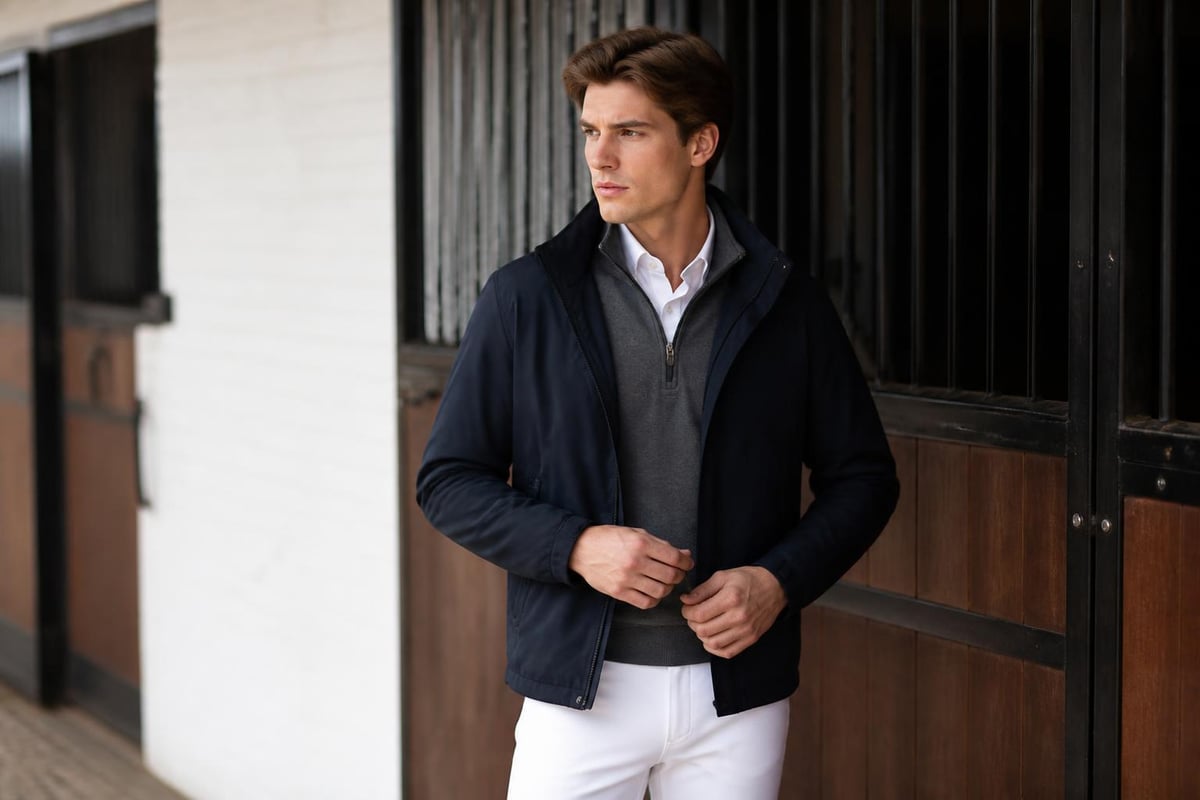
Fit matters more than you might think. Breeches should sit comfortably at your natural waist, not low on your hips like casual trousers. The seat should be close but not restrictive, and the lower leg should follow your calf line without bunching at the boot. When you mount up, the fabric should move with you rather than fighting against your position. Many riders size down initially, but proper technical fabrics should fit true to size whilst providing the compression and support you need.
Building Your Core Wardrobe
Your riding shirts form the next layer of any functional equestrian outfit male. Technical tees and polo shirts designed for riding offer more than casual athletic wear. Purpose-built riding shirts typically feature longer backs to stay tucked during movement, underarm gussets for unrestricted arm motion, and fabrics that manage sweat without showing every drop.
Short-sleeve technical tees work brilliantly for summer riding and layering under jackets during cooler months. The best versions use moisture-wicking fabrics that keep you dry without that clammy feeling cheaper materials create. Polo shirts add versatility, looking appropriate for lessons, competitions, and post-ride errands. Choose solid colours over busy patterns. Navy, white, and neutral tones work everywhere and never look dated.
Transitional Pieces That Work
Sweatshirts and mid-layers bridge the gap between base layers and outerwear. Quality riding sweatshirts differ from standard athletic wear through their cut and features. Look for styles with slightly longer sleeves that stay in place when you raise your arms, dropped back hems that provide coverage in the saddle, and fabrics substantial enough for warmth without adding bulk.
These pieces shouldn't restrict your riding position. Test any sweatshirt by raising your arms overhead and rotating your torso. The fabric should move with you smoothly. Heavyweight fleeces might feel warm but often add too much bulk under jackets. Mid-weight technical fabrics provide better temperature regulation and layer more effectively.
The beauty of well-designed riding wear lies in its versatility. Your waterproof riding jacket protects you during wet weather rides but also works for daily life. Proper riding jackets feature articulated sleeves that allow natural arm movement, dropped back hems for saddle coverage, and technical waterproof fabrics that breathe rather than trap moisture inside.
Discipline-Specific Considerations
Different riding disciplines demand specific approaches to your equestrian outfit male. Equestrian dress codes vary significantly between disciplines, and understanding these differences helps you invest in the right pieces. Dressage traditionally requires more formal attire with precise fit standards. Show jumping allows slightly more flexibility whilst maintaining a polished appearance. Western riding follows entirely different conventions.
For English disciplines, competition wear typically includes white or light-coloured breeches, a show shirt, tie or stock, and a properly fitted jacket. The jacket should allow full shoulder movement whilst maintaining a tailored appearance. Darker colours dominate schooling wear, where navy, black, and earth tones prove practical and professional.
Competition Standards
Show ring requirements become more specific as you move up levels. Novice competitions might accept polo shirts and dark breeches, whilst advanced levels demand traditional show coats and stocks. Research the specific rules for your chosen discipline and level before purchasing competition gear. The equestrian competition apparel guide offers detailed breakdowns of requirements across various disciplines.
That said, your everyday equestrian outfit male shouldn't live in the show ring alone. The best riding clothes work for training, competing, and everything between. Invest in versatile pieces that meet competition standards whilst remaining practical for daily use. A quality show shirt shouldn't sit in your wardrobe fifty weeks per year.
Quality Markers and Material Selection
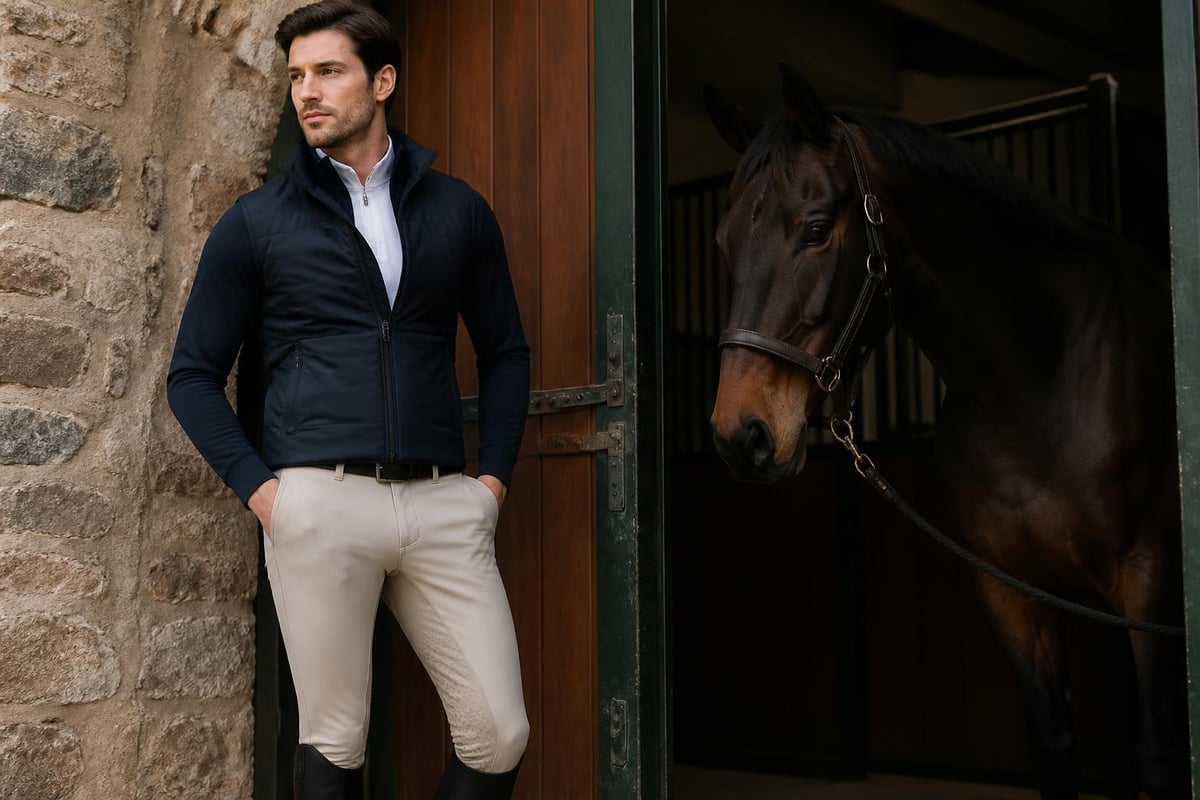
Understanding fabric technology transforms how you approach building your equestrian outfit male collection. Technical fabrics aren't marketing fluff. They genuinely perform better than traditional materials. Four-way stretch allows movement in all directions. Moisture-wicking properties pull sweat away from your skin. Quick-dry capabilities mean you're not sitting in damp clothes between rides.
Premium riding wear typically uses specific fabric blends developed for athletic performance. Polyester blends with elastane provide stretch and recovery. Nylon adds durability and abrasion resistance. Small percentages of spandex maintain shape retention. These materials cost more than basic cotton but justify the investment through performance and longevity.
Construction quality separates good riding clothes from average ones. Examine seams carefully. Flatlock or reinforced seams prevent chafing and last longer under stress. Check pocket placement and reinforcement, particularly in breeches where phone pockets see heavy use. Quality brands reinforce high-stress areas like inner legs, seat panels, and pocket openings.
Fit and Sizing Considerations
Proper fit makes or breaks any equestrian outfit male. Riding clothes should fit closer than casual wear without restricting movement. If you're between sizes, consider the fabric composition. Highly elastic materials might allow sizing down for a more technical fit, whilst less stretchy fabrics require accurate sizing. Always reference size guides specific to each brand, as sizing standards vary internationally.
Try on riding clothes and actually move in them. Sit in a chair with your legs in riding position. Raise your arms overhead. Rotate your torso. The clothes should accommodate these movements without pulling, bunching, or restricting. Breeches shouldn't gap at the waist or sag at the seat. Jackets shouldn't ride up when you lift your arms or lean forward.
Style Evolution and Modern Trends
The evolution of equestrian wear reflects broader changes in athletic apparel whilst maintaining riding-specific functionality. Historical riding attire prioritized formality over comfort, with heavy fabrics and restrictive cuts. Modern designs embrace technical materials and ergonomic construction whilst respecting traditional aesthetics where appropriate.
Contemporary equestrian outfit male choices balance heritage and innovation. Clean lines and classic colours remain standard, but fabrics and construction techniques have advanced dramatically. You can now find riding breeches that perform like technical athletic wear whilst maintaining the traditional silhouette riders expect. Jackets incorporate waterproof-breathable membranes that would have seemed impossible decades ago.
This evolution benefits practical riders significantly. You're no longer forced to choose between looking proper and feeling comfortable. Quality modern riding wear delivers both. The best riding clothes brands understand this balance, creating pieces that respect equestrian tradition whilst embracing performance innovation.
Colour and Pattern Strategies
Stick with classic colours for maximum versatility in your equestrian outfit male. Navy, black, white, and neutral tones work across disciplines and occasions. These colours layer well together, hide dirt reasonably effectively, and never look dated. Save bold colours for accent pieces or casual wear if you enjoy variety.
Patterns rarely work well in riding attire. Solid colours maintain a cleaner, more professional appearance. They also prove more versatile for mixing and matching pieces. A wardrobe built on solid neutrals allows countless combinations from fewer total pieces. This approach proves both economical and practical.
Practical Wardrobe Building Strategy
Start with two pairs of quality breeches in versatile colours. Navy and a neutral tone like beige or grey cover most situations. Add three technical shirts, either tees or polos depending on your preference and climate. Include at least one mid-layer sweatshirt for cooler weather. Complete the foundation with a proper riding jacket that handles weather whilst allowing full range of motion.
This core collection handles daily riding, lessons, and casual competitions. Build from here based on your specific needs and riding frequency. Serious competitors might add show-specific pieces. Those riding in variable climates benefit from additional layering options. Weekend riders might prioritize versatility over specialized competition gear.
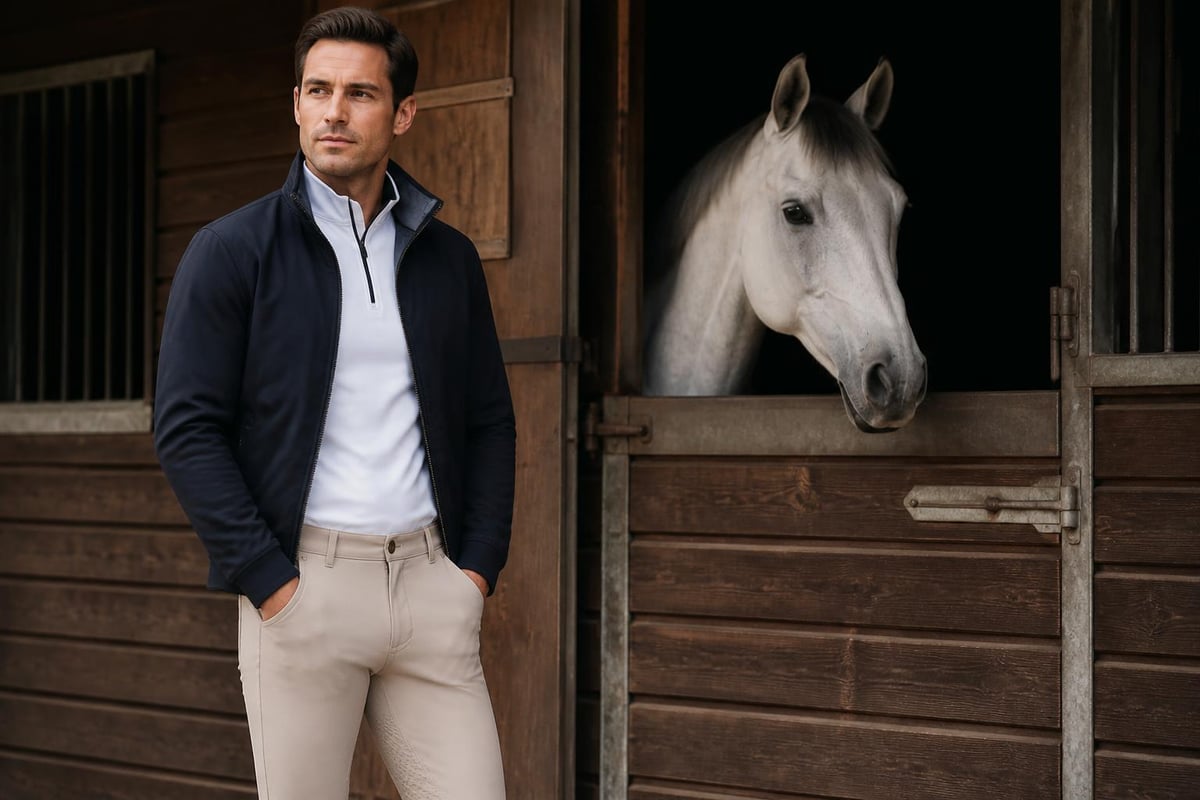
Quality over quantity always wins with riding clothes. Two pairs of excellent breeches outperform five mediocre pairs. They'll fit better, last longer, and genuinely improve your riding experience. The same principle applies across your entire equestrian outfit male collection. Purchase the best you can afford and build gradually rather than filling your wardrobe with cheap alternatives.
Care and Maintenance
Proper care extends the life of your equestrian outfit male significantly. Most technical riding fabrics require specific washing approaches. Turn breeches inside out before washing to protect grip materials and reduce pilling. Use cold water and mild detergent without fabric softener, which can damage moisture-wicking properties and reduce grip effectiveness.
Avoid high heat when drying. Most riding clothes perform best when air-dried or tumbled on low heat. High temperatures can damage elastic fibres, reducing the fabric's recovery and shortening garment life. This extra care might seem tedious initially but becomes routine quickly and genuinely preserves your investment.
Store riding clothes properly between uses. Hang jackets and shirts to maintain their shape. Fold breeches along their natural creases rather than random folds that create permanent lines. Keep everything away from direct sunlight, which can fade colours over time. Proper storage maintains appearance and extends usability significantly.
When to Replace
Even quality riding clothes eventually need replacement. Watch for signs that pieces have reached their limit. Breeches showing significant pilling, losing grip effectiveness, or developing thin spots should be retired. Jackets with compromised waterproofing or damaged zips need replacing. Shirts with persistent odours despite proper washing have likely reached the end of their functional life.
Don't wait until clothes actually fail during rides. Replace pieces when they stop performing optimally rather than when they completely give out. This proactive approach ensures you're always riding in gear that supports rather than hinders your performance.
Seasonal Adjustments
Your equestrian outfit male needs shift with seasons and weather conditions. Summer riding demands maximum breathability and moisture management. Lightweight technical tees and shorts-length breeches work well in extreme heat, though full-length breeches generally prove more practical for protection and grip. Light colours reflect heat better than dark ones.
Winter requires strategic layering without adding excessive bulk. Start with thermal base layers under your standard riding shirts. Add mid-weight fleece or technical sweatshirts as needed. Top everything with a proper riding jacket designed for cold weather. The key is maintaining mobility whilst staying warm. Bulky layers restrict your position and communication with your horse.
Transitional seasons benefit from versatile pieces that work across temperature ranges. Technical fabrics that regulate temperature perform brilliantly during spring and autumn when mornings start cool and afternoons warm up. Jackets with removable linings or zip-off sleeves provide flexibility for changing conditions throughout a single ride.
Finding Your Style Within Structure
Building the perfect equestrian outfit male doesn't mean abandoning personal style. Within the functional requirements of riding wear, you can express individual preferences through colour choices, fit preferences, and how you combine pieces. Some riders prefer fitted technical looks. Others lean toward relaxed traditional styles. Both approaches work when built on proper foundations.
Your riding clothes should make you feel confident in the saddle and comfortable off it. When you look good, you ride better. It's not vanity, it's practical psychology. Confidence affects posture, which affects your riding position, which affects your horse. Wearing riding clothes that fit properly and look sharp contributes to better overall performance.
The historical significance of equestrian costume demonstrates how riding attire has always balanced function and appearance. Modern interpretations continue this tradition whilst incorporating contemporary fabrics and construction techniques. Understanding this context helps you make informed choices about which traditional elements matter functionally and which are purely aesthetic.
Building a proper equestrian outfit male takes thoughtful consideration of your riding needs, climate, and personal style within the functional requirements of the sport. Quality pieces that fit properly, perform reliably, and look sharp make every aspect of riding more enjoyable. Whether you're just starting your collection or refining an established wardrobe, focus on versatile essentials that work hard across multiple situations. Gallant Equestrian creates performance-driven riding clothes designed specifically for men who demand both function and style, with pieces that transition seamlessly from stables to everyday life. Look the Part. Enjoy the Ride.

