

Men's Equestrian Breeches: The Complete 2026 Guide
Apr 04, 2026
Finding the right pair of mens equestrian breeches can transform your riding experience. They're not just trousers designed for the saddle; they're precision-engineered performance wear that bridges the gap between traditional equestrian heritage and modern athletic design. Whether you're schooling at home, competing at a weekend event, or simply prefer clothing that moves with purpose, understanding what separates exceptional breeches from ordinary riding wear makes all the difference.
Understanding the Foundation: What Makes Breeches Different
Traditional breeches have evolved significantly from their historical origins, but the core principles remain unchanged. They're cut to eliminate bulk around the legs, designed to prevent chafing during hours in the saddle, and constructed with materials that maintain their shape ride after ride.
Modern mens equestrian breeches incorporate technical fabrics that weren't available even a decade ago. Four-way stretch materials move with your body rather than against it. Moisture-wicking properties keep you comfortable during intense schooling sessions. Reinforced panels sit precisely where you need grip and durability most.
The difference becomes obvious the moment you mount up. Generic riding trousers bunch at the knee, create pressure points, and restrict movement. Purpose-built breeches disappear from your awareness, allowing you to focus entirely on your horse and your riding.
Grip Systems: Full Seat Versus Knee Patch
Choosing between full seat and knee patch breeches often comes down to discipline and personal preference, though both systems offer distinct advantages.
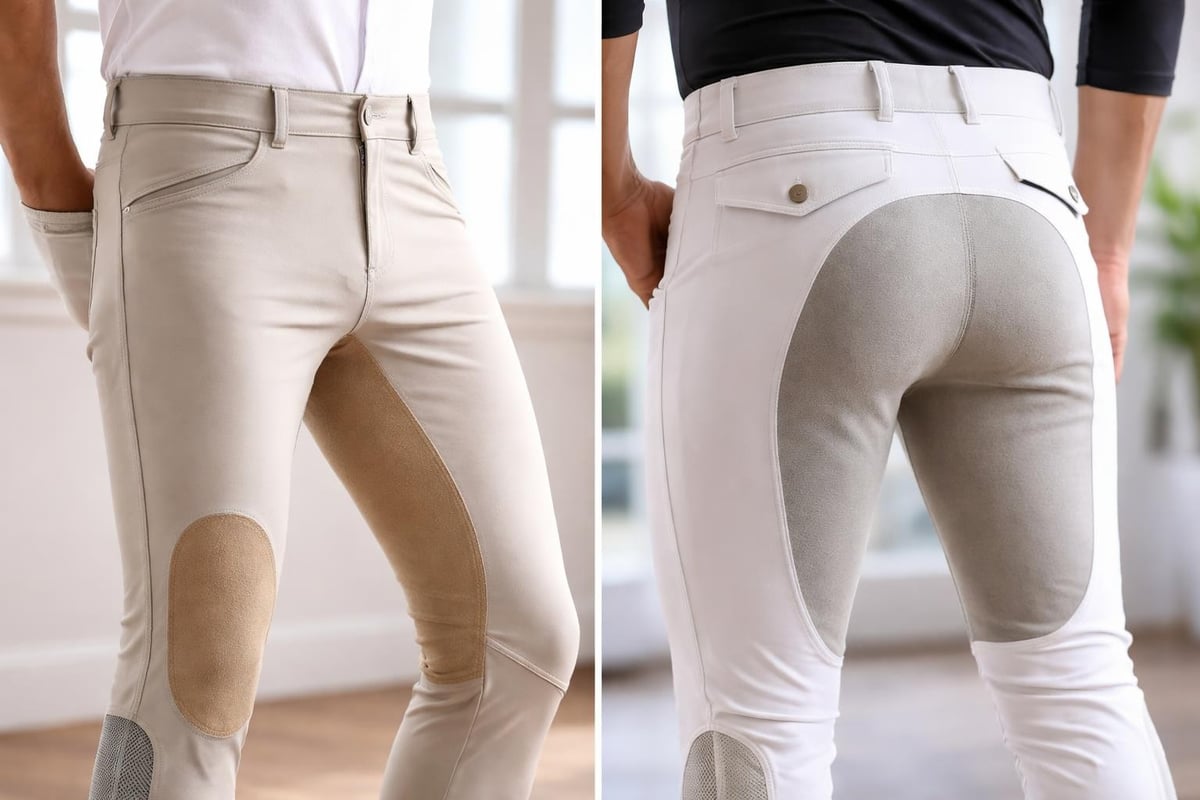
Full seat breeches feature grip material extending from the seat through the inner thigh to just above the knee. This provides maximum stability across the widest contact area with your saddle. For dressage riders, jumpers, and anyone spending extended periods at sitting trot or canter, full seat designs deliver confidence-inspiring security. The grip prevents sliding during lateral movements and helps maintain position over fences.
Knee patch breeches concentrate grip material at two strategic points where your leg maintains primary contact with the saddle. Many riders find this option less restrictive, particularly for general riding, hacking, or disciplines requiring frequent position changes. The reduced grip area allows more subtle leg movement whilst still providing security where it matters most.
Selecting men's riding breeches requires honest assessment of your primary riding activities. Eventers often choose full seat for dressage and show jumping phases, switching to knee patch for cross-country. Polo players typically prefer knee patch for maximum mobility. Many riders keep both styles in rotation depending on the day's work.
The grip material itself has evolved considerably. Early synthetic suede options were revolutionary but could become slippery when wet or worn. Contemporary silicone-based grips maintain traction regardless of conditions whilst remaining soft and flexible. Some premium breeches incorporate laser-cut grip patterns that reduce bulk without sacrificing security.
Fabric Technology: Performance Meets Comfort
The textile revolution in equestrian wear has been quietly remarkable. Contemporary mens equestrian breeches utilize fabric systems that would seem like science fiction to riders from previous generations.
High-performance stretch fabrics form the foundation. These typically combine polyamide, elastane, and increasingly, recycled materials into compositions that stretch in four directions. This isn't just about flexibility. Four-way stretch means breeches recover their original shape rather than bagging at the knee after a few hours of riding.
Moisture management separates exceptional breeches from adequate ones. Technical fabrics pull perspiration away from your skin and transport it to the outer surface where it can evaporate. This happens through capillary action within the fabric structure itself. During a demanding flatwork session or a hot summer competition day, this feature alone justifies the investment in quality breeches.
Breathability works alongside moisture-wicking. Premium fabrics allow air circulation whilst maintaining enough structure to support your position. Mesh panels strategically placed behind the knees or along the calves enhance ventilation without compromising the clean lines essential for competition turnout.
Durability determines whether breeches remain in your rotation for one season or five. Quality fabrics resist pilling, maintain colour saturation through repeated washing, and handle the unique stresses riding places on clothing. Reinforced areas at the inner calf, where stirrup leathers create friction, extend garment life substantially.
The Critical Importance of Proper Fit
Ill-fitting breeches undermine everything else. Premium fabrics and thoughtful design mean nothing if the cut doesn't suit your build or riding position.
Start with the waist. Breeches should sit comfortably at your natural waistline without requiring a belt to stay in place, though belt loops allow adjustment for those who prefer them. Too tight creates discomfort and restricts breathing. Too loose allows excess fabric to bunch beneath your seat.
The rise (the distance from waist to crotch seam) affects both comfort and function. A longer rise suits taller riders or those with longer torsos. Insufficient rise creates uncomfortable pulling when you mount or adopt a deep seat. Most men's riding breeches are now designed with generous rises that accommodate proper riding position without compromise.
Thigh fit influences mobility and appearance. Modern athletic cuts provide room through the thigh without excess fabric. Too tight restricts blood flow during long rides and creates unflattering lines. Too loose defeats the purpose of streamlined riding wear.
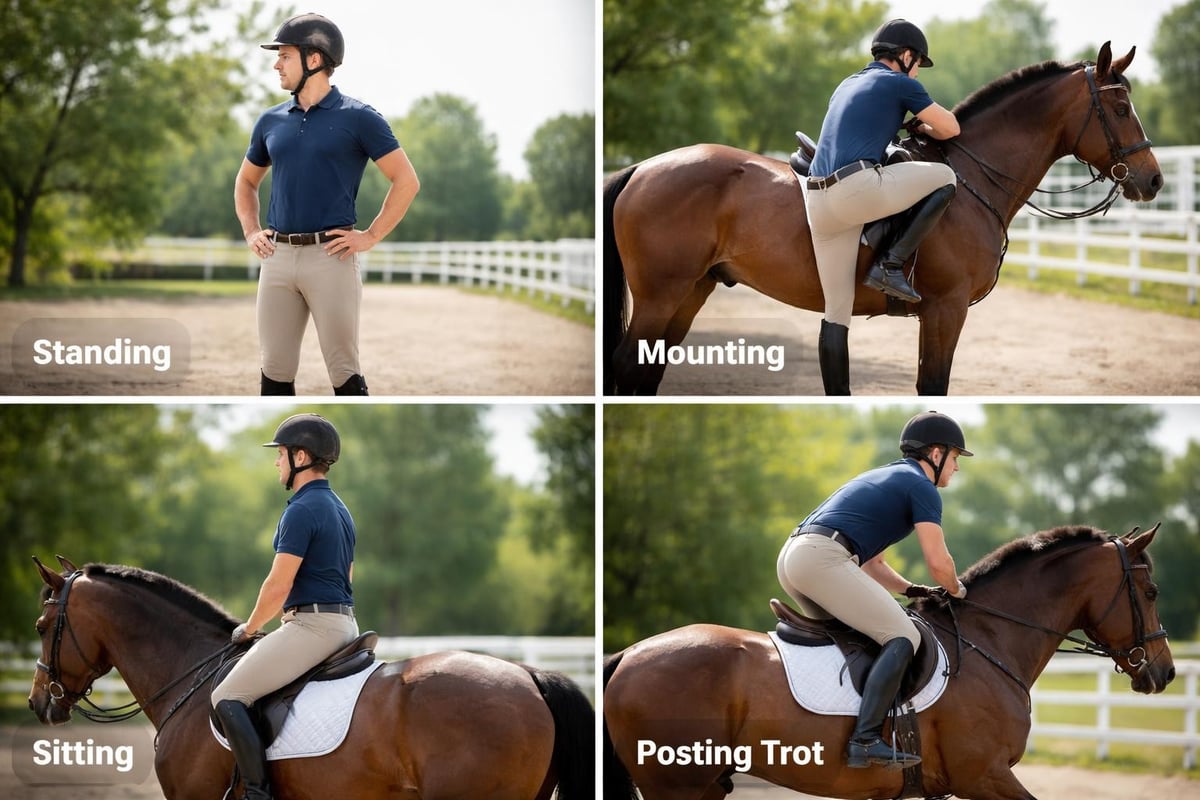
The knee area deserves particular attention. Quality breeches incorporate anatomically shaped knees that follow the natural bend of your leg in riding position. When you're mounted, the knee patch or full seat material should sit exactly where your leg contacts the saddle. Stand in riding position when trying breeches to assess this properly.
Calf fit and leg length complete the picture. Breeches should extend to mid-calf, sitting smoothly beneath tall boots or just above paddock boots depending on your footwear. Excessive length creates wrinkles inside boots; insufficient length rides up uncomfortably. Many premium brands now offer multiple inseam lengths within each waist size, acknowledging that proportion varies significantly among riders.
Proper measurements take the guesswork out of online ordering. Waist, hip, thigh, and inseam measurements compared against manufacturer sizing charts ensure good results. Remember that European sizing differs from British or American systems, so always check the specific brand's guidance.
Features That Matter: Beyond the Basics
Once you've established fit and fabric preferences, specific features distinguish good breeches from exceptional ones.
Pocket placement and style affect both function and aesthetics. Traditional designs include two front pockets plus a small watch pocket. Some contemporary breeches add rear pockets, though these must be positioned and designed to avoid creating bulk beneath your seat. Zip closures keep items secure during riding. Some riders prefer completely flat-front designs for competition wear, relegating pockets to training breeches.
Ankle closures have evolved from simple elastic to sophisticated systems. Zip ankles remain popular, allowing you to pull breeches on over bare feet then zip closed for a trim fit inside boots. The quality of these zip systems determines longevity. Premium breeches incorporate lockdown mechanisms that prevent zips from sliding during wear.
Waistband construction influences comfort significantly. Wide waistbands distribute pressure more evenly, particularly important during hours in the saddle. Some designs incorporate silicone grip on the interior waistband to help keep shirts neatly tucked. Flat-seam construction prevents chafing.
Colour options traditionally centred on tan, white, and black for competition wear, with navy and grey for schooling. Contemporary designs have expanded this palette considerably whilst maintaining appropriate formality levels for showing. Competition wear still typically demands conservative colours, whilst training breeches offer more creative expression.
Seasonal Considerations: Year-Round Performance
Climate significantly influences breech selection. British weather alone requires diverse options.
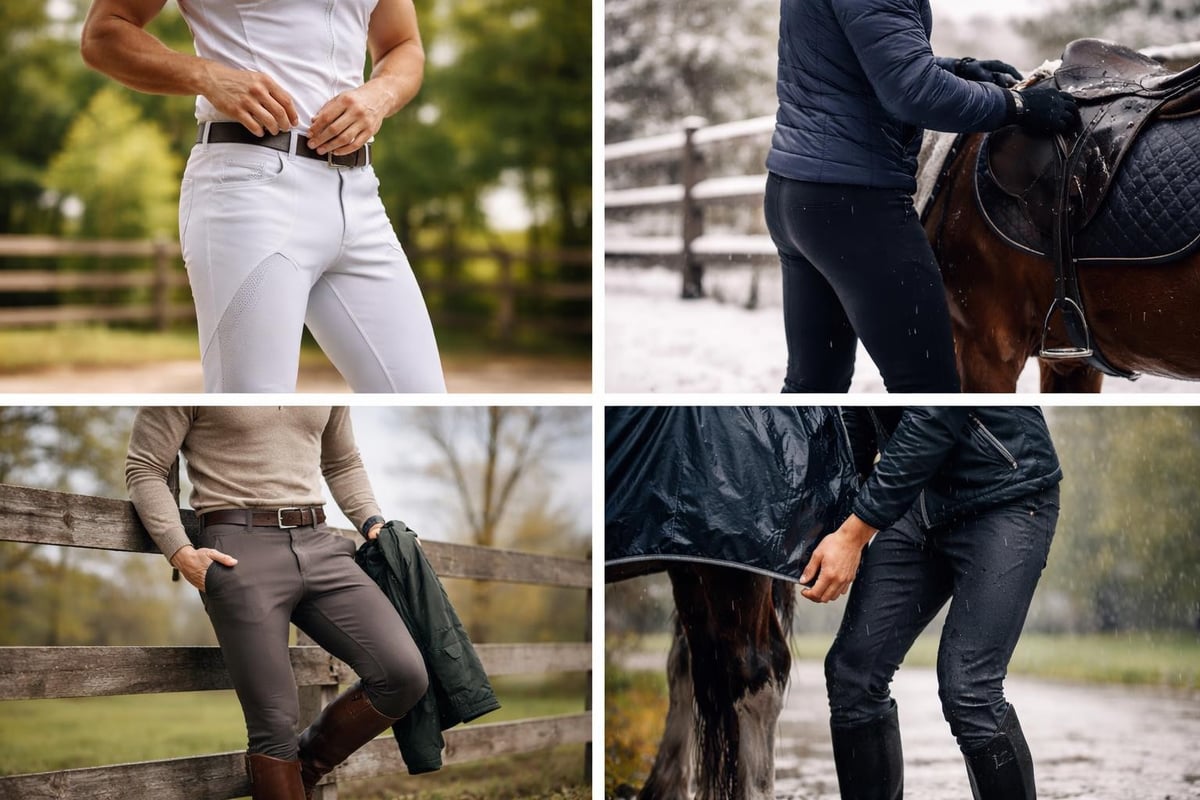
Summer breeches prioritize breathability and moisture management. Lightweight technical fabrics, often with mesh panels, keep you comfortable during hot weather riding. Some designs incorporate UV protection, particularly relevant for riders in exposed arenas or those who hack out extensively. Lighter colours reflect heat more effectively than dark shades, though this requires balancing against visible dirt during stable work.
Winter breeches add thermal properties without bulk. Fleece-lined options provide genuine warmth during cold weather riding. The challenge lies in maintaining the trim fit essential for proper riding whilst adding insulation. Premium winter breeches achieve this through technical fleece materials that trap warm air efficiently in minimal thickness. Wind-resistant outer fabrics enhance protection during hacking or outdoor schooling.
All-season breeches split the difference, offering moderate thermal properties with adaptability. Mid-weight fabrics work across broader temperature ranges, though they may not excel at either extreme. Many riders maintain a rotation addressing specific seasonal needs rather than compromising with all-season options.
Water resistance matters more than many riders initially consider. Even light rain penetrates standard breeches quickly. Some premium designs incorporate DWR (durable water repellent) treatments that cause water to bead and roll off rather than soaking through. This proves particularly valuable during outdoor riding in changeable weather.
Care and Maintenance: Protecting Your Investment
Proper care extends breech lifespan substantially whilst maintaining performance properties and appearance.
Washing guidelines typically recommend cold water and gentle cycles. High temperatures can damage elastane fibres, reducing stretch and recovery. Harsh detergents may affect technical fabric properties or fade colours prematurely. Turn breeches inside out before washing to protect grip materials and outer surfaces.
Drying methods matter more than many realize. Tumble drying on high heat degrades fabrics and can damage grip materials permanently. Air drying preserves fabric integrity and extends garment life. If you must use a dryer, select low heat and remove breeches whilst still slightly damp.
Storage practices seem minor but affect how breeches maintain their shape. Folding at the waist and hanging over a trouser hanger prevents unwanted creases. Avoid hanging breeches by their belt loops, which stretches the waistband over time. Ensure breeches are completely dry before storing to prevent mildew.
Stain treatment requires promptness. Mud, manure, and grass stains come out far more easily when fresh. Pre-treat problem areas before washing. Avoid bleach on technical fabrics, which can damage fibres and create weak points. Specialized equestrian clothing cleaners address common stains whilst protecting performance properties.
| Care Aspect | Best Practice | Why It Matters |
|---|---|---|
| Water Temperature | Cold (30°C max) | Preserves elastane, prevents shrinkage |
| Detergent | Gentle, technical fabric formula | Maintains DWR treatments, protects grip |
| Drying | Air dry or low heat | Prevents fabric degradation |
| Frequency | After every 2-3 wears (or when soiled) | Removes salt, sweat, maintains hygiene |
| Storage | Fold at waist, hang properly | Maintains shape, prevents creases |
Coordinating Your Riding Wardrobe
Mens equestrian breeches form the foundation of a functional riding wardrobe, but they don't work in isolation.
Upper body coordination creates cohesive appearance whilst supporting performance. Technical polo shirts or base layers pair naturally with breeches for schooling. Structured jackets and tailored pieces elevate the same breeches for competition settings. The key lies in matching formality levels and ensuring upper layers don't compromise the clean lines breeches create.
Footwear choices influence which breech styles work best. Tall boots require breeches that sit smoothly beneath without excessive bulk at the calf. Paddock boots with half chaps allow more flexibility in leg length. Some riders prefer different breeches depending on which boots they're wearing that day.
Seasonal layering extends wardrobe versatility. The same quality breeches work year-round when paired appropriately. Base layers beneath breeches add warmth without bulk during winter. Removing these layers during warmer months maintains the same outward appearance and fit.
Assembling practical riding outfits requires considering how pieces work together across various weather conditions and riding contexts. Building around several pairs of quality breeches in complementary colours creates maximum flexibility with minimum wardrobe size.
Investment Versus Value: Making Smart Choices
Quality mens equestrian breeches represent significant investment compared to casual athletic wear. Understanding where that investment goes helps make informed decisions.
Construction quality separates premium from budget options. Examine seam construction. Flat-lock seams lie completely flush against skin, preventing chafing during movement. Reinforced stitching at stress points ensures breeches withstand the unique demands of riding. Bar tacks at pocket corners and other high-stress locations prevent premature failure.
Material composition directly affects performance and longevity. Premium fabrics maintain stretch recovery through hundreds of wear cycles. Cheaper alternatives lose shape quickly, becoming baggy and unflattering. Grip materials should remain tacky and flexible rather than becoming hard or peeling away from the base fabric.
Brand reputation often reflects consistent quality control and thoughtful design. Established equestrian brands understand riders' specific needs through years of feedback and refinement. Newer brands can offer innovation and value, though research helps distinguish genuine quality from clever marketing.
| Price Range | Typical Features | Best For |
|---|---|---|
| Entry Level (£40-£80) | Basic stretch fabric, simple grip, standard fit | Beginners, occasional riders |
| Mid-Range (£80-£150) | Technical fabrics, quality grip, better fit options | Regular riders, multiple disciplines |
| Premium (£150-£250+) | Advanced materials, superior construction, refined details | Serious competitors, daily riders |
Cost per wear provides better value assessment than initial price. Breeches worn three times weekly for two years deliver over 300 wears. Premium breeches at £200 cost approximately 67 pence per wear. Budget breeches at £60 that fail after six months cost 75 pence per wear despite lower initial investment. Quality proves economical over time.
Discipline-Specific Considerations
Different equestrian disciplines place varying demands on breeches, influencing optimal choices.
Dressage traditionally favours full seat breeches in conservative colours. The sustained sitting required at collected gaits demands maximum grip and security. White or light colours remain standard for competition, requiring breeches that maintain appearance through repeated washing. Some dressage riders prefer slightly higher-rise breeches that don't gap when adopting deep seats.
Show jumping works well with either full seat or knee patch styles. Many jumpers prefer knee patch breeches for the freedom of movement during two-point position and course walking. Darker colours prove practical for schooling, with formal options reserved for competition. Reinforced inner calf areas withstand friction from close contact with the horse during jumping efforts.
Eventing often involves owning both styles. Full seat for dressage and show jumping phases provides security. Some eventers switch to knee patch for cross-country, preferring the less restrictive feel during the galloping and varied positions this phase demands. Practical colours that don't show every speck of mud between phases prove valuable.
General riding and hacking benefit from versatile, comfortable breeches that transition easily from arena to trail. Practical colours, durable fabrics, and comfortable fits take precedence over competition formality. Many riders choose this context for trying new styles or colours they wouldn't select for showing.
Understanding different riding contexts helps build an appropriate breeches collection without unnecessary duplication. Most riders find two to three pairs adequate, though serious competitors often maintain larger rotations.
Modern Innovations: What's Available in 2026
The equestrian clothing industry continues evolving, bringing genuine improvements to mens equestrian breeches.
Smart fabrics now incorporate moisture management that actively responds to body temperature. Phase-change materials absorb excess heat during intense activity then release it when you cool down, helping maintain comfortable body temperature across varying activity levels. Whilst still premium-priced, these technologies are becoming more accessible.
Sustainable materials address environmental concerns without compromising performance. Recycled polyester and polyamide now match virgin materials in durability and technical properties. Some manufacturers incorporate natural fibres like merino wool blended with technical synthetics, combining moisture management with renewable materials. These options appeal to environmentally conscious riders seeking performance and responsibility.
Antimicrobial treatments reduce odour development between washes. Silver ions or other antimicrobial agents incorporated during fabric production inhibit bacteria growth. This proves particularly valuable during multi-day competitions or for riders who can't launder breeches immediately after each use.
Compression elements borrowed from athletic wear provide muscular support during riding. Strategic compression panels around major muscle groups may reduce fatigue during long rides whilst maintaining the unrestricted movement essential for effective riding position. This technology remains relatively new in equestrian applications but shows promise.
Building Your Breech Collection
Strategic acquisition builds a functional breeches wardrobe without excessive spending.
Start with essentials: one pair of quality breeches in a practical colour suitable for both schooling and casual competition. Tan or navy work across most contexts. Ensure proper fit and comfortable fabric before expanding your collection. This foundation pair teaches you what works for your riding and body type.
Add specialization: once you've established baseline preferences, add breeches addressing specific needs. Competition riders need formal options in appropriate colours for their discipline. Those riding year-round benefit from seasonal variations. Multiple-discipline riders might add style variations (full seat versus knee patch) for different contexts.
Consider rotation: having multiple pairs means each pair sees less frequent wear, extending overall lifespan. Two to three pairs rotated regularly last longer than a single pair worn constantly. This also ensures you're never caught without clean breeches when needed.
Quality over quantity remains sound advice. Three pairs of well-constructed breeches outlast and outperform six pairs of budget options whilst providing better riding experience throughout their life. Browse quality breech collections to understand what premium construction delivers.
Replace proactively: breeches showing significant wear, losing stretch recovery, or developing compromised grip materials should be retired from regular rotation. Worn breeches affect comfort and potentially riding performance. Relegating older pairs to yard work or lessons whilst maintaining newer breeches for serious riding and competition preserves your best appearance when it matters most.
Quality mens equestrian breeches combine technical performance with refined style, supporting your riding whilst maintaining the professional appearance the sport demands. Whether you're just starting out or refining an established wardrobe, choosing breeches that fit properly, perform reliably, and suit your specific riding needs transforms your experience in the saddle. Gallant Equestrian creates performance-driven breeches designed specifically for male riders, combining New Zealand design heritage with technical innovation that transitions seamlessly from stable to everyday life. Look the Part. Enjoy the Ride.

