

Horseback Riding Jacket: A Guide for Men | Gallant Equestrian
Jul 26, 2026
The right horseback riding jacket does more than keep you warm. It moves with you in the saddle, handles unpredictable weather, and looks sharp enough to wear beyond the stables. For men who ride regularly, finding that balance between performance and style takes more than picking the first waterproof shell you find online. It requires understanding what makes a jacket work in the saddle and how modern fabrics and designs have evolved to meet those demands.
What Makes a Horseback Riding Jacket Different
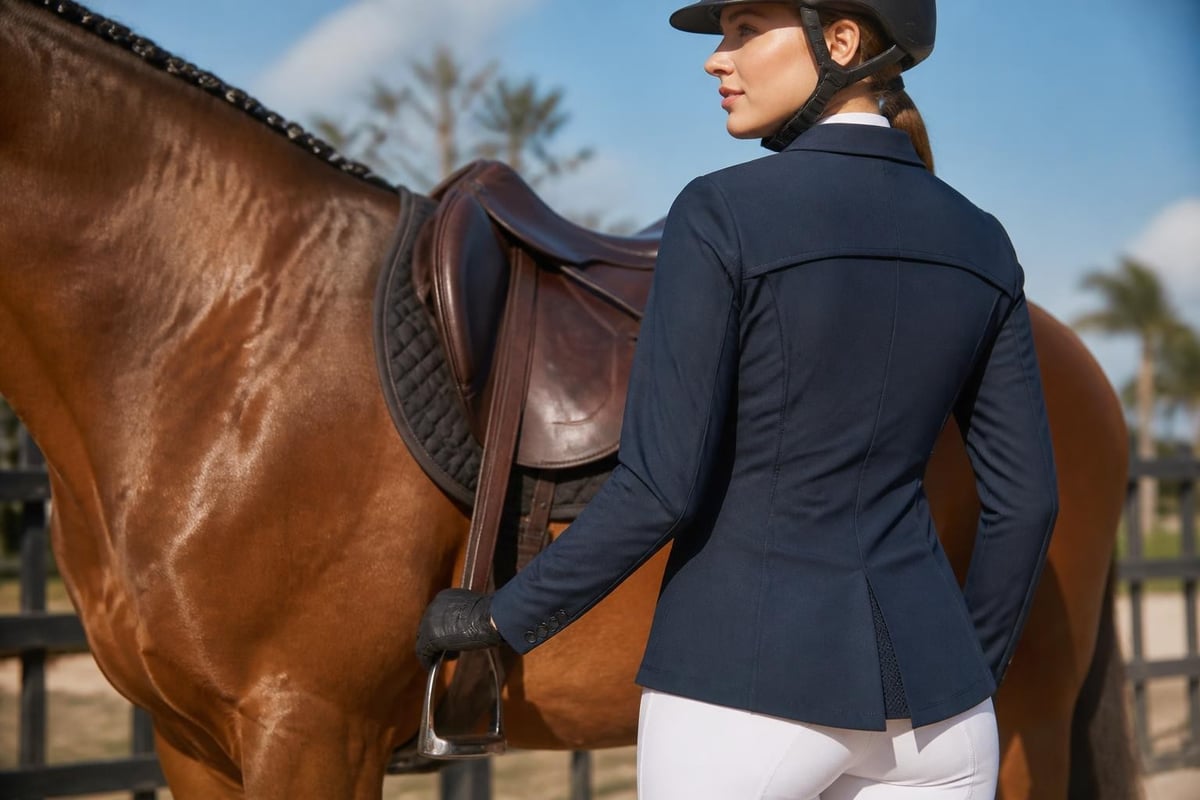
A horseback riding jacket isn't just outerwear with pockets. It's designed around the unique demands of being on horseback, where your arms reach forward, your torso leans and twists, and you need freedom through the shoulders and back without excess fabric bunching around your waist. Standard casual jackets restrict movement or ride up when you're in the saddle, creating discomfort after the first hour.
Equestrian-specific cuts feature longer backs to cover your lower spine when you're seated, articulated sleeves that move naturally when holding reins, and tailored waists that don't balloon in the wind. The fabrics need to handle moisture from both rain and sweat while remaining breathable enough that you don't overheat during warm-ups or intensive schooling sessions.
Modern performance materials have transformed what's possible. Technical fabrics now offer four-way stretch, water resistance, and breathability in combinations that weren't available even five years ago. This means you can find a horseback riding jacket that performs in demanding conditions whilst maintaining a refined appearance suitable for everyday wear.
Choosing Between Riding Styles and Jacket Types
Your discipline influences which jacket features matter most. Show jumping and cross-country riders need maximum mobility and often prefer lightweight soft shells that move with explosive movements over fences. Dressage riders typically want a more structured silhouette that maintains elegant lines during precision work. Hack and leisure riders benefit from versatility, choosing jackets that transition easily from morning rides to afternoon errands.
Competition Requirements
Competition jackets follow specific guidelines depending on your discipline and level. Traditional show coats in navy, black, or tweed remain standard for hunters and equitation classes. Dressage tests often call for tailcoats at upper levels, though shadbellies work for many divisions. Eventing accepts technical riding jackets during cross-country phases, with proper show attire required for dressage and show jumping sections.
Understanding what to wear in the competition arena helps you build a functional competition wardrobe. Recent updates to many governing body rules have relaxed certain restrictions, allowing performance fabrics that meet traditional colour requirements. This shift recognizes that modern materials can deliver protection and professionalism simultaneously.
Training and Everyday Options
Training jackets prioritize function over formality. Soft shells dominate this category, offering weather protection without weight. Quarter-zip pullovers work well for mild conditions, providing easy temperature adjustment during varying intensity sessions. Full-zip designs give you maximum versatility, transforming from jacket to vest when you unzip and remove sleeves on convertible models.
Water-resistant shells protect against sudden showers common in spring and autumn riding. These packable options weigh little but deliver significant protection when weather turns. Pairing a waterproof riding jacket with breathable base layers creates an adaptable system that handles everything from morning frost to midday sun.
Fabric Technology and Performance Standards
Technical fabrics separate modern horseback riding jackets from traditional options. Understanding these materials helps you match jacket performance to your riding conditions and personal preferences. Synthetic blends dominate contemporary riding wear because they deliver specific benefits that natural fibres struggle to match.
| Fabric Type | Key Benefits | Best Use Case |
|---|---|---|
| Soft Shell | Four-way stretch, water-resistant, breathable | Daily training, moderate weather |
| Hard Shell | Fully waterproof, windproof, packable | Heavy rain, extreme conditions |
| Fleece-Lined | Insulated, comfortable, moisture-wicking | Cold weather, winter riding |
| Technical Blends | Balanced performance, versatile, easy care | Year-round riding, multi-purpose |
Water resistance differs from waterproofing. Resistant fabrics repel light rain and moisture but eventually saturate under sustained exposure. Waterproof membranes prevent water penetration entirely, though they often sacrifice some breathability. For most riders, water-resistant soft shells handle typical conditions whilst maintaining superior comfort during active riding.
Breathability matters more than many riders initially realize. A jacket that traps moisture from sweat creates discomfort faster than external rain. Quality fabrics move moisture vapor away from your skin, keeping you dry from the inside out. This becomes crucial during intensive schooling sessions or when layering for cold conditions.
Fit Considerations for Men's Riding Jackets
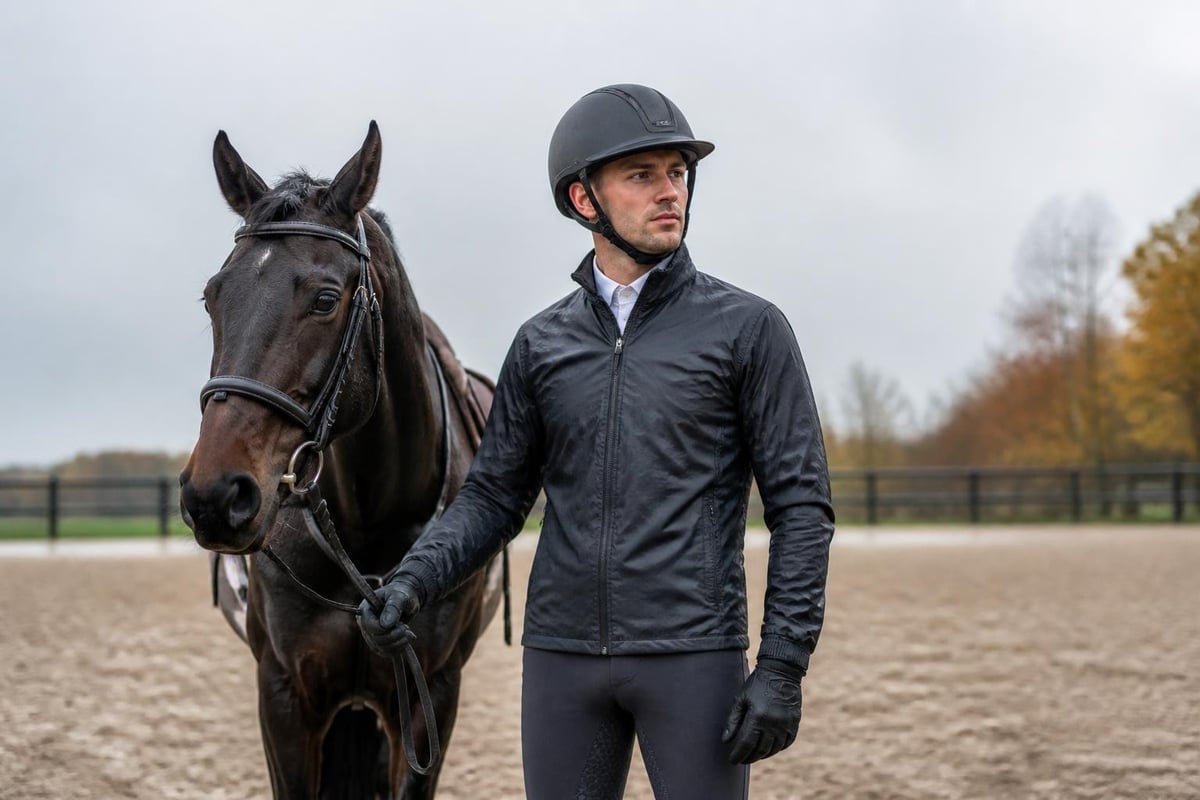
Proper fit transforms a good jacket into an excellent one. Men's equestrian jackets should allow full range of motion through shoulders and arms whilst maintaining a tailored appearance that doesn't look baggy or oversized. The shoulders should sit naturally without pulling when your arms extend forward into riding position.
Sleeve length requires particular attention. When you hold your arms in riding position, sleeves should cover your wrists completely without bunching at the elbows. Many riders find standard sleeve lengths ride up when mounted, exposing wrists to cold and rain. Quality horseback riding jackets account for this with slightly longer sleeves designed for the forward arm position.
The torso should fit close enough to prevent wind ballooning but loose enough to accommodate layers underneath. A good test involves wearing your typical riding base layer and mid-layer, then checking movement in the saddle position. You should be able to twist, lean forward, and reach without restriction or the jacket riding up significantly.
Sizing and Adjustment Features
Modern jackets offer adjustment systems that fine-tune fit. Hem drawcords cinch the waist to prevent wind from flowing up inside the jacket. Velcro or elastic cuffs seal wrists against weather whilst allowing adjustment for different layer thicknesses underneath. Some designs include adjustable waist tabs similar to those found on premium technical outerwear.
Understanding your measurements helps when shopping online. Chest measurement taken over your typical riding layers gives the most accurate sizing baseline. Shoulder width and sleeve length measurements ensure proper fit in critical areas. Consulting size guides before purchasing saves the hassle of returns and exchanges.
Safety and Protection Standards
Whilst not all riding jackets incorporate protective elements, safety considerations influence design choices. Body protectors worn underneath require jackets with sufficient room and appropriate cut. Some riders choose jackets specifically designed to fit over safety vests, particularly for cross-country and show jumping disciplines.
The ASTM F1937 standard specifies design and performance criteria for body protectors used in equestrian sports. Understanding these requirements helps when selecting protective equipment and ensuring your jacket accommodates necessary safety gear without compromising movement or comfort.
Visibility features enhance safety during early morning or evening rides. Reflective trim on sleeves, back yokes, or front panels increases visibility to motorists when riding near roads. Some technical jackets incorporate high-visibility panels that meet safety standards whilst maintaining subtle styling appropriate for general wear.
Washington State regulations detail mandatory safety equipment for individuals on horseback at racetracks, including specifications for vests and helmets. Whilst these specific requirements apply to racing contexts, they reflect broader safety consciousness throughout the equestrian community.
Style and Versatility Beyond the Stable
The best horseback riding jacket works equally well at the local coffee shop or running weekend errands. This dual-purpose functionality reflects changing expectations in men's equestrian apparel, where riders demand clothing that transitions seamlessly between stable and street without looking out of place in either setting.
Clean lines and refined details distinguish premium riding jackets from purely technical outdoor wear. Thoughtful colour choices in navy, charcoal, olive, or black work across contexts whilst maintaining practical concealment of stable dirt and arena dust. Subtle branding avoids the heavily logoed appearance common in mainstream athletic wear.
Coordinating Your Riding Wardrobe
A versatile horseback riding jacket anchors multiple outfit combinations. Paired with quality riding breeches and boots, it creates a classic equestrian look suitable for training sessions. Combined with casual trousers or jeans, the same jacket transitions to everyday wear without signalling "just came from the barn" to everyone you encounter.
Building a functional equestrian wardrobe follows similar principles to developing any capsule collection. Core pieces in complementary colours and compatible styles create numerous outfit options from relatively few items. Understanding how equestrian attire fits together helps you maximize wardrobe efficiency whilst maintaining appropriate style for different contexts.
Quality jackets justify their investment through longevity and versatility. A well-made horseback riding jacket serves reliably for years, handling frequent wear across varying conditions without deteriorating or losing performance. This durability makes premium options more economical long-term than repeatedly replacing cheaper alternatives that fail after a season or two.
Maintenance and Care Best Practices
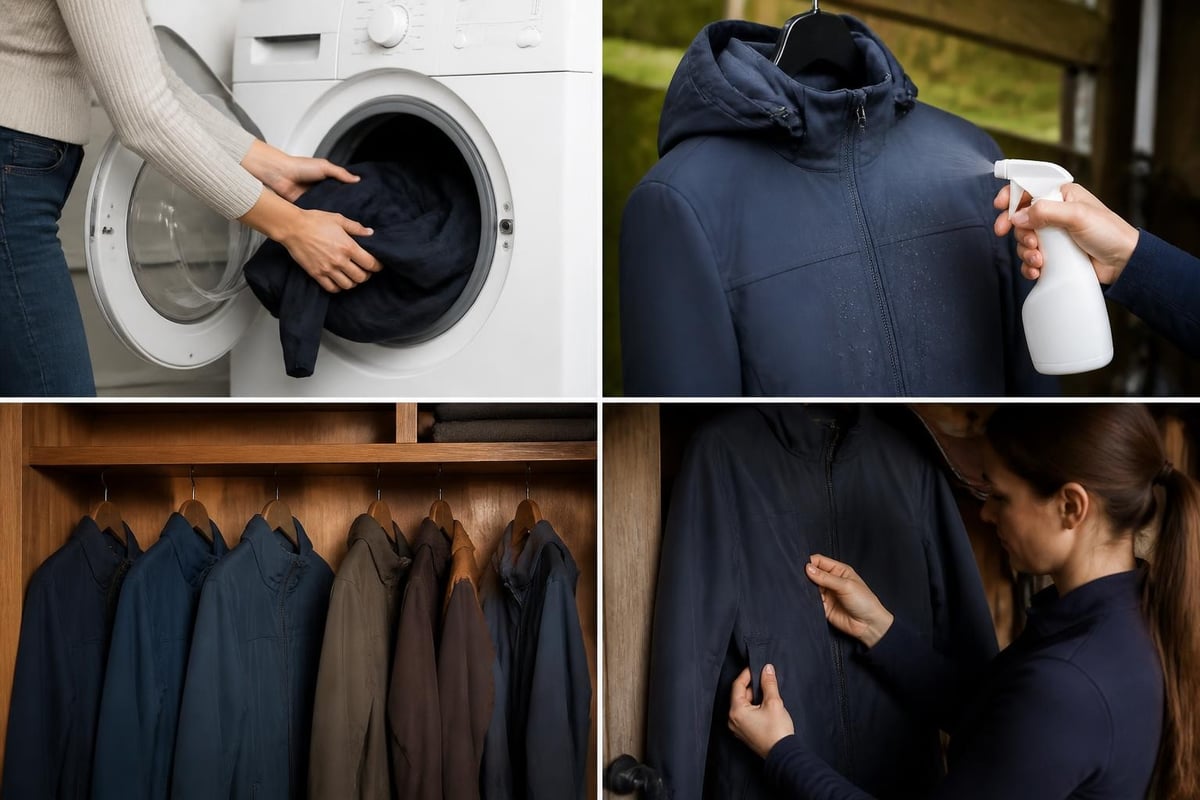
Proper care extends jacket life and maintains performance characteristics. Technical fabrics require specific treatment to preserve water resistance and breathability. Harsh detergents and fabric softeners damage membrane coatings and reduce water repellency over time. Following manufacturer care instructions ensures your jacket performs as intended season after season.
Regular cleaning prevents dirt and oils from degrading fabric treatments. Stable dust, arena footing, and general riding grime accumulate gradually, compromising breathability before you notice visual dirtiness. Washing jackets every few weeks during heavy use periods maintains performance whilst keeping them fresh and professional-looking.
Water-resistant treatments fade with wear and washing. Reapplying durable water repellent sprays restores protective coatings that help fabrics shed moisture. This simple maintenance step keeps water beading on the surface rather than soaking into the fabric, preserving comfort during wet rides and extending periods between necessary washes.
| Care Task | Frequency | Purpose |
|---|---|---|
| Machine Wash | Every 3-4 wears | Remove dirt, maintain breathability |
| DWR Reapplication | Every 3-4 washes | Restore water repellency |
| Seam Inspection | Monthly | Identify early damage, prevent failure |
| Storage Check | Seasonally | Ensure proper hanging, prevent creasing |
Storage matters more than many riders realize. Hanging jackets properly prevents creasing that damages membrane coatings. Avoid compressing technical jackets in tight spaces or leaving them folded for extended periods. Clean jackets before storing them for off-season, as residual dirt and oils accelerate fabric degradation even when garments aren't being worn.
Investment and Value Considerations
Premium horseback riding jackets command higher prices than casual outdoor wear, reflecting specialized design, quality materials, and construction appropriate for equestrian demands. Understanding what drives these costs helps you evaluate whether specific features justify price differences and which compromises make sense for your riding frequency and budget.
Construction quality appears in details like reinforced seams, quality zippers, and finished hems. These elements determine whether a jacket lasts multiple seasons or fails after limited use. Investing in well-constructed pieces from manufacturers who understand equestrian needs typically proves more economical than cycling through cheaper alternatives that don't withstand regular riding demands.
Feature prioritization depends on your riding context. Frequent riders in variable weather climates benefit most from advanced fabric technology and weather protection. Weekend riders in mild conditions might prioritize style and versatility over maximum performance specifications. Matching investment to actual requirements prevents overspending on features you won't use whilst ensuring adequate performance where it matters.
Regional Considerations and Climate Adaptation
Climate significantly influences which horseback riding jacket features matter most. Riders in temperate regions need versatile options that handle cool mornings and warm afternoons within single rides. Those in consistently cold climates prioritize insulation and wind protection. Understanding your typical riding conditions helps you select jackets that perform reliably in your environment.
Layering systems offer more versatility than single heavy jackets. A quality shell paired with removable insulation layers adapts to shifting temperatures throughout riding sessions and across seasons. This modular approach lets you adjust protection level precisely rather than choosing between too warm or too cold.
Humidity affects jacket performance differently than temperature alone. Humid climates demand maximum breathability to prevent moisture accumulation from sweat, even when external temperatures seem moderate. Dry climates allow less breathable fabrics without discomfort, though wind protection becomes more important in areas with persistent breezes.
Emerging Trends in Men's Equestrian Outerwear
Contemporary equestrian fashion increasingly blurs lines between technical riding wear and lifestyle clothing. This convergence reflects broader trends toward athletic-inspired everyday wear and growing recognition that functional design enhances rather than compromises style. Men's riding jackets exemplify this shift, offering genuine performance whilst maintaining refined aesthetics suitable beyond equestrian contexts.
Sustainable materials gain traction as riders seek environmentally responsible options. Recycled fabrics, responsible manufacturing processes, and durability-focused design reduce environmental impact whilst delivering performance comparable to conventional materials. This movement toward sustainability aligns with equestrian community values around land stewardship and animal welfare.
Minimalist design approaches favor clean lines and subtle details over heavily branded or overly technical appearances. This aesthetic shift makes horseback riding jackets more versatile for everyday wear whilst maintaining the refined character appropriate for equestrian settings. The result is clothing that performs brilliantly in the saddle yet looks perfectly natural in daily life.
Smart features integrate seamlessly rather than dominating design. Hidden pockets secure phones and keys without visible bulk. Magnetic closures replace fiddly zippers in strategic locations. Convertible elements transform jackets between configurations without obvious mechanical complexity. These thoughtful details enhance functionality whilst preserving clean aesthetics.
Understanding how equestrian fashion evolves helps you make informed choices that remain relevant across seasons and shifting trends. Classic design elements prove timeless whilst thoughtful incorporation of contemporary features ensures modern performance and style.
Selecting the right horseback riding jacket requires balancing performance, fit, and versatility to match your individual riding style and daily life. Quality construction, thoughtful design, and appropriate fabrics ensure your jacket performs reliably across varying conditions whilst maintaining the refined appearance you want both in and out of the saddle. Whether you're building your first complete riding wardrobe or upgrading specific pieces, investing in proper equestrian outerwear pays dividends through comfort, durability, and confidence every time you ride. Discover how Gallant Equestrian creates performance-driven jackets and complete riding collections that work as hard as you do, designed in New Zealand to deliver uncompromising quality that transitions effortlessly from stables to street. Look the Part. Enjoy the Ride.

