

Equestrian Show Jacket: The Complete Guide for Men
May 02, 2026
The right equestrian show jacket transforms your presence in the competition arena. It's the difference between looking prepared and looking professional, between meeting regulations and exceeding expectations. For male riders, finding a show jacket that balances tradition with modern performance isn't just about ticking boxes. It's about stepping into the ring with confidence, knowing your kit supports your riding as much as your skill does.
What Makes a Show Jacket Different
An equestrian show jacket isn't simply formal outerwear on horseback. The construction differs fundamentally from standard blazers or sport coats.
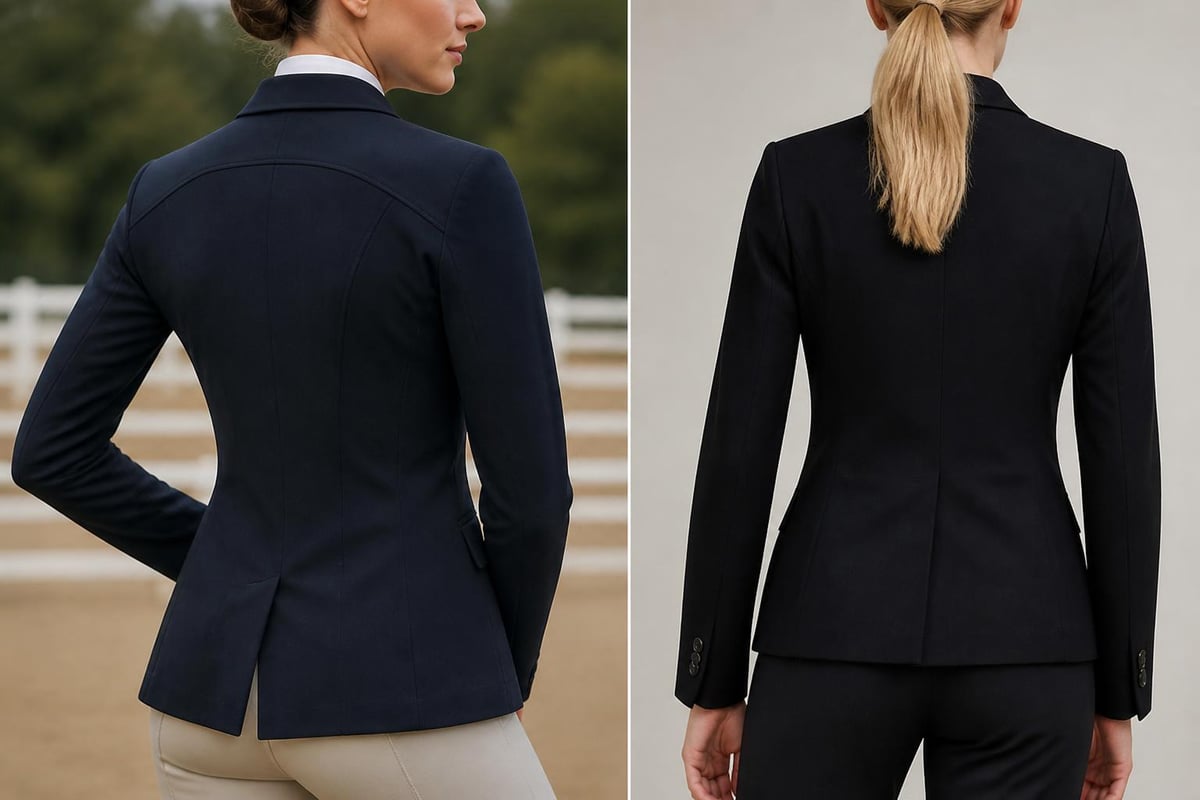
The tailoring addresses movement patterns unique to riding. Shoulder panels allow unrestricted arm rotation when handling reins. Back vents permit freedom through the seat and hips. Sleeve cuts accommodate bent elbows without riding up the forearm.
Traditional show jackets used wool exclusively, which looked impeccable but trapped heat mercilessly during summer competitions. Modern versions incorporate technical fabrics that breathe whilst maintaining a formal appearance. Some manufacturers now produce show jackets with softshell technology that offer stretch and moisture management without sacrificing the structured look judges expect.
The weight matters considerably. Heavy fabrics restrict movement and cause fatigue during long classes. Lightweight options enhance comfort but must retain enough structure to hang properly. Finding that balance separates adequate jackets from exceptional ones.
Understanding Discipline Requirements
Each equestrian discipline maintains distinct dress codes, and your equestrian show jacket must align with your chosen sport.
Dressage Specifications
Dressage demands the most formal presentation. At lower levels, dark colours prevail-navy, black, or dark grey. Upper-level competitors may wear shadbelly coats, though standard jackets remain acceptable.
The fit runs closer to the body than jumping jackets. Clean lines emphasize the rider's position and posture, which judges scrutinize constantly. Buttons should be conservative, typically covered or subtle. Competition-specific attire for dressage prioritizes understated elegance over flash.
Show Jumping Standards
Show jumping allows slightly more latitude. Navy remains the safest choice, though certain venues permit lighter colours during summer months. The cut tends to be marginally less restrictive than dressage jackets, acknowledging the more dynamic movement patterns.
Judges care about turnout, but functionality takes precedence. Your jacket shouldn't impede your ability to fold over fences or adjust quickly between obstacles. Many jumpers prefer modern technical fabrics that move with them rather than fighting every stride.
Eventing Versatility
Eventing's dressage phase follows dressage rules. The show jumping phase mirrors jumping standards. This dual requirement means eventers often invest in versatile jackets that satisfy both contexts.
Practicality matters enormously. You'll likely wear the same jacket across multiple phases, so durability and easy care become priorities. Stain resistance and quick-drying properties prove invaluable when you're competing across several days.
Achieving Proper Fit
Fit determines everything. An ill-fitting equestrian show jacket undermines even the finest fabric or construction.
Shoulders and Chest
The shoulder seam should sit precisely where your shoulder ends and your arm begins. Too far inward creates pulling across the back. Too far outward looks sloppy and restricts movement.
When you're mounted with arms forward holding reins, the jacket shouldn't pull tight across the chest or shoulder blades. Test this position when trying jackets-standing in a shop tells you nothing about how it performs in the saddle.
Sleeve Length
Sleeves should end where your wrist meets your hand when your arms hang naturally at your sides. When mounted, this puts the cuff just past your wrist bone, preventing awkward gaps between sleeve and glove.
Many riders make the mistake of buying sleeves too long, thinking they'll look more polished. In reality, excess fabric bunches at the wrist and interferes with rein contact.
Length and Proportion
The jacket hem should cover your seat when mounted, sitting approximately mid-hip when standing. Too short exposes your shirt and disrupts the clean line judges prefer. Too long creates bulk and looks dated.
Finding the right fit often requires trying multiple sizes and brands. Different manufacturers cut differently, particularly between European and American makers.
Fabric Technologies Worth Considering
Modern equestrian show jacket construction has evolved dramatically, though traditional aesthetics remain non-negotiable.
| Fabric Type | Benefits | Considerations |
|---|---|---|
| Wool Blend | Traditional appearance, breathable | Requires dry cleaning, less stretch |
| Technical Polyester | Easy care, moisture-wicking | Can look shiny if poorly made |
| Softshell Hybrid | Exceptional stretch, weatherproof | May not suit all disciplines |
| Cotton Blend | Natural feel, comfortable | Wrinkles easily, limited performance |
Performance fabrics engineered for equestrian use typically incorporate four-way stretch. This allows the jacket to move with you rather than against you, reducing fatigue during lengthy classes or multiple rounds.
Moisture management keeps you comfortable when nerves or weather create sweat. Look for fabrics that wick moisture away from your body and dry quickly between classes. Nobody wants to compete in a damp jacket during afternoon rounds.
Some riders dismiss technical fabrics as less traditional, but modern materials have transformed competition wear without sacrificing the classic appearance judges expect. The key lies in choosing well-executed designs that prioritize performance beneath a traditional exterior.
Color and Style Conventions
Conservative choices dominate equestrian competition, though subtle variations exist.
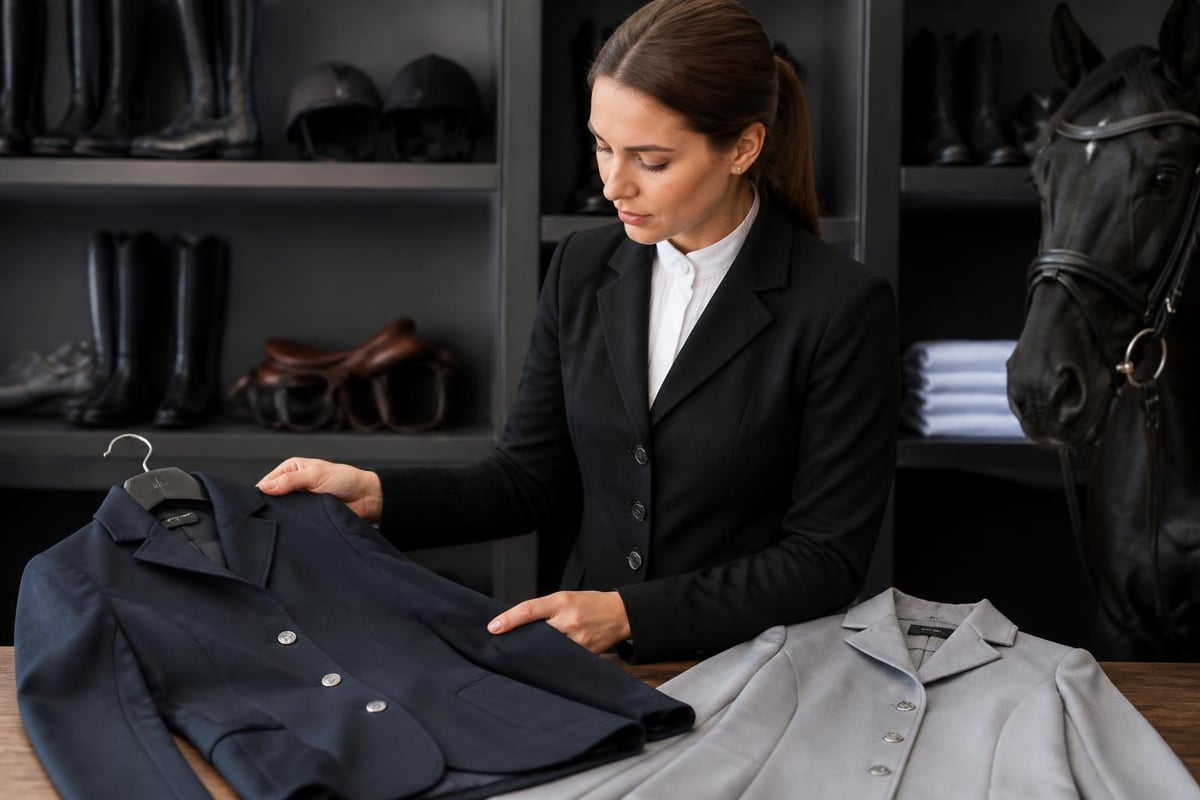
Navy remains universally acceptable across all disciplines and levels. It photographs well, suits most complexions, and signals serious intent. Black follows closely, though some traditionalists view it as slightly less formal for daytime competitions.
Dark grey offers a refined alternative. Charcoal and deeper greys work particularly well for riders who find navy unflattering or simply want subtle distinction.
Lighter colours-tan, beige, or light grey-appear occasionally in show jumping during warm months, but verify venue rules before investing. What's acceptable at local shows may violate regulations at regional or national competitions.
Details matter enormously. Button selection, pocket styling, and collar construction all contribute to the overall impression. Quality equestrian jackets balance classic details with contemporary fit, creating timeless appeal without looking stodgy.
Sizing Across Different Brands
Manufacturers size inconsistently, making brand research essential before purchasing.
European brands often run slimmer through the body and longer in the sleeve than American equivalents. If you typically wear a medium in American cuts, you might need a large in European styling. This isn't about quality-just different fit philosophies.
Some companies design specifically for athletic builds, offering more room through the shoulders and chest whilst maintaining definition at the waist. Others cut more traditionally, which suits different body types.
Always consult specific size charts rather than assuming your usual size applies. Measure your chest, waist, sleeve length, and jacket length, then compare against manufacturer specifications. Understanding sizing variations prevents costly returns and ensures your investment fits properly from delivery.
Investment Versus Budget Options
Price ranges for equestrian show jackets span considerably, from under £200 to well over £800.
Entry-level jackets serve riders competing occasionally or those new to showing. They meet basic requirements but may sacrifice some performance features or durability. For weekend competitors at local venues, these often suffice.
Mid-range options typically incorporate better fabrics, improved construction, and enhanced details. Most serious amateur competitors find this bracket offers the best value-substantial quality without professional-level pricing.
Premium jackets justify their cost through exceptional fabrics, precise tailoring, and longevity. Riders competing frequently at higher levels benefit from the performance advantages and professional appearance these jackets deliver.
Consider cost per wear rather than upfront price. A £400 jacket worn fifty times over several seasons costs £8 per use. A £150 jacket that fits poorly and gets replaced after one season costs £150 per season. Quality competition wear represents genuine investment rather than mere expense.
Care and Maintenance Essentials
Proper care extends your jacket's life dramatically and maintains its professional appearance.
Cleaning Protocols
Many traditional jackets require dry cleaning, which adds ongoing cost and inconvenience. Modern technical fabrics often allow machine washing, though always verify care labels before proceeding.
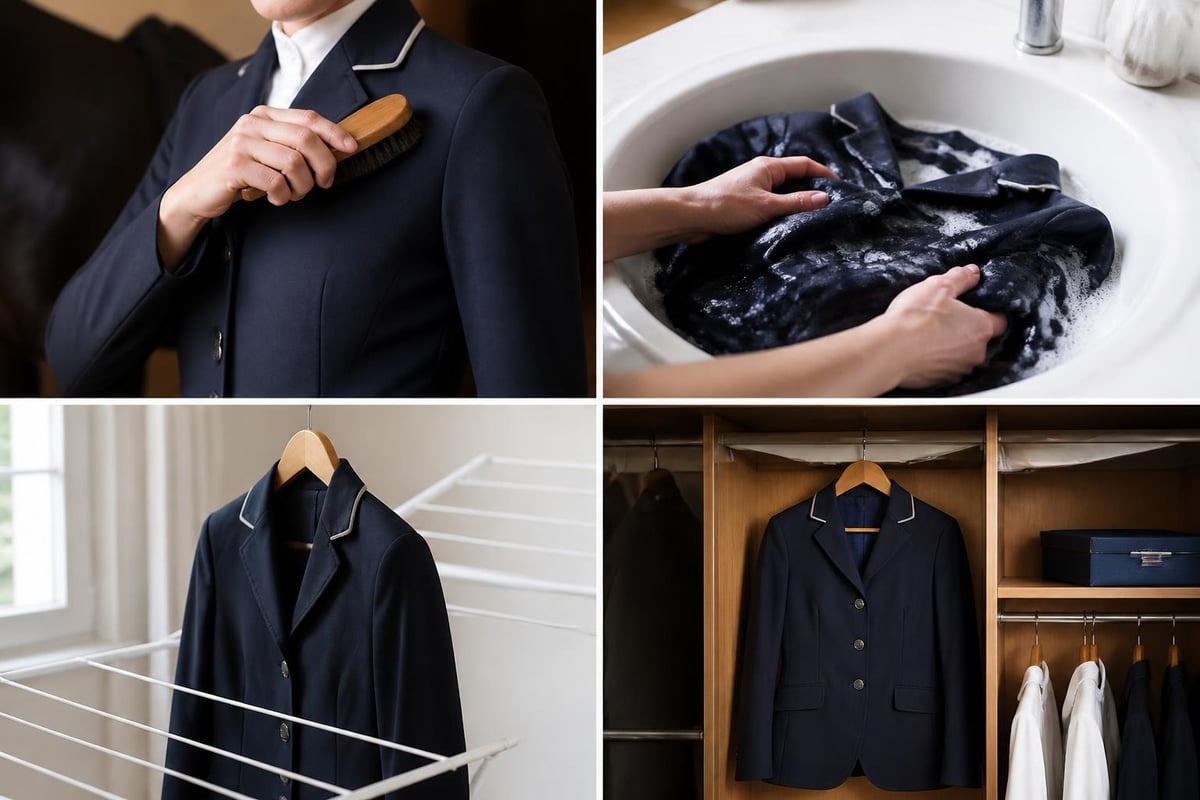
For machine-washable jackets, use cold water and gentle cycles. Turn the jacket inside out to protect the exterior. Skip fabric softener, which can damage technical fabrics' moisture-wicking properties.
Hang dry rather than using machine dryers. Heat can damage elastic fibres and alter the jacket's shape. A padded hanger maintains shoulder structure during storage.
Storage Considerations
Store show jackets properly between competitions. Breathable garment bags protect against dust whilst allowing air circulation. Avoid plastic dry cleaning bags for long-term storage-they trap moisture and encourage mildew.
Never leave damp jackets crumpled in kit bags. Hang them immediately after competing, even if you can't wash them straight away. This prevents permanent creasing and musty odours from developing.
Brush off stable dust and hair before it embeds in the fabric. A good clothes brush takes thirty seconds and prevents dirt from grinding into fibres during storage or transport.
Transportation Tips
Invest in a proper garment bag for travel to competitions. Folding show jackets creates creases that may not hang out before your class. If you must fold, do so along natural seams and hang immediately upon arrival.
Some competitors keep their show jacket in the lorry or car boot permanently. Whilst convenient, temperature extremes can damage fabrics over time. If you use this approach, ensure adequate protection from heat, cold, and moisture.
Common Fit Problems and Solutions
Even quality jackets sometimes require adjustment to achieve perfect fit.
Pulling across the back usually indicates insufficient room through the shoulders or chest. Sizing up may help, but also consider brands that cut more generously through the upper body. Some manufacturers offer athletic cuts specifically for this issue.
Gaping at the waist suggests the jacket's proportions don't match your build. Tailors can take in the waist on most jackets, creating a more defined line without compromising shoulder fit. This alteration costs less than a new jacket and dramatically improves appearance.
Short sleeves plague taller riders constantly. Rather than sizing up the entire jacket (which affects shoulder and chest fit), have a tailor let out the sleeve hem if fabric allows. Some jackets include extra material specifically for this purpose.
Restricted movement when mounted indicates the cut doesn't accommodate riding positions. This rarely improves with wear-the jacket simply isn't designed properly for equestrian use. Consider switching to a brand that prioritizes movement in their construction.
Expert guides on show jacket selection emphasize trying jackets whilst mimicking riding positions. Raise your arms as if holding reins. Bend forward as if posting or jumping. If the jacket restricts these movements in the shop, it'll be worse in the arena.
Tailoring for Peak Performance
Off-the-rack jackets suit some riders perfectly, but many benefit from professional tailoring.
A skilled tailor familiar with equestrian wear can transform a good jacket into an exceptional one. They understand the specific requirements-where you need freedom of movement, where you want definition, how the jacket should sit when mounted.
Common alterations include sleeve shortening or lengthening, waist suppression, and shoulder adjustments. These modifications typically cost £30-80 depending on complexity and location, but the improvement in fit and comfort justifies the expense.
Some riders purchase jackets one size larger than needed, then have them tailored to fit precisely. This approach works particularly well for broad-shouldered riders who need room through the chest but definition at the waist.
Brief your tailor about how you'll use the jacket. Mention your discipline, typical class length, and climate conditions. This context helps them make informed decisions about alterations that enhance rather than hinder performance.
Trends Versus Timeless Choices
Fashion trends occasionally influence equestrian show jacket design, though conservatism dominates.
Recent years have seen subtle shifts toward slimmer cuts and modern fabrics, but the fundamental silhouette remains remarkably consistent. A well-chosen navy show jacket from ten years ago still looks appropriate today-that's the nature of traditional competition wear.
Some manufacturers experiment with textured fabrics, subtle patterns, or contemporary styling details. These work for certain venues and disciplines but risk looking dated quickly. Unless you compete frequently enough to justify multiple jackets, classic choices offer better long-term value.
The real innovation appears in construction rather than aesthetics. Technical fabrics, improved ventilation systems, and ergonomic design represent genuine progress without compromising traditional appearance. These advances enhance performance invisibly, which suits the conservative nature of equestrian sport perfectly.
Equestrian style evolves slowly and deliberately. What works endures. What's merely trendy disappears. Choose accordingly.
Preparing for Competition Day
Your equestrian show jacket should be competition-ready well before you arrive at the venue.
Try the complete outfit-jacket, shirt, tie, breeches, boots-at home several days before competing. Sit on a chair as if mounted. Raise your arms. Check every detail. Discovering fit issues on competition morning creates unnecessary stress.
Pack your jacket properly. Use a garment bag or hang it in your vehicle. Arrive early enough to press out any wrinkles if needed. Some competitors bring portable steamers to competitions-five minutes of preparation prevents looking rumpled during your class.
Inspect buttons before each competition. A lost button moments before entering the ring has derailed many rounds. Carry a spare button and emergency sewing kit in your grooming box. This takes minimal space and provides substantial peace of mind.
Clean boots, pressed breeches, and a well-fitted show jacket signal professionalism before you ever demonstrate your riding. Judges notice turnout, and while it won't compensate for poor riding, it certainly doesn't hurt your overall impression.
Building Your Competition Wardrobe
Most serious competitors eventually own multiple show jackets, though you can start with one versatile piece.
Your first jacket should be navy or black, appropriate for your primary discipline, and fit impeccably. This becomes your foundation-reliable, appropriate, professional. Once you've competed in it successfully several times, you understand what works and what you'd improve.
A second jacket might address different weather conditions. A lighter-weight option for summer competitions or a slightly warmer version for spring and autumn. Some riders maintain separate jackets for different disciplines if they compete across multiple sports.
Building an equestrian capsule wardrobe focuses on versatile, high-quality pieces that work together seamlessly. This approach prevents wardrobe overwhelm whilst ensuring you're always appropriately dressed, whether training at home or competing at championship level.
Modern Performance Without Compromise
The best contemporary equestrian show jackets honour tradition whilst embracing performance innovation.
Look for designs that appear classically tailored but incorporate stretch panels in strategic locations. These additions remain invisible but transform how the jacket moves with you. Similarly, moisture-wicking linings keep you comfortable without any external indication of technical features.
Some manufacturers now offer temperature-regulating fabrics that adapt to conditions. These materials provide warmth when needed but release heat during exertion, maintaining consistent comfort throughout long competition days.
Modern equestrian apparel successfully merges heritage with innovation. You shouldn't have to choose between looking proper and feeling comfortable. The right jacket delivers both.
The equestrian show jacket represents more than competition requirements-it's the uniform that connects you to riding's rich traditions whilst supporting contemporary performance demands. When you've found the right jacket, properly fitted and maintained, you step into the arena with one less concern and considerably more confidence. Gallant Equestrian creates performance-driven jackets and essential riding wear for men who demand both functionality and style, designed to perform in the arena and transition seamlessly to everyday life. Look the Part. Enjoy the Ride.

