

Men's Horseback Riding Apparel: What to Wear in 2026
May 03, 2026
Choosing the right mens horseback riding apparel isn't just about looking sharp in the saddle. It's about finding gear that works as hard as you do, whether you're training at dawn, competing on the weekend, or handling yard work between rides. The right clothing improves your position, protects you from the elements, and transitions seamlessly from stables to everyday life. In 2026, riders expect more from their wardrobe than ever before: technical fabrics that perform, tailored fits that flatter, and versatile pieces that earn their place in your rotation.
The Foundation: Breeches That Actually Work
Mens horseback riding apparel starts with proper breeches. This isn't negotiable. Your relationship with your horse depends on clear communication through your seat and legs, and baggy jeans or cheap riding tights won't cut it. Modern riding breeches combine technical stretch fabrics with strategic reinforcement where it matters most.
Full-seat breeches provide maximum grip through silicone or leather panels that run from knee to knee across your seat. They're brilliant for dressage, jumping, and any discipline where staying centred matters. The grip keeps you secure without pinching, and quality versions won't pill or lose their stickiness after a few washes.
Knee-patch breeches offer a lighter feel with reinforcement only at the knee. They're excellent for everyday riding, schooling sessions, and riders who prefer less grip. The reduced coverage means better breathability in warmer months, and they're generally easier to care for than full-seat designs.
Fit matters more than most riders realize. Your breeches should sit at your natural waist without needing a belt to stay up. The leg should be snug without restricting movement, and the seat shouldn't bag or wrinkle when you're mounted. Technical riding breeches engineered for men account for different proportions than women's designs, offering proper rise and thigh room without excess fabric.
Shirts and Polos: From Training to Competition
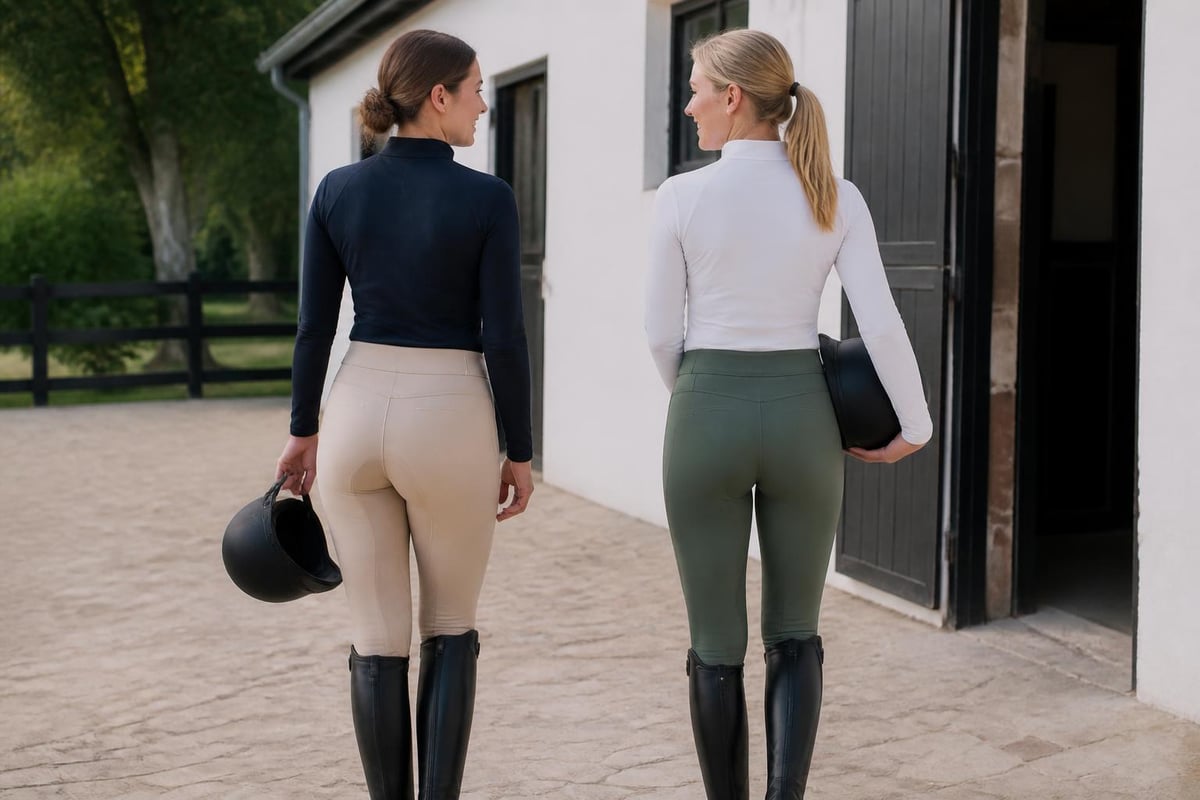
Your upper body needs as much attention as your lower half when building mens horseback riding apparel. Training shirts should move with you, wick moisture, and maintain a professional appearance even after hours in the saddle. Competition shirts need to meet specific standards while keeping you comfortable under pressure.
Performance polo shirts strike the perfect balance for everyday riding. Look for moisture-wicking fabrics with a bit of stretch through the shoulders and chest. Raglan sleeves or gusseted underarms prevent restriction when you're posting or reaching forward. The Gallant Equestrian collection focuses on pieces that work equally well for morning training and afternoon meetings.
Competition shirts require more structure. Traditional show shirts feature long sleeves, collar stays, and clean lines that look sharp under a jacket. Modern versions incorporate stretch panels in strategic locations so you're not choosing between looking good and moving freely. White remains the standard for most disciplines, but subtle patterns and colours are increasingly acceptable in certain contexts.
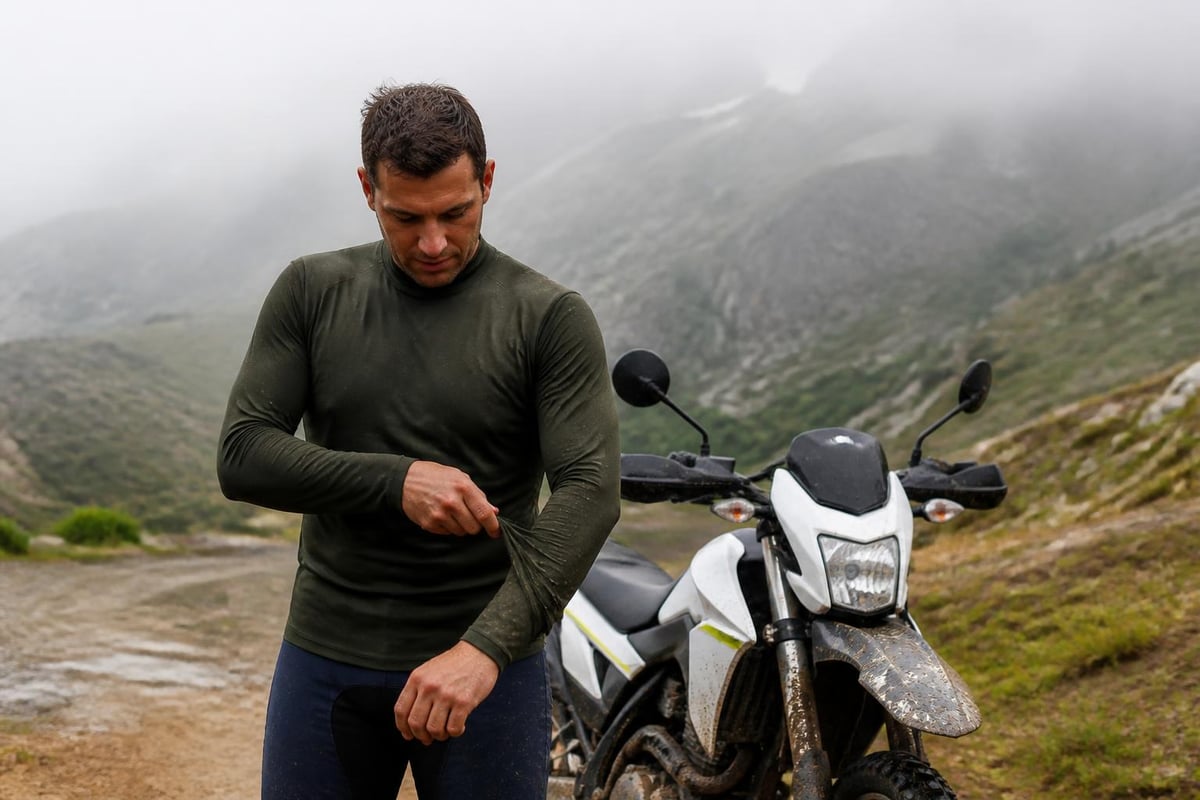
Base layers deserve serious consideration, especially in variable climates. A proper base layer regulates temperature, manages moisture, and provides an extra barrier against wind. Merino wool works brilliantly year-round: warm when it's cold, cool when it's hot, and naturally odour-resistant. Synthetic options dry faster and typically cost less, making them practical for daily rotation.
Jackets: Weather Protection That Performs
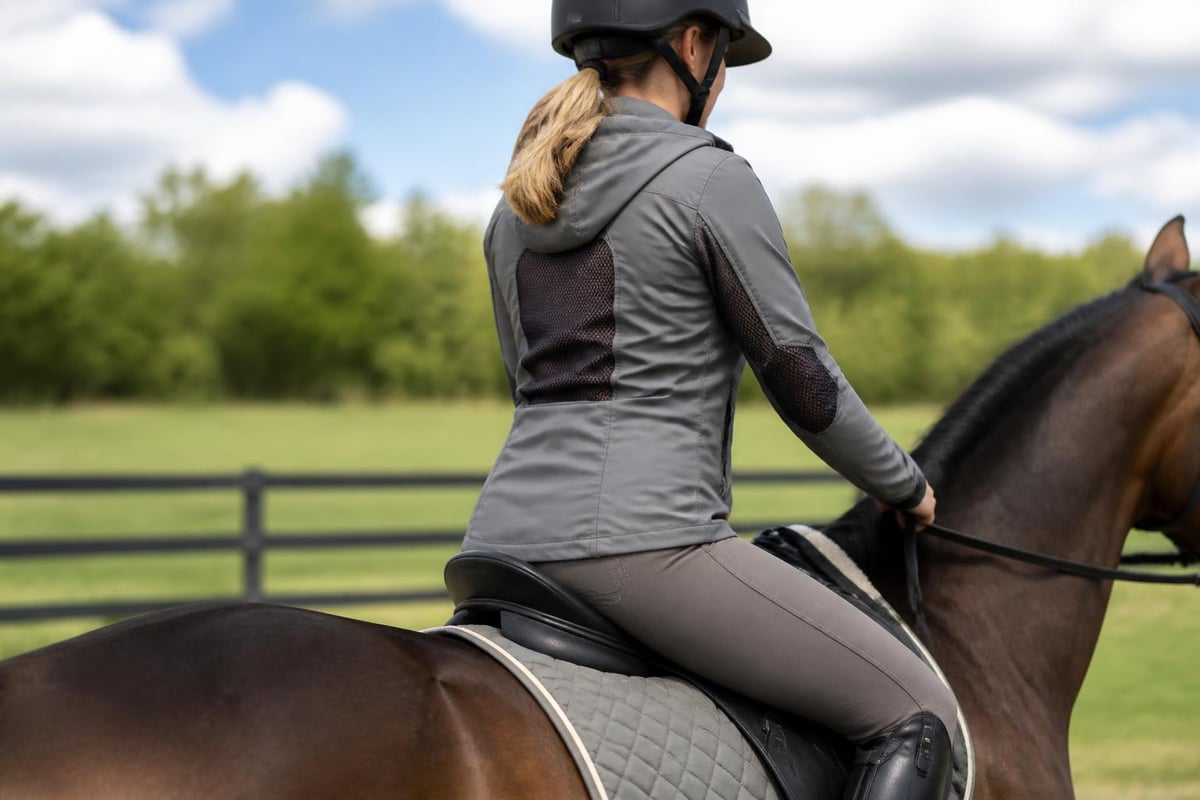
Mens horseback riding apparel requires proper outerwear. British weather demands jackets that actually work, and cheap options will disappoint you quickly. Your jacket needs to keep you dry without cooking you from the inside, move with your riding position, and look presentable when you dismount.
Softshell jackets provide the sweet spot between weather resistance and breathability. They block wind, shed light rain, and stretch enough to follow your movement. Quality softshells include dropped rear hems to cover your lower back in the saddle, and sleeve lengths designed for arms extended forward. The jackets collection demonstrates how technical design improves riding performance.
| Jacket Type | Best For | Weather Resistance | Breathability |
|---|---|---|---|
| Softshell | Daily riding, yard work | Wind + light rain | Excellent |
| Hardshell | Serious weather | Heavy rain | Good |
| Insulated | Cold weather | Wind + cold | Fair |
| Competition | Shows, events | Light conditions | Very good |
Hardshell jackets handle serious rain and wind. They're fully waterproof with sealed seams, but that protection comes with reduced breathability. Modern hardshells incorporate ventilation systems and technical fabrics that minimize the greenhouse effect. They're essential for regions with heavy rainfall, but you'll want to remove them when the sun breaks through.
Insulated jackets keep you warm during cold-weather riding. Look for designs that layer well without bulk, maintain freedom of movement, and resist wind penetration. Down provides exceptional warmth-to-weight ratio but loses insulation when wet. Synthetic insulation performs better in damp conditions and costs less, making it practical for stable work. Understanding what makes a quality riding jacket helps you choose pieces that last.
Footwear Fundamentals
Proper boots complete your mens horseback riding apparel setup. Your feet control stirrup placement, absorb impact, and communicate subtle cues. Riding in trainers or work boots compromises safety and effectiveness. Dedicated riding boots protect your feet, improve your position, and prevent your foot from sliding through the stirrup.
Tall boots remain the gold standard for English disciplines. They protect your lower leg, create a clean line, and prevent stirrup leathers from pinching. Quality leather boots mould to your calf over time, providing custom fit and support. They require regular care but last for years with proper maintenance.
Paddock boots and half chaps offer similar protection with easier entry and better versatility. You can wear paddock boots for stable work, then add half chaps for riding. This combination costs less than tall boots initially and allows you to adjust fit more easily. The downside is the visible seam where boot meets chap, which matters in formal competitions.
Safety features cannot be overlooked. Your boots must have a defined heel (at least 2cm) to prevent your foot sliding through the stirrup. The sole should provide grip in the stirrup while allowing easy release in an emergency. Steel toe caps are brilliant for stable work but potentially dangerous for riding, as they can catch in stirrups.
Seasonal Adaptations
Mens horseback riding apparel needs to flex with the calendar. Summer riding demands completely different kit than winter sessions, and transitional seasons require layering strategies that maintain comfort across changing conditions.
Summer priorities centre on heat management and sun protection. Lightweight, moisture-wicking fabrics move sweat away from your skin. Light colours reflect heat better than dark ones. Long sleeves actually keep you cooler than short sleeves when they're made from proper performance fabrics, plus they protect against sunburn and insects. Mesh panels under arms and across the back improve airflow where you need it most.
Winter riding requires thoughtful layering rather than single heavy pieces. Start with a quality base layer that manages moisture. Add an insulating mid-layer that traps warm air. Finish with a weather-resistant outer layer that blocks wind and rain. This system lets you adjust as you warm up during your ride, preventing the sweat-then-chill cycle that ruins winter sessions.
Spring and autumn challenge riders with morning frost and afternoon warmth. Gilets (sleeveless jackets) provide core warmth without arm restriction, making them excellent choices for transitional weather. They layer easily under waterproof jackets when weather turns, and pack small when you don't need them.
Competition-Specific Requirements
Competition mens horseback riding apparel follows specific rules that vary by discipline. Understanding these requirements prevents embarrassing disqualifications and helps you present professionally. Most governing bodies publish detailed dress codes, but general principles apply across disciplines.
Dressage demands traditional formality. Expect white or light-coloured breeches, white shirt, stock tie or regular tie, dark jacket, and tall boots. Gloves are typically required. Shadbelly coats replace regular jackets at upper levels. The emphasis is on classical presentation that doesn't distract from your riding.
Show jumping allows slightly more flexibility. Dark or neutral breeches work alongside white shirts and dark jackets. Some competitions permit coloured shirts or stock ties that coordinate with your stable colours. Tall boots remain standard, though quality paddock boots and half chaps are acceptable in some contexts.
Eventing combines requirements across three phases. Dressage follows traditional rules. Show jumping allows practical, professional attire. Cross-country demands safety gear including body protectors and properly secured helmets, with practical clothing that won't snag or restrict movement.
The competition wear collection demonstrates how modern designs meet traditional standards while incorporating performance features. You shouldn't have to choose between looking sharp and riding well. Understanding proper equestrian attire fundamentals ensures you're prepared for any situation.
Fabric Technology That Matters
Modern mens horseback riding apparel incorporates materials that would have seemed like science fiction a generation ago. Understanding these technologies helps you choose pieces that actually deliver on their promises rather than just marketing hype.
Moisture-wicking fabrics pull sweat away from your skin through capillary action. The moisture spreads across the fabric's outer surface where it evaporates quickly. This keeps you drier and more comfortable during intense riding. Quality wicking fabrics maintain their performance through hundreds of washes, while cheap versions lose effectiveness quickly.
Four-way stretch materials expand and contract in all directions. This matters enormously when you're posting, jumping, or adjusting your position. Traditional fabrics only stretch width-wise or length-wise, creating restrictions that affect your riding. Proper stretch fabrics should recover their shape rather than bagging out after a few hours of wear.
Antibacterial treatments reduce odour-causing bacteria buildup. They're particularly valuable in base layers and summer riding shirts that see heavy use between washes. Silver-ion treatments and similar technologies prevent the sour smell that develops in synthetic fabrics after repeated sweating.
| Fabric Feature | Benefit | Maintenance |
|---|---|---|
| Moisture-wicking | Stays drier, more comfortable | Avoid fabric softener |
| Four-way stretch | Unrestricted movement | Wash cool, air dry |
| Antibacterial | Reduced odour | Follow care instructions |
| Water-resistant | Sheds light moisture | Re-treat periodically |
Building a Practical Wardrobe
Creating a functional mens horseback riding apparel collection requires planning. You need enough variety to handle different weather, different disciplines, and regular washing cycles without constant laundry pressure. Start with essentials, then expand based on your specific riding situation.
Minimum viable wardrobe includes two pairs of breeches (one washing, one wearing), three riding shirts or polos, one quality jacket, proper boots, and a helmet. This gets you riding safely and presentably while you determine what else you need. Many riders stay at this level for years if they're riding casually or focusing budget on horse-related expenses.
Working rider wardrobe expands to four pairs of breeches, six shirts, two jackets (one lightweight, one weatherproof), competition attire if you show, and backup boots or boot care supplies. This rotation prevents wardrobe emergencies and reduces wear on individual pieces. The essentials collection provides the foundation pieces that work season after season.
Serious competitor wardrobe requires discipline-specific competition attire, sufficient training wear to avoid constant washing, seasonal variations, and backup pieces for multi-day competitions. Budget increases accordingly, but quality gear lasts for years and performs better than cheap alternatives that need replacing seasonally.
Storage and care extend your investment. Breeches should be washed inside-out in cool water and line-dried to preserve grip and elasticity. Jackets need regular reproofing to maintain water resistance. Boots require cleaning and conditioning after muddy rides. Proper care prevents premature wear and keeps your kit looking professional rather than neglected.
The Style Evolution
Mens horseback riding apparel has evolved dramatically from the days when riders had limited options beyond traditional hunt coats and ill-fitting breeches. Modern designs acknowledge that men ride seriously, compete successfully, and deserve clothing engineered for their specific needs. This shift represents more than fashion – it reflects genuine understanding of what male riders require.
Fit improvements account for broader shoulders, narrower hips, and different proportions than women's designs. Properly cut mens breeches eliminate the excess fabric and awkward bunching that plagued earlier options. Jackets allow for chest and shoulder room without looking boxy or restricting arm movement. Modern men's riding clothing finally fits properly rather than forcing riders into adapted women's sizes.
Aesthetic shifts embrace clean lines, refined details, and colours beyond basic black and white. Navy, charcoal, olive, and burgundy appear in training wear and even some competition contexts. Subtle patterns and texture variations add visual interest without crossing into unprofessional territory. The goal is looking put-together whether you're schooling at home or competing internationally.
Performance integration ensures style doesn't compromise function. The best mens horseback riding apparel performs technically while looking sharp. Articulated knees don't announce themselves visually. Moisture-wicking fabrics appear no different from traditional cotton. Stretch panels integrate seamlessly into overall design. You shouldn't be able to tell performance clothing from traditional kit at first glance.
Practical Purchasing Strategy
Investing wisely in mens horseback riding apparel requires balancing quality against budget. Buying the cheapest option typically costs more long-term through replacement cycles, while buying the most expensive option doesn't guarantee better performance. Focus on value rather than price alone.
Prioritize contact points – the pieces touching your horse and saddle deserve the highest quality budget allows. Excellent breeches improve your riding more than any other single piece. Invest here first, then work outward. Your jacket matters less than your breeches. Your polo shirt matters less than your jacket. Allocate funds accordingly.
Watch for versatility when evaluating pieces. A softshell jacket that works for riding, stable work, and casual wear provides better value than competition-only kit you'll use twice yearly. Breeches that transition from training to low-level competition serve you better than specialised options. Understanding what to wear for different riding situations helps you choose pieces that work harder.
Time purchases strategically to maximize value. End-of-season sales offer substantial savings on quality pieces. Black Friday and Boxing Day provide opportunities on full-price items. However, don't buy wrong sizes or unsuitable styles just because they're discounted. A bargain that doesn't fit or doesn't work isn't actually a bargain.
Start with basics from established brands before experimenting with newer companies. Once you understand what works for your body and riding style, you can branch out more confidently. The Samson Collection demonstrates how focused designs deliver consistent performance across different pieces.
Safety Considerations
Proper mens horseback riding apparel includes critical safety elements that shouldn't be optional. Horses are large, powerful animals with minds of their own. The right clothing reduces injury risk without compromising your riding or style.
Helmets remain non-negotiable regardless of discipline or experience level. Modern equestrian helmets protect against rotational forces and multiple impact angles while remaining comfortable enough for hours of wear. Replace your helmet after any significant impact or every five years, whichever comes first. Proper fit matters enormously – a helmet that moves on your head provides minimal protection.
Body protectors make sense for jumping, cross-country, young horses, or any high-risk riding. They protect your spine, ribs, and internal organs from impact and crushing injuries. Modern protectors flex with your movement rather than restricting position. Some insurance policies require them for certain activities.
Gloves prevent blisters, improve grip, and protect your hands from rein burns. They're especially important when riding unfamiliar horses or in challenging conditions. Quality riding gloves provide feel without bulk, maintaining connection with your horse while protecting your skin.
Proper footwear prevents your foot sliding through the stirrup in a fall. The defined heel is a safety feature, not a style choice. Boots should fit snugly enough that they won't come off easily but not so tight they restrict circulation or movement. Understanding essential riding attire and safety gear protects you while developing your skills.
Beyond the Basics
Once you've established your core mens horseback riding apparel wardrobe, certain additions improve specific situations. These aren't essential for everyone, but they solve real problems for riders who need them.
Rain trousers protect your breeches during wet stable work or when riding in persistent rain. Proper riding-specific rain trousers allow full range of motion and don't bunch awkwardly in the saddle. They're brilliant for keeping your good breeches clean during muddy turnout or field checking.
Riding tights provide an alternative to traditional breeches for casual riding or practice sessions. They typically cost less, dry faster, and work well for riders who want comfort over traditional appearance. Quality riding tights include grip panels and proper rise, distinguishing them from generic athletic leggings.
Neck warmers and buffs protect against wind and cold without the bulk of scarves that could catch on tack. They're easily adjusted or removed as you warm up during your ride. Many riders find them essential for early morning winter sessions.
Quality socks prevent blisters and wick moisture away from your feet. Riding-specific socks feature reinforcement in heel and toe areas, cushioning in key zones, and lengths designed to work with tall boots or half chaps. They're a small investment that significantly impacts comfort during long riding days.
The Complete Picture
Building effective mens horseback riding apparel requires understanding how pieces work together rather than viewing them as isolated purchases. Your breeches, shirt, jacket, and boots should complement each other functionally and aesthetically. Colour coordination matters, but performance integration matters more.
Layering systems allow adaptation to changing conditions without carrying a full wardrobe to the stables. A quality base layer, versatile mid-layer, and weather-appropriate outer layer handle everything from crisp autumn mornings to summer afternoon thunderstorms. Each piece should work independently and in combination with the others.
Style consistency creates a professional impression whether you're training at home or competing regionally. You don't need expensive designer labels, but you do need clean, well-maintained kit that fits properly. Taking care of what you own matters more than constantly buying new pieces. The best sellers collection showcases pieces that deliver consistent performance across various riding situations.
Functional choices always trump fashion trends in equestrian contexts. If something looks brilliant but restricts your position, interferes with your horse, or compromises safety, it doesn't belong in your riding wardrobe. The best mens horseback riding apparel combines technical performance with refined appearance, never forcing you to choose between them.
Proper mens horseback riding apparel improves your riding, protects you from elements and injury, and presents you professionally in any equestrian setting. Investing in quality pieces that fit well, perform reliably, and transition seamlessly from training to competition makes every ride more enjoyable. Gallant Equestrian specializes in performance-driven men's equestrian clothing designed in New Zealand and built to last, offering breeches, jackets, and shirts that work as hard as you do while maintaining the refined style serious riders demand. Look the Part. Enjoy the Ride.

