

Equestrian Riding Wear for Men | Gallant Equestrian
Sep 23, 2026
Choosing the right equestrian riding wear matters more than most riders initially realise. It's not just about looking sharp in the saddle - though that certainly helps. The clothes you wear directly affect your performance, comfort, and safety during every ride. For men who take their riding seriously, understanding what works in the arena, on the trail, and beyond is essential. In 2026, the line between technical riding gear and everyday menswear has blurred beautifully, offering options that deliver genuine performance without sacrificing style.
Understanding Modern Equestrian Riding Wear
The evolution of men's riding apparel has accelerated dramatically over the past decade. Traditional jodhpurs and stiff show jackets have given way to technical fabrics that breathe, stretch, and perform across disciplines. Modern equestrian riding wear combines centuries-old tradition with contemporary fabric science and athletic design principles.
Performance starts with fabric technology. Today's riding wear uses moisture-wicking materials that pull sweat away from your skin, four-way stretch that moves with you in the saddle, and reinforced panels positioned exactly where you need durability. These aren't marketing buzzwords - they're functional features that make hours in the saddle more comfortable and effective.
The best pieces transition effortlessly from stable to street. You shouldn't need to change completely after a morning ride just to grab coffee or run errands. Quality riding wear for men respects your time and lifestyle, offering clean lines and versatile colours that work in multiple contexts.
Safety Standards Matter
Safety regulations govern competition attire across all major equestrian disciplines. The FEI dressage rules outline specific requirements for international competitions, whilst the USEF Rule Book provides comprehensive guidance for American riders. These standards extend beyond helmets to include proper footwear, appropriate layering, and even visibility requirements for certain disciplines.
Protective equipment represents your first line of defence. Modern helmets meeting ASTM F1163 standards balance protection with comfort, whilst body protectors following BETA Level 3 specifications offer crucial impact absorption. The British Horseracing Authority has raised minimum standards for rider safety equipment, reflecting an industry-wide commitment to better protection.
Building Your Core Riding Wardrobe
Every rider needs foundational pieces that perform reliably across different activities and weather conditions. Start with essentials that work together as a system rather than collecting random items that don't coordinate or complement each other.
Breeches: The Foundation Layer
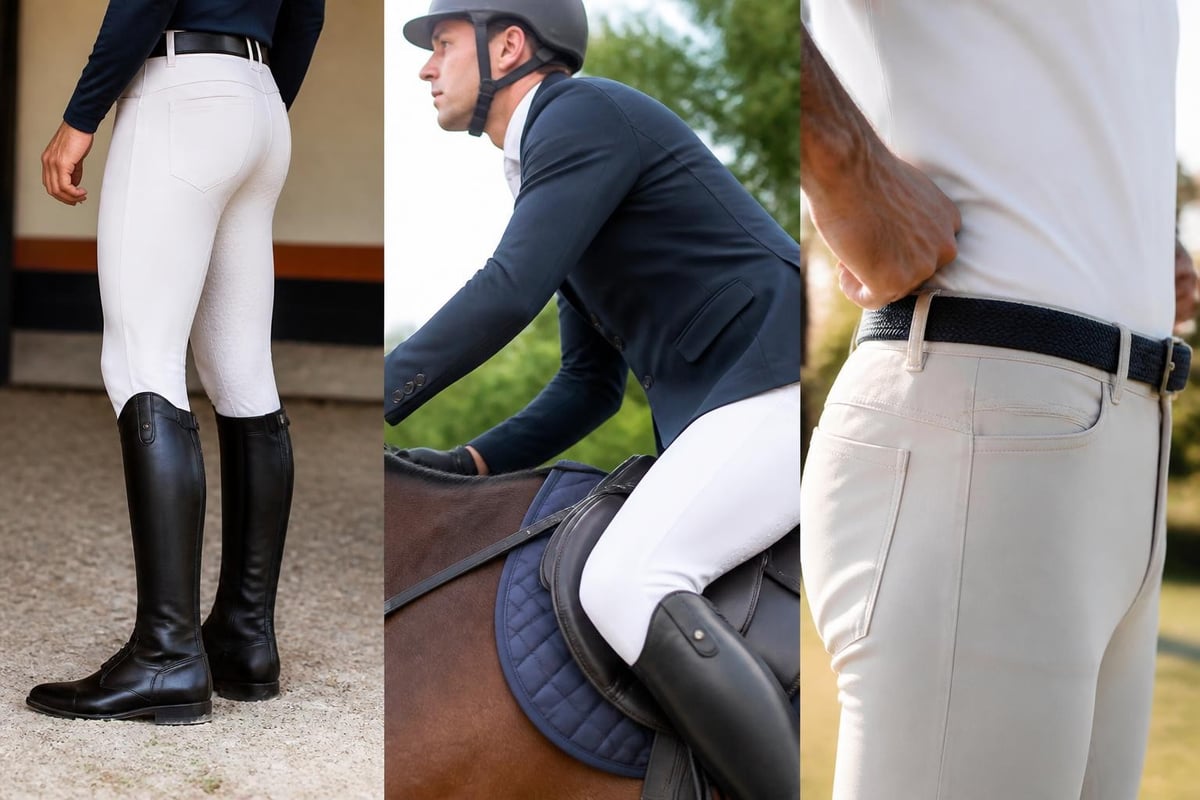
Breeches represent your most critical riding investment. They contact the saddle, shape your position, and endure more wear than any other garment. Quality breeches feature strategically placed grip - either full seat or knee patch - that keeps you secure without restricting movement.
Fit considerations:
Full seat silicone grip provides maximum security for dressage and jumping. The continuous grip surface keeps you anchored during collection and over fences, though some riders find it initially sticky in warm weather. Competition breeches with full seat grip offer this enhanced stability whilst maintaining a refined appearance.
Knee patch grip suits general riding and hacking. This traditional configuration offers security where you need it most whilst allowing easier movement on and off the horse. Knee-only silicone grip designs work brilliantly for everyday riding and training sessions.
Colour choices extend beyond simple aesthetics. Navy, black, and olive remain versatile options that hide stable dust whilst looking sharp. Bone and lighter shades suit competition settings where presentation matters most.
Shirts and Layering Essentials
Base layers regulate temperature and manage moisture during intense riding sessions. Technical polo shirts work exceptionally well for training days, offering collar protection from the sun whilst maintaining a professional appearance. Performance polo shirts in breathable fabrics transition seamlessly from arena to casual settings.
Competition shirts require more formal styling. Show shirts in white or subtle patterns present the traditional look judges expect, whilst technical fabrics ensure comfort during long competition days. Pair them with appropriate ties that complete the formal presentation without feeling restrictive.
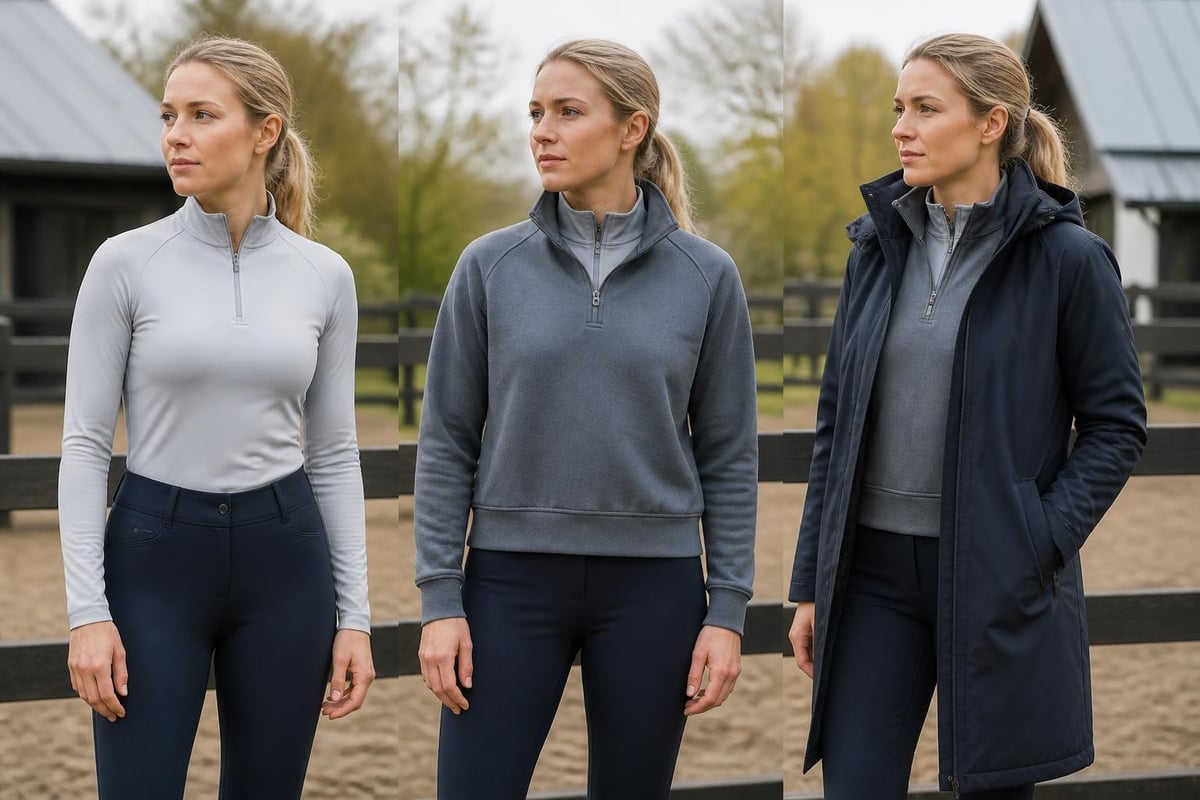
Mid-layers provide warmth without bulk. Lightweight sweatshirts and hoodies layer effectively under jackets when temperatures drop, yet work independently during milder conditions. Choose pieces with articulated sleeves that allow full range of motion when working around horses.
Weather-Specific Riding Wear
British weather demands versatile clothing strategies. Morning frost can give way to afternoon sunshine, then evening rain - sometimes within a single ride. Your equestrian riding wear needs to adapt quickly without requiring complete wardrobe changes.
Winter Riding Essentials
Cold weather riding challenges even experienced riders. Maintaining warmth whilst preserving freedom of movement requires thoughtful clothing choices. Winter riding jackets for men should offer insulation without restricting your position or creating bulk that interferes with rein contact.
Layering creates adjustable warmth. Start with a technical base layer that wicks moisture, add a mid-weight fleece or sweatshirt, then top with a windproof outer shell. This system lets you remove or add layers as conditions change throughout your riding day.
Extremities need special attention in cold conditions. Quality riding gloves balance grip, sensitivity, and warmth - no small feat when you need to feel your reins whilst protecting your hands. Thermal socks designed for riding boots prevent the circulation restriction that causes cold feet.
Wet Weather Protection
Rain inevitably arrives at the worst possible moments. Proper wet weather gear keeps you riding when others head inside, maintaining training consistency and building resilience. Rain jackets designed for riding need longer backs to cover your seat, articulated sleeves for arm mobility, and ventilation to prevent internal condensation.
Waterproof doesn't mean watertight. You need breathability to manage the heat generated during active riding. Look for jackets with pit zips, back vents, or breathable membrane technology that allows moisture vapour to escape whilst blocking external rain.
Visibility becomes critical in poor weather. The British Horse Society recommends high-visibility clothing when riding on roads or shared paths, particularly during reduced light conditions. Many modern riding jackets incorporate reflective elements without compromising style.
Choosing Quality Over Quantity
Investment pieces outlast cheaper alternatives by years, not months. Quality equestrian riding wear costs more initially but delivers better value through superior durability, maintained appearance, and consistent performance. The difference becomes obvious after just a few months of regular use.
Construction details that indicate quality:
Flatlock seaming prevents chafing during long rides. These smooth, strong seams lie flat against your skin rather than creating pressure points that irritate after hours in the saddle. Check inside seams on breeches and base layers for this feature.
Reinforced stress points extend garment life dramatically. Look for double stitching at pocket edges, reinforced buttonholes, and extra fabric at high-wear zones like inner thighs and seat areas. These details separate clothing that lasts from pieces that fail prematurely.
Technical fabrics maintain their properties through countless wash cycles. Cheaper materials lose stretch, fade quickly, and develop pilling that looks shabby within weeks. Premium fabrics retain colour, shape, and performance characteristics for years.
| Quality Indicator | What to Look For | Why It Matters |
|---|---|---|
| Fabric Weight | 220-280 gsm for breeches | Durability without stiffness |
| Stretch Recovery | Returns to shape after stretching | Maintains fit over time |
| Silicone Grip | Even application, no gaps | Consistent security in saddle |
| Stitching | 10-12 stitches per inch | Strength and longevity |
| Waistband Construction | Wide, comfortable, stays put | No riding up or pinching |
Finding the Right Fit
Proper fit transforms adequate riding wear into exceptional performance gear. Breeches should feel snug without restricting circulation, with enough length to prevent riding up when you mount. The waistband should sit comfortably at your natural waist, not require a belt to stay in place, and feature enough stretch to accommodate breathing and movement.
Jacket sleeves need sufficient length to cover your wrists when arms are extended forward in riding position. Standard menswear measurements often fall short here, as riding requires different proportions than everyday clothing. Shoulder seams should align with your natural shoulder line, allowing free movement without excess fabric bunching under your arms.
Practical Care and Maintenance
Proper maintenance extends the life of quality equestrian riding wear significantly. Most technical riding clothes require straightforward care, but a few considerations prevent premature wear and maintain performance characteristics.
Wash riding wear separately from stable clothes. Horse hair, hay dust, and stable debris can damage technical fabrics and clog washing machines. Turn garments inside out to protect outer surfaces and preserve colour. Use cool or warm water rather than hot, which can damage elastic fibres and silicone grip.
Avoid fabric softeners on technical riding wear. These products coat fibres, reducing moisture-wicking capabilities and making silicone grip less effective. They're particularly problematic for base layers and performance shirts that rely on specific fabric properties.
Air drying preserves fabric integrity better than machine drying. High heat damages elastic fibres, reduces stretch recovery, and can melt silicone grip panels. If you must use a dryer, select the lowest heat setting and remove items whilst slightly damp.
Store riding wear properly between uses. Hang jackets and shirts to prevent creasing. Fold breeches carefully rather than hanging them by the waistband, which can stretch elastic over time. Keep everything in a cool, dry space away from direct sunlight that fades colours.
Transitioning Between Riding and Daily Life
Modern equestrian riding wear excels at versatility. The best pieces work as well off the horse as on, eliminating the need for complete wardrobe changes between stable and social commitments. This practical approach respects your time whilst maintaining appropriate style standards.
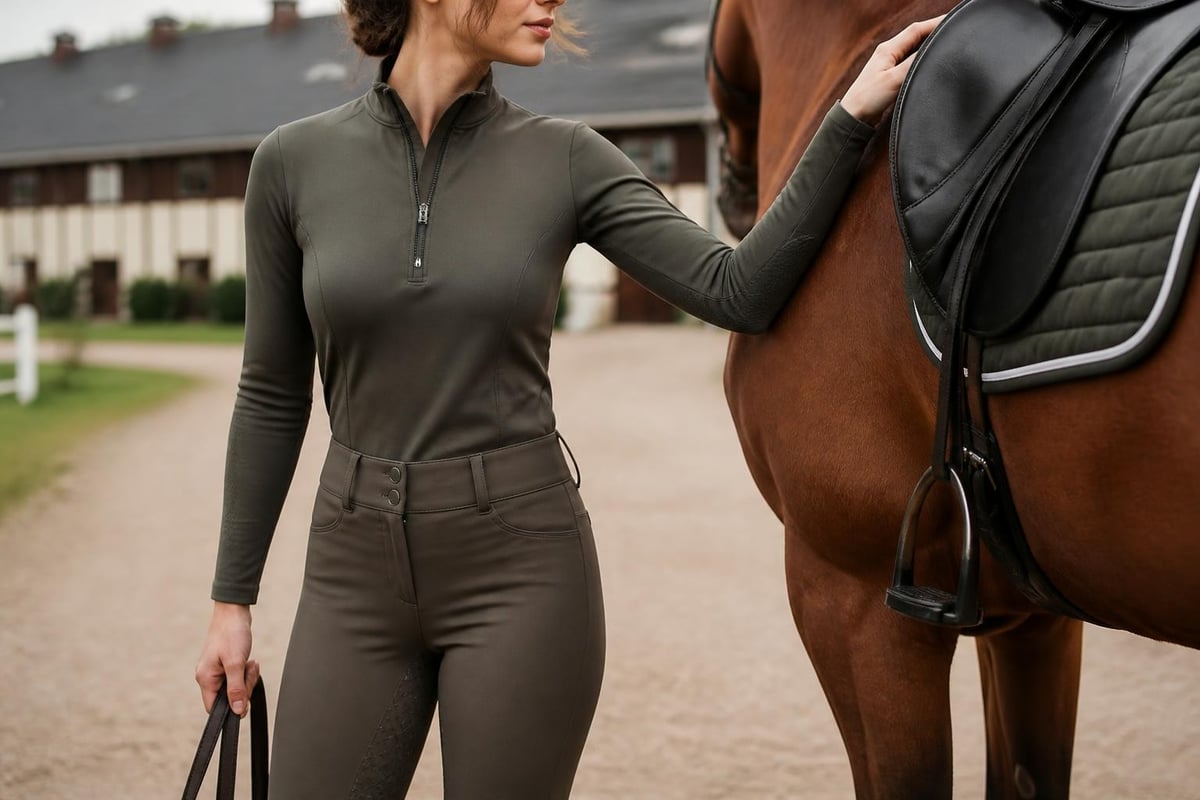
Choose colours and cuts that work across contexts. Navy, black, and olive breeches pair naturally with boots for a smart-casual look that doesn't scream "just came from the stable." Clean lines and quality fabrics elevate these pieces beyond purely functional riding gear.
Layering creates different looks from the same core pieces. A technical polo shirt works perfectly for training, but swap it for a show shirt and jacket for competition, or throw on a quality sweatshirt for casual post-ride errands. This systematic approach maximizes the utility of each piece you own.
Many riders appreciate finding equestrian clothing shops near them where they can try on pieces and get proper fitting advice. However, understanding your measurements and knowing what works for your riding style makes online shopping equally effective.
Evidence-Based Equipment Choices
The Equestrian Research Atlas provides valuable evidence-based information about rider clothing and protective equipment. This research helps riders make informed decisions about what actually improves safety and performance versus marketing claims.
Protection equipment requires particular attention. The BETA guide to rider safety offers detailed information about body protectors, including proper fitting and when to replace equipment. Air vests represent newer technology that's gaining acceptance, though traditional body protectors remain the gold standard for cross-country and jump training.
Road safety deserves serious consideration for riders who hack regularly. RoSPA research highlights the importance of visibility gear and proper protective equipment for riders sharing roads with vehicles. High-visibility elements integrated into everyday riding wear provide practical solutions without requiring separate safety vests.
Building a Systematic Wardrobe
Rather than accumulating random pieces, build your equestrian riding wear collection systematically. Start with core essentials that work across multiple situations, then add specialised items as specific needs arise. This approach prevents wardrobe bloat whilst ensuring you always have appropriate options ready.
Core starter kit:
Two pairs quality breeches in versatile colours provide rotation during frequent riding. One pair handles washing whilst you wear the other, preventing the rushed morning decisions about damp riding clothes. Navy and black offer maximum versatility.
Three technical shirts cover training and casual wear. Polo shirts in coordinating colours work brilliantly for most riding situations whilst looking sharp enough for casual wear afterwards. Add one show shirt if you compete regularly.
One quality riding jacket handles weather protection and layering. Choose a versatile style that works over various base layers, from lightweight shirts in summer to thick fleeces in winter. Neutral colours coordinate with everything in your wardrobe.
Seasonal additions:
Winter demands additional layers. Sweatshirts and hoodies bridge the gap between base layers and outer jackets, whilst thermal base layers make early morning rides bearable. Winter layers work together as a system rather than individual pieces.
Summer requires lightweight, breathable options. Short-sleeve technical tees manage heat better than polo shirts during intense summer riding, whilst still maintaining professional appearance. Choose colours that hide inevitable dust and sweat marks.
| Season | Essential Items | Optional Additions |
|---|---|---|
| Spring | Medium-weight jacket, standard breeches, polo shirts | Rain jacket, light base layers |
| Summer | Lightweight tees, breathable breeches, sun protection | Competition shirt, show jacket |
| Autumn | Layering pieces, sweatshirts, transitional jacket | Thermal base layers, riding gloves |
| Winter | Insulated jacket, thermal layers, warm gloves | Body warmer, fleece mid-layer |
Style Without Compromise
Performance and style needn't conflict. The best equestrian riding wear delivers both without compromise, using quality materials and thoughtful design to create pieces that work hard and look sharp. This balance separates premium riding wear from cheap alternatives that excel at neither function.
Clean lines and classic cuts age better than trendy designs. Today's fashionable colour might look dated next season, but navy, black, white, and olive remain timeless. These classic choices also coordinate effortlessly, making it easy to build coherent outfits from individual pieces.
Subtle details elevate good riding wear to exceptional. Quality hardware that doesn't tarnish, discreet logos that don't scream for attention, and refined finishing touches demonstrate craftsmanship and attention to detail. These elements might seem minor individually, but collectively they define premium equestrian clothing.
Fit remains the ultimate style factor. Perfectly tailored breeches in average fabric look better than expensive breeches that fit poorly. Take time to find brands that cut for your body type, and don't hesitate to try different sizes or styles until you find what works. The difference between good fit and perfect fit is immediately obvious in the saddle.
Making Informed Purchases
Research before buying prevents expensive mistakes. Read detailed product descriptions, check sizing charts carefully, and seek reviews from other male riders when possible. Understanding exactly what you're purchasing reduces returns and ensures satisfaction.
Consider cost per wear rather than just purchase price. Quality breeches at £150 that last three years with regular use cost less per ride than £60 pairs that need replacing every six months. This calculation becomes even more favourable when you factor in consistent performance and maintained appearance.
Start with versatile neutral colours that coordinate easily. Once you've established core pieces, experiment with additional colours if desired. But your first purchases should prioritise function and versatility over fashion statements.
Pay attention to return policies and sizing flexibility. Even with careful measurements, some pieces won't fit as expected. Choose retailers with straightforward return processes that let you try items properly before committing.
Building the right equestrian riding wear collection takes time and thoughtful choices, but the investment pays dividends in comfort, performance, and confidence every time you ride. Whether you're training daily, competing regularly, or enjoying weekend hacks, having proper kit that works hard and looks sharp makes every ride better. Gallant Equestrian creates performance-driven riding wear specifically for men who demand both functionality and style, with New Zealand-designed pieces built to last through countless rides and everyday wear. Look the Part. Enjoy the Ride.

